
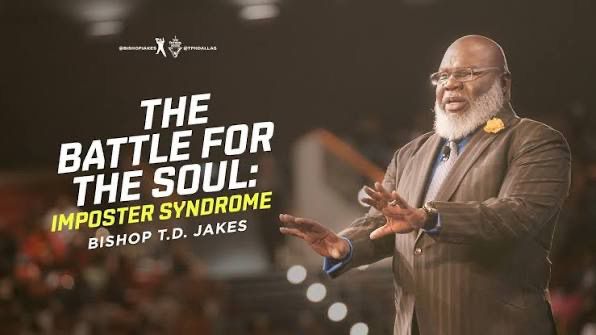
Imposter syndrome is one of the quietest battles many people fight. It is the feeling that you are not truly qualified, worthy, or deserving of the space you occupy, even when your work, experience, and achievements prove otherwise. It is that inner voice that says, “What if they find out I am not as good as they think I am?”
At its core, imposter syndrome is not always about lack of ability. Sometimes, it is about the gap between who you are, who people expect you to be, and who you secretly fear you are. Bishop T.D. Jakes describes it as an experience rather than a permanent condition. He explains that it is a tendency to question your authenticity, especially when you are trying to match who you are with what others expect from you.
Many people experience this in different areas of life. A professional may have the qualifications but still feel inadequate in a boardroom. A parent may love their children deeply but still wonder whether they are doing enough. A leader may carry a title but privately struggle with the weight of responsibility. A spouse, student, entrepreneur, minister, or public servant may appear confident on the outside while wrestling with fear on the inside.
The danger of imposter syndrome is that it can make people sabotage the very opportunities they prayed for. A person may avoid applying for a role, speaking in a meeting, accepting recognition, or stepping into leadership because they feel unworthy. Sometimes, they shrink themselves to remain within their comfort zone, not because they lack potential, but because they have not yet accepted their own growth.
One important lesson from the story of Jacob is that you can be blessed and still not feel settled. Jacob had received the birthright, but he did not feel right within himself. He had possessions, family, and success, yet he was still afraid to face his past. His struggle was not only with Esau; it was also with himself. In the same way, many people are not fighting external enemies as much as they are fighting their own doubts, guilt, fears, and internal narratives.
To overcome imposter syndrome, we must become intentional about how we think, speak, and respond to the doubts within us.
1. Recognize it for what it is
The first step is to understand that imposter syndrome is not your identity. It is not proof that you are fake, unqualified, or undeserving. It is a feeling, and feelings are not always facts.
You may feel unqualified, but that does not mean you are unqualified. You may feel afraid, but fear does not cancel your assignment. You may feel like you do not belong, but that does not mean you have no right to be in the room.
2. Separate your worth from your title
What you do is important, but it is not the fullness of who you are. Titles, achievements, degrees, positions, and public recognition may open doors, but they cannot be the foundation of your identity.
If your confidence depends only on performance, you will always feel pressure to prove yourself. True confidence begins when you understand that your value is not limited to what you produce, achieve, or display publicly.
3. Confront the story you have been telling yourself
Many people carry old labels into new rooms. They still see themselves through past mistakes, rejection, failure, or the opinions of people who misunderstood them.
To overcome imposter syndrome, you must challenge those inner narratives. Instead of saying, “I do not deserve this,” begin to say, “I am growing into this.” Instead of saying, “I am pretending,” say, “I am learning.
4. Accept that growth often feels uncomfortable
New rooms will stretch you. Bigger responsibilities will challenge you. Leadership will expose areas where you still need development.
That discomfort does not mean you are an imposter; it means you are expanding. Every competent person was once new at something. Confidence is not always present at the beginning. Sometimes, it is built through preparation, practice, persistence, and experience.
5. Stop isolating yourself
Imposter syndrome grows stronger in silence. When you keep your fears hidden, they can begin to feel bigger than they really are.
Speak to trusted mentors, friends, coaches, or colleagues who can remind you of the truth when your mind is clouded by fear. Sometimes, you need people who can hold a mirror to your progress and say, “You are not pretending. You are becoming.”
Overcoming imposter syndrome is not about pretending to be fearless. It is about refusing to let fear define you. It is about allowing your mind, your words, and your actions to come into agreement with the truth of who you are becoming.
Ultimately, the battle against imposter syndrome is a battle for the soul: the battle to believe that you are not an accident, not a fraud, and not out of place. You are allowed to grow into the spaces you once prayed for. You are allowed to receive the blessings you worked for. You are allowed to stand fully in your assignment, not as an imposter, but as someone becoming whole, confident, and free.
For more information and deeper reflection on this topic, watch the full video here: https://youtu.be/KH2-rL50CUY


Leave a Reply