
Hello, I am Advocate Brownie Ebal
I am a legal Practitioner, Venture Capitalist and Philanthropist.
Welcome to my site.
I love life, travelling, food, beauty, the law, leadership and meeting people from diverse backgrounds. I hope to inspire each one of you with my various articles as I share from my experiences around our beautiful world.
I live in Kampala, Uganda.



-
Article 56: Alternative Dispute Resolution in Intellectual Property Disputes: A Smart Path for Innovation Protection.

Written by Adv. Brownie Ebal and Victoria Nakiyimba.
On 22nd May 2025, the East Africa Law Society (EALS), through its Intellectual Property Committee, hosted a landmark webinar titled “ADR in IP Disputes: The Smart Way to Protect Innovation and Avoid Costly Litigation.” This event brought together seasoned legal minds, IP professionals, and young practitioners from across East Africa and beyond to unpack the growing relevance of Alternative Dispute Resolution (ADR) in navigating the increasingly complex world of intellectual property.
EALS, the premier regional Bar Association, is a leading force in promoting the rule of law and professional excellence in East Africa. Through initiatives like these, it continues to position the region as a hub for legal innovation and collaboration. The session was moderated by Ms. Brenda Imelda, Prosecution Counsel, Office of the Director of Public Prosecution, Kenya, who set the tone for the discussion by highlighting how innovation today moves faster than traditional litigation can manage. She stressed the importance of equipping young lawyers with tools that enable effective and efficient conflict resolution outside the courtroom.
Mr. Leandro Toscano, representing the World Intellectual Property Organization (WIPO) in Geneva, offered a comprehensive global perspective. He began by explaining why ADR is so critical for IP disputes: the field is highly specialized, often involves international parties, and demands confidentiality and speed. He noted that 70–75% of WIPO’s cases involve parties from different jurisdictions, a testament to the global nature of IP today. ADR, he explained, provides confidentiality, cost-effectiveness, and procedural flexibility—crucial in matters involving trade secrets and sensitive commercial information. Toscano also detailed WIPO’s partnerships in Africa, such as mediation programs in Kenya and Tanzania, and highlighted a shift from ADR being used only by multinationals to now including Small and Medium Enterprises (SMEs) and individuals. In response to questions from attendees, he clarified that WIPO’s mediation process is time-flexible, usually taking two to four months, and that mediator fees are agreed upon based on the complexity of the case—ensuring affordability and fairness. Toscano also addressed opportunities for young professionals, introducing the WIPO ADR Young Program;https://www.wipo.int/amc/en/center/wipoadryoung/index.html and sharing resources such as free workshops and essay competitions to help build careers in ADR. He emphasized that aspiring mediators should combine subject-matter knowledge with soft skills like conflict resolution and emotional intelligence, while arbitrators should develop strong analytical and drafting abilities.
Advocate William Kivuyo, a seasoned IP practitioner from Tanzania, offered an East African lens. He discussed recent legal reforms that have expanded ADR access in Tanzania since 2020, including the use of independent arbitration and mediation services conducted outside of the courtroom. While these changes are encouraging, he was frank about the persistent challenges. Many clients remain skeptical of ADR, sometimes viewing a lawyer’s suggestion to mediate as a sign of weakness. Legal practitioners themselves often resist ADR, preferring the courtroom’s adversarial nature. Kivuyo pointed to a lack of trained mediators, limited awareness among the public, and inadequate infrastructure as major barriers. He illustrated this by recalling a mediation center once proposed within a court premise—an idea that was rejected to maintain neutrality, yet highlighted the struggle to establish dedicated ADR spaces. About capacity building and opportunities, Kivuyo advised law students and young professionals to develop a mental bias toward ADR early in their careers. He encouraged them to pursue apprenticeships with active ADR practitioners, especially during school breaks, and emphasized that ADR—particularly arbitration—can be more financially rewarding and time-efficient than conventional litigation. He urged African legal institutions to modernize while also drawing on traditional dispute resolution values, fostering reconciliation and cooperation over confrontation.
Advocate Patroba Omwenga offered grounded, real-time insight into the realities of IP dispute management at the Kenya Industrial Property Institute (KIPI), where he serves as a legal officer. He explained that many disputes arise from trademark registration processes, particularly during the opposition phase. Here, legal expertise is critical to evaluating the legitimacy of claims while encouraging innovation. He highlighted the need for ADR in managing these disputes efficiently, especially among (Micro, Small and Medium Enterprises) MSMEs, who make up a large portion of trademark applicants. Patroba illustrated this with specific cases, such as the ‘Big Man Bazu’ trademark registered by media personality Willis Raburu—resulting in a successful infringement suit (Civil Suit 198 of 2023), in which Airtel Kenya was ordered to pay KES 6.5 million (Ksh 5 million in special damages and Ksh 1.5 million in general damages) and was permanently restrained from using the mark— and the high‑stakes Civil Appeal No. 338 of 2013, concerning the contested registration of ‘Basmati rice’ as a trademark/geographical indication between India and Pakistan. These cases, he noted, show how IP issues can even touch diplomatic nerves, making ADR not only useful but essential. Responding to questions, Patroba explained that ADR becomes more accessible when parties see benefits such as confidentiality, speed, and cost-effectiveness. He clarified that many trademarks, including names like “Bahati,” are registered not as plain words but as stylized logos or images, making them eligible for protection. He also emphasized the need to raise IP awareness in Kenya, noting that many creators lose out on rights and compensation simply because they do not register their innovations. He encouraged more aggressive public education and simplified access to IP registration as essential steps toward empowering creators and protecting innovation.
In conclusion, the webinar underscored the growing urgency and value of ADR in resolving IP disputes across East Africa. As innovation accelerates and legal systems strain to keep pace, ADR offers a more collaborative, timely, and accessible solution. With support from regional bar associations, reform-minded governments, and global institutions like WIPO, ADR is rapidly becoming not just an alternative, but the preferred method for navigating the complexities of intellectual property. The session called on legal professionals—especially the younger generation—to embrace ADR as a strategic, forward-thinking path that honors both legal rigor and innovative spirit.
For more information, please watch the video below:
-
Article 55: Key practical take aways from the 15 Invaluable Laws of Growth.
Written by Adv. Brownie Ebal.
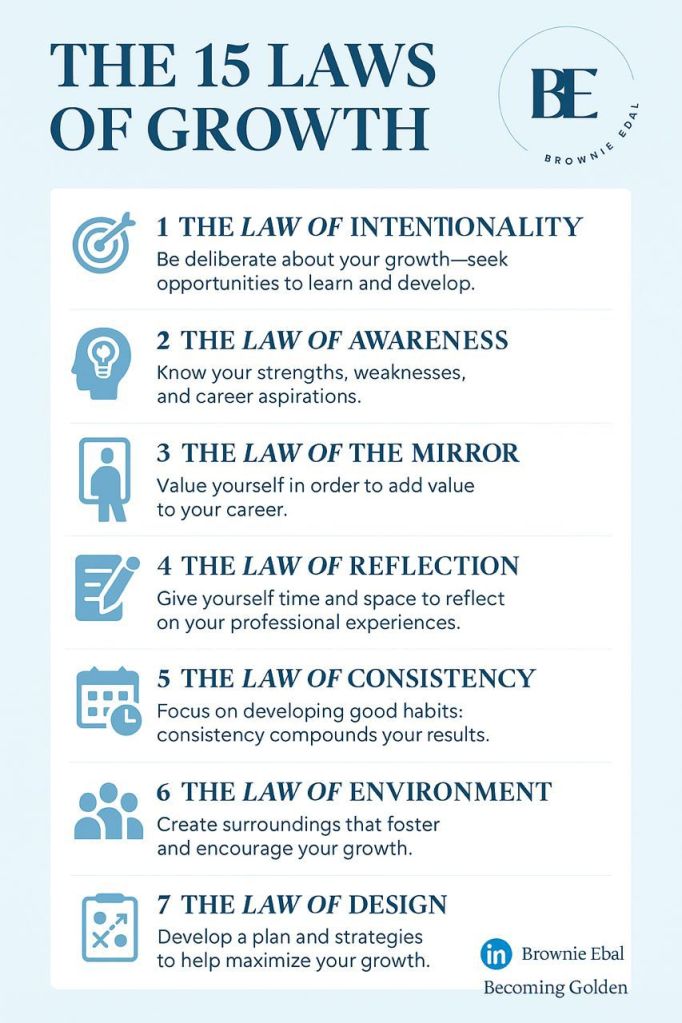
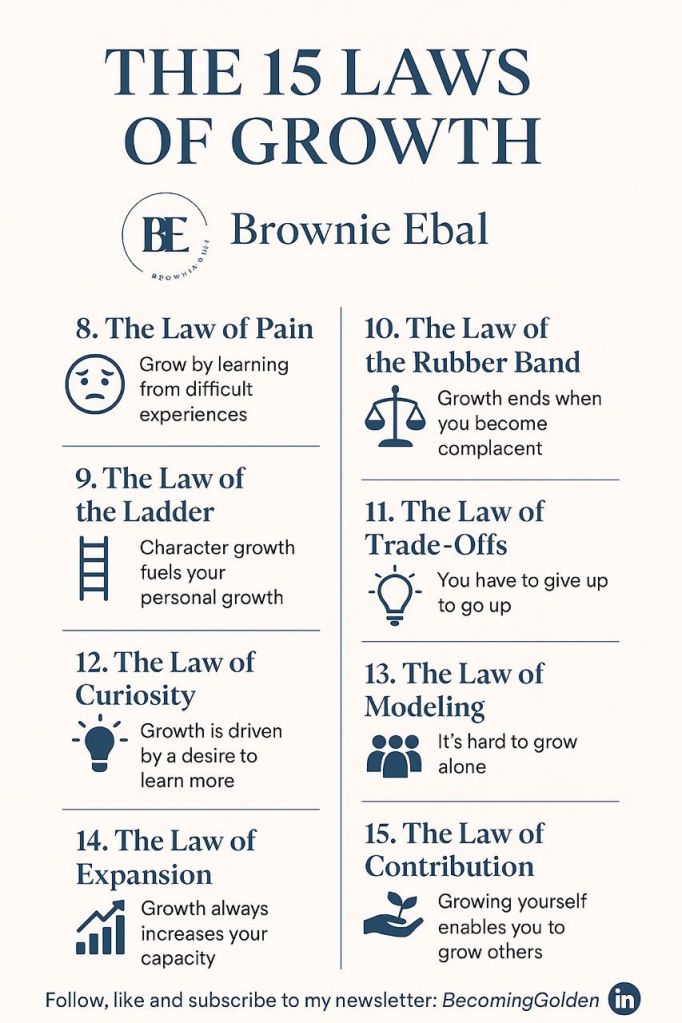
Personal growth is not accidental—it is intentional. Over the past few years, The 15 Invaluable Laws of Growth by John C. Maxwell has become more than just a book to me. It is a framework I keep returning to as I navigate my journey in the legal profession. Here are my key takeaways from the book, and how each one has shaped my mindset, strategy, and growth as a legal professional.
1. The Law of Intentionality – Growth Doesn’t Just Happen
In the legal field, advancement is never accidental. I’ve learned to be deliberate about my growth—seeking mentorship, training, and complex matters that stretch my abilities.
2. The Law of Awareness – You Must Know Yourself to Grow Yourself
Understanding my strengths—be it advocacy, analysis, or negotiation—and being honest about my gaps allows me to position myself strategically in any organization.
3. The Law of the Mirror – You Must See Value in Yourself to Add Value to Yourself
Confidence is everything, especially in high-stakes environments. I have learned to acknowledge my value so I can own the room, add meaningful input, and lead with presence.
4. The Law of Reflection – Learning to Pause Allows Growth to Catch Up with You
I now schedule time to reflect on cases, decisions, and even missteps. That reflection sharpens my judgment and builds the kind of maturity needed at higher levels.
5. The Law of Consistency – Motivation Gets You Going, Discipline Keeps You Growing
Motivation fluctuates. But discipline—showing up, delivering excellence, and staying committed—is what has helped me earn trust from partners and senior leadership.
6. The Law of Environment – Growth Thrives in Conducive Surroundings
I seek rooms where people challenge me, not just cheer for me. Growth has accelerated when I am around bold thinkers and seasoned professionals who push me beyond my comfort zone.
7. The Law of Design – To Maximize Growth, Develop Strategies
I approach my career like I would any complex legal issue—with a well-thought-out strategy. Goals, timelines, and mentorship structures keep me aligned and progressing.
8. The Law of Pain – Good Management of Bad Experiences Leads to Growth
Tough clients. Missed deadlines. Performance feedback. I have learned to turn every hard moment into a stepping stone—not a stumbling block.
9. The Law of the Ladder – Character Growth Determines the Height of Your Personal Growth
In law, your integrity is everything. Character determines who gets invited into trusted, strategic conversations—and who gets quietly sidelined.
10. The Law of the Rubber Band – Growth Stops When You Lose the Tension Between Where You Are and Where You Could Be
I have become addicted to that stretch between comfort and challenge. Staying stretched is how I have made leaps others hesitated to take.
11. The Law of Trade-Offs – You Have to Give Up to Grow Up
I have had to say no to short-term comforts—certain social events, easier roles, even some friendships—to say yes to long-term growth and leadership.
12. The Law of Curiosity – Growth Is Stimulated by Asking Why
Asking “why” has helped me challenge stale practices and bring fresh insight into the legal teams I work with. Curiosity is not a weakness—it is a career advantage.
13. The Law of Modeling – It is Hard to Improve When You Have No One but Yourself to Follow.
Watching and learning from women and men I admire has been instrumental. I do not just follow their steps—I study their mindset, strategy, and presence.
14. The Law of Expansion – Growth Always Increases Your Capacity
With each new challenge I take on, I realize: I can handle more. Growth has expanded my professional range, and now I’m ready for greater leadership responsibilities.
15. The Law of Contribution – Growing Yourself Enables You to Grow Others
The real joy comes when I help officers, junior associates, interns, or colleagues find their own stride. Growth isn’t just personal—it becomes legacy.
Growth is not a one-time event; it is a lifelong journey. These laws continue to challenge me, stretch me, and shape the leader I am becoming. If you are looking to grow with intention, I highly recommend not just reading Maxwell’s book—but living it.
-
Article 54: Breaking Free from the Mid-Level Career Crisis.

Written by Adv. Brownie Ebal and Victoria Nakiyimba.
On 16th April 2025, during a compelling LinkedIn Live session, HR Consultant and Career Coach Pepe Minambo of Motivation Hub Limited shared thought-provoking insights on a topic many professionals face silently: The Mid-Level Job Crisis. Motivation Hub Limited is a leading coaching and training firm that equips professionals with tools for personal mastery, career growth, and leadership development. Their work empowers individuals to transform their mindset, communicate with impact, and lead with purpose. Learn more at: https://motivatorafrica.net/about-us
During the session, Minambo dissected the mid-career experience into four distinct categories—victims, survivors, navigators, and outliers—each representing a mindset and position that many find themselves in at different stages of their career.
Victims are those who stop growing without even realizing it. They show up, go through the motions, and wait for something external to change their path. Pepe highlighted this by recounting a story of a woman who worked for 30 years as a switchboard operator, only to receive a fridge as a retirement gift. It was a sobering reminder that neither the world nor your employer owes you anything. Growth must be self-driven. Some people, he noted, are victims not by choice, but by virtue of where they are or who they associate with.
Then there are the survivors—people who once showed immense promise, the ones who lit up interview rooms, impressed hiring panels, and started off with high expectations. But once inside the system, they faded into the background, unnoticed and unremarkable. They are not failures, but they are not fulfilled either. The promise simply fizzled out, and they end up contributing little to themselves or their organizations.
Navigators, on the other hand, do everything right on paper. They dress well, meet deadlines, are known by their bosses and clients, and stay on track. But still, they remain stuck. They seem to have everything figured out but do not progress. The issue? Attitude. It is not enough to be good; you must be intentional. You must challenge yourself beyond tasks. As Pepe emphasized, “Hire for attitude and train for skills.” Many navigators fail not because of lack of ability but because of an inability to lead their own growth.
Outliers are the rare ones who rise above. They read the company’s strategic plan. They think for themselves and for others. They are not limited by job descriptions. They make their bosses look good. They are not just workers; they are value creators. While only 15% of people think, and another 15% think they are thinking, outliers belong to neither—they are too busy acting on insight. They understand that success is not about doing more but about thinking better and leading from wherever they stand.
From these insights, the path out of stagnation becomes clear. Learn how to communicate effectively—your ideas, your intentions, and your value. Do not shy away from the politics of the office; understand the dynamics so you can move with wisdom. Make your boss look good—not in a manipulative way, but by stepping up, delivering consistently, and handling responsibilities that go beyond your role. Align your intelligence with your interests. Become someone your boss feels safe with, someone who lifts the team, not just themselves. Do not be afraid of greatness—some people were born great, yes, but others became great by daring to try. Life may twist and turn, but certain principles remain true. Follow them, and you will go further than most.
In conclusion, Pepe’s message was clear: where you start does not define where you end. Whether you are a victim, survivor, or navigator today, you can choose to become an outlier. It begins with how you think, how you act, and how you take ownership of your own growth. The mid-level crisis does not have to be your ceiling—it can be your turning point.
-
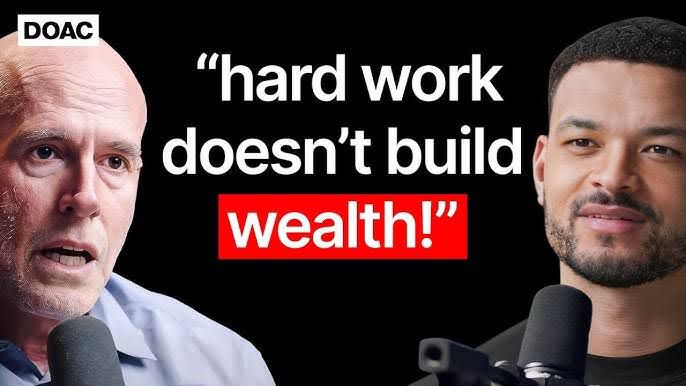
Article 53: Hard Work Doesn’t Build Wealth
Written by Adv. Brownie Ebal and Victoria Nakiyimba.
While hard work is often seen as the cornerstone of success, Scott Galloway presents a compelling case that when it comes to building true wealth, it is not enough. In a thought-provoking episode of The Diary of a CEO — a podcast hosted by entrepreneur and investor Steven Bartlett — Galloway, as the guest speaker, breaks down the habits, mindset, and long-term strategies that actually drive wealth creation.
Scott Galloway is a professor of marketing at New York University Stern School of Business, bestselling author, entrepreneur, and outspoken commentator on business and society. With a career spanning successful startups, investments, and teaching, his insights are grounded in both academic theory and real-world experience. His candid, data-driven approach has made him a respected voice on financial independence, economic inequality, and modern capitalism. Below are the key takeaways from his insights:
1. Wealth is Built Through Consistent Habits: True wealth does not come from sudden windfalls — it results from disciplined, consistent financial behavior over time. That means putting money aside from every small earning, sticking to your weekly SACCO contributions, tracking expenses, or reinvesting profits from a side hustle. These small but consistent actions create long-term security and growth.
2. Prioritize Ownership Over Income: Earning a salary is important, but building wealth requires ownership—of assets like stocks, businesses, or property. Think beyond earning — save to buy a plot of land, invest in shares through the stock exchange, unit trusts, or slowly build a business. Ownership brings passive income and long-term stability in ways a salary never can.
3. Start Financial Education Early and Talk Openly About Money: Many people avoid discussing finances, but open conversations build financial literacy. Start by budgeting together as a family, teaching children how to manage pocket money, or setting saving goals as a couple. Within your circles — at work, church, or school — create room for real conversations about money, debt, saving, and investment.
4. Define Your “Number”: Setting a clear financial goal—how much you need to feel secure or retire comfortably—helps guide spending and saving. Whether it is saving UGX 30 million to build your house, or generating UGX 100,000 a week in passive income, knowing your target makes decisions around money more intentional and grounded.
5. Diversify Investments as You Grow: As life evolves, so should your investment approach. Start with what you can manage — maybe a small retail business — and as income increases, branch out into farming, money markets, or rental units. Avoid putting all your eggs in one basket; spread risk and increase your chances of sustainable returns.
6. Take Advantage of Urban Opportunities: Cities offer exposure and growth, especially early in your career. Being in an urban center gives you access to business expos, industry events, networking spaces, and educational resources. Even just attending a free public talk or skills workshop can introduce you to your next opportunity.
7. Seek Mentorship and Build Relationships: Behind most successful careers is a network of supportive mentors. Reach out to people doing work you admire. Ask questions, be teachable, and follow up. Whether it is an older colleague, a professional group, or someone in your community — relationships shape your growth more than you realize.
8. Master the Art of Storytelling: Being able to articulate your ideas and experiences in a compelling way can influence how others perceive and engage with you. Whether you are writing a resume, presenting a business pitch, or introducing yourself in a meeting — how you tell your story matters. Learn to communicate your value clearly and confidently.
9. Start Investing Early, Even in Small Amounts: Time is your biggest ally in wealth creation. Do not wait for a lump sum. Start with what you have — UGX 5,000 a week into a SACCO, small savings in a mobile wallet, or a basic investment product. The habit matters more than the amount at the start.
10. Recognize the Role of Luck and Privilege: Success is also influenced by luck, privilege, and timing. Some people begin with more — family property, connections, or access to capital. Others do not. Acknowledge those differences, but do not be discouraged. Stay focused, stay humble, and be ready when your moment comes.
Scott Galloway’s message reframes the conversation around wealth. It is not just about hustle—it is about planning, understanding risk, owning assets, and staying disciplined. Wealth is not merely a reward for effort; it is the result of thoughtful, educated decisions made over time. And for those willing to learn, adapt, and take control of their financial path, the opportunities are real and within reach.
For more information, please click on the link to watch video: https://youtu.be/rKOx5qlLyaA
-
Article 52: The 7 Baby Steps to Financial Freedom: A Proven Path to Take Control of Your Money
Written by Adv. Brownie Ebal
Financial freedom is more than just having money in the bank—it is about peace of mind, flexibility, and the ability to make life decisions without being held back by debt or constant financial pressure. It means choosing how you spend your time, where you work, and how you live, with money as a tool—not a trap.
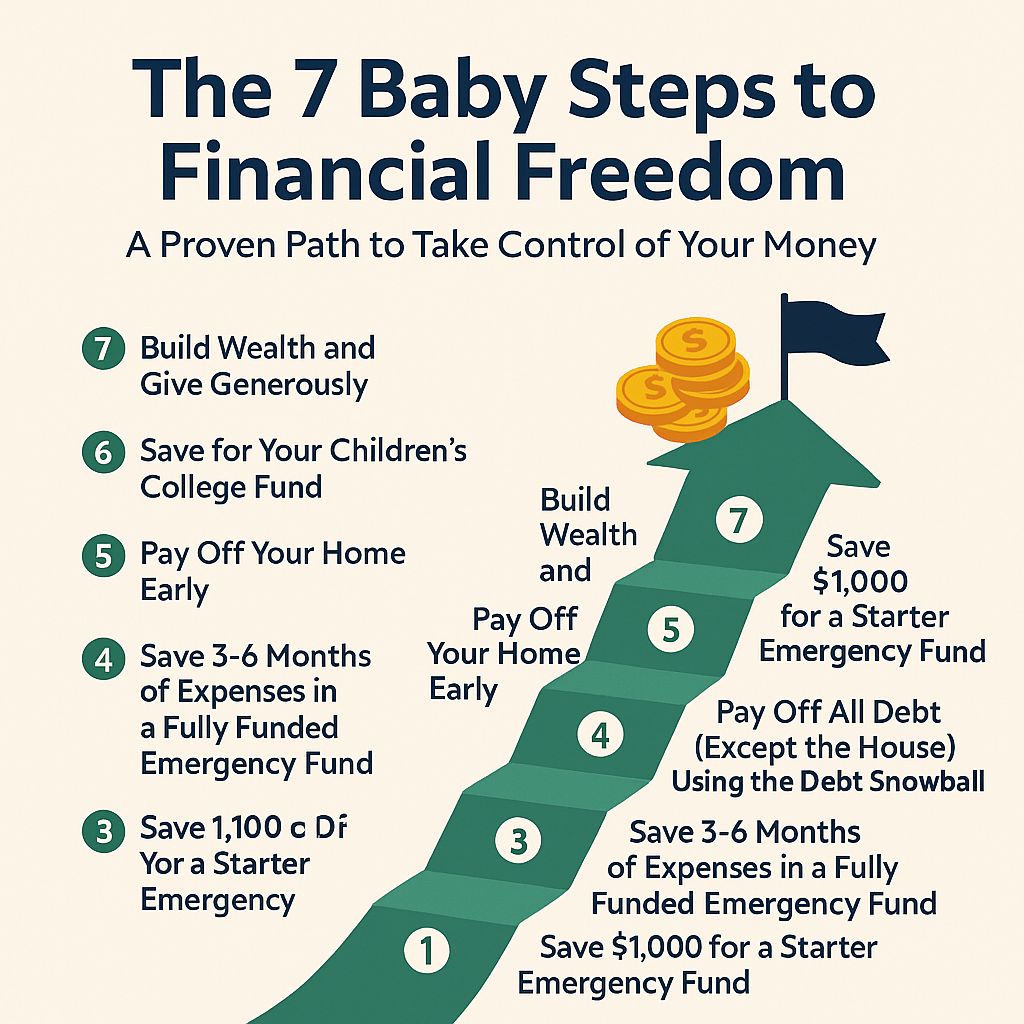
One of the clearest and most effective roadmaps to achieving financial freedom is Dave Ramsey’s 7 Baby Steps. These steps are simple, but not easy. They demand discipline, intentionality, and a mindset shift. But they have helped millions, and after watching the video, it is clear why they work: not just mathematically, but behaviorally.
Here is how they unfold:
Step 1: Save UGX 3.5 million (~$1,000) for a Starter Emergency Fund
Before focusing on paying off debt, your first goal should be setting aside a modest emergency fund. This cushion protects you from everyday surprises like a car breakdown or sudden medical expense—without turning to mobile loans or overdrafts. For liquidity and ease of access, consider keeping this emergency fund in a unit trust (unit fund) rather than a traditional bank savings account.
Unlike banks that typically offer very low interest rates on savings accounts, unit trusts invest your money in a diversified portfolio, potentially yielding better returns. They also maintain relatively quick access to your money. I personally recommend UAP Old Mutual Unit Trust—it is what I use. They issue regular statements and offer prompt withdrawals, making it an excellent option for an emergency fund. For more information, visit: https://www.uapoldmutual.co.ug
Other reputable unit trust providers in Uganda include:
- Sanlam Investments East Africa: https://invest-ug.sanlameastafrica.com
- Xeno Investment Management : https://myxeno.com
- ICEA Lion Asset Management: https://icealion.co.ug
- Britam Asset Managers: https://ug.britam.com
Kindly check them out and choose one that aligns with your investment goals and customer service expectations.
Step 2: Pay Off All Debt (Except Your Mortgage) Using the Debt Snowball Method
List all your non-mortgage debts—such as salary loans, mobile money loans (e.g., Airtel Money or MTN MoMo advances), SACCO loans, or credit card balances—from smallest to largest. Focus all your extra money on clearing the smallest debt first while making minimum payments on the rest. Each win gives you momentum and builds your confidence. In Uganda, where access to quick but costly credit is widespread, this step is crucial for breaking the debt cycle.
Step 3: Save 3–6 Months of Expenses in a Fully Funded Emergency Fund
Once you are debt-free (except your house), it is time to beef up your emergency fund. This fund should cover basic living expenses like rent, food, transport, and utilities for at least three months. If you lose your job or face a major crisis, you will have time and breathing space to recover without panic. Again, UAP Old Mutual or other low-risk money market accounts are excellent places to store this fund with access and security in mind.
Step 4: Invest 15% of Your Household Income Toward Retirement
With your safety net in place, shift your focus to long-term wealth. In Uganda, one of the best tools available is NSSF (National Social Security Fund). If you are self-employed or in the informal sector, consider making voluntary NSSF contributions—you can register easily through the NSSF Go App or visit their branches. You can also visit their website: https://www.nssfug.org for more information. In addition, explore treasury bills and bonds offered by the Bank of Uganda as stable, passive-income investment options. These instruments are secure and can yield higher returns than savings accounts over time.
Step 5: Save for Your Children’s Education
If you have children, start setting aside money for their school fees or university education. Open a dedicated education fund—many insurance companies in Uganda offer education policies with guaranteed payouts and optional life coverage. Alternatively, earmark some of your investments in treasury bonds to mature in time with your child’s academic milestones.
Step 6: Pay Off Your Home Early
Once your debts are clear, emergency fund set, and retirement and education plans are in motion, focus on eliminating your mortgage. In Uganda, this could be a loan from Housing Finance Bank or another institution. Paying off your home early saves millions in interest and gives you true financial freedom—no more rent or housing stress.
Step 7: Build Wealth and Give Generously
With no debt, a fully funded emergency reserve, ongoing investments, and a paid-off home, you are in a position to live and give with purpose. Support your church, community projects, or family in need. Generosity becomes a joy when your finances are in order—and it has a multiplying effect in society.
In conclusion, financial freedom is not just about money—it is about peace, control, and confidence. Dave Ramsey’s 7 Baby Steps offer a straightforward, actionable plan for anyone ready to take control of their finances and their future. It’s not always easy, but it is simple. And best of all—it works.
As Dave often says: “Live like no one else now, so later you can live and give like no one else.”
For more information on investments:
Joseph Areu- 0778171804
Referral: Brownie Ebal
Watch the video here to start your journey:https://youtu.be/lGHGzU3CtZg?si=RpgQIGfnCsfyVado

About Me
I love reading, writing, attending events, learning, leadership and meeting new people.
I hold a Masters Degree in International Law and I am passionate about life.
If you are interested in learning more about self discovery and becoming the best version of yourself.
Follow Me On
Subscribe To My Newsletter
Subscribe for new stories and exclusive content.

