
Hello, I am Advocate Brownie Ebal
I am a legal Practitioner, Venture Capitalist and Philanthropist.
Welcome to my site.
I love life, travelling, food, beauty, the law, leadership and meeting people from diverse backgrounds. I hope to inspire each one of you with my various articles as I share from my experiences around our beautiful world.
I live in Kampala, Uganda.



-
Article 61: Elevation is Not a Solo Act.

Written by Adv. Brownie Ebal
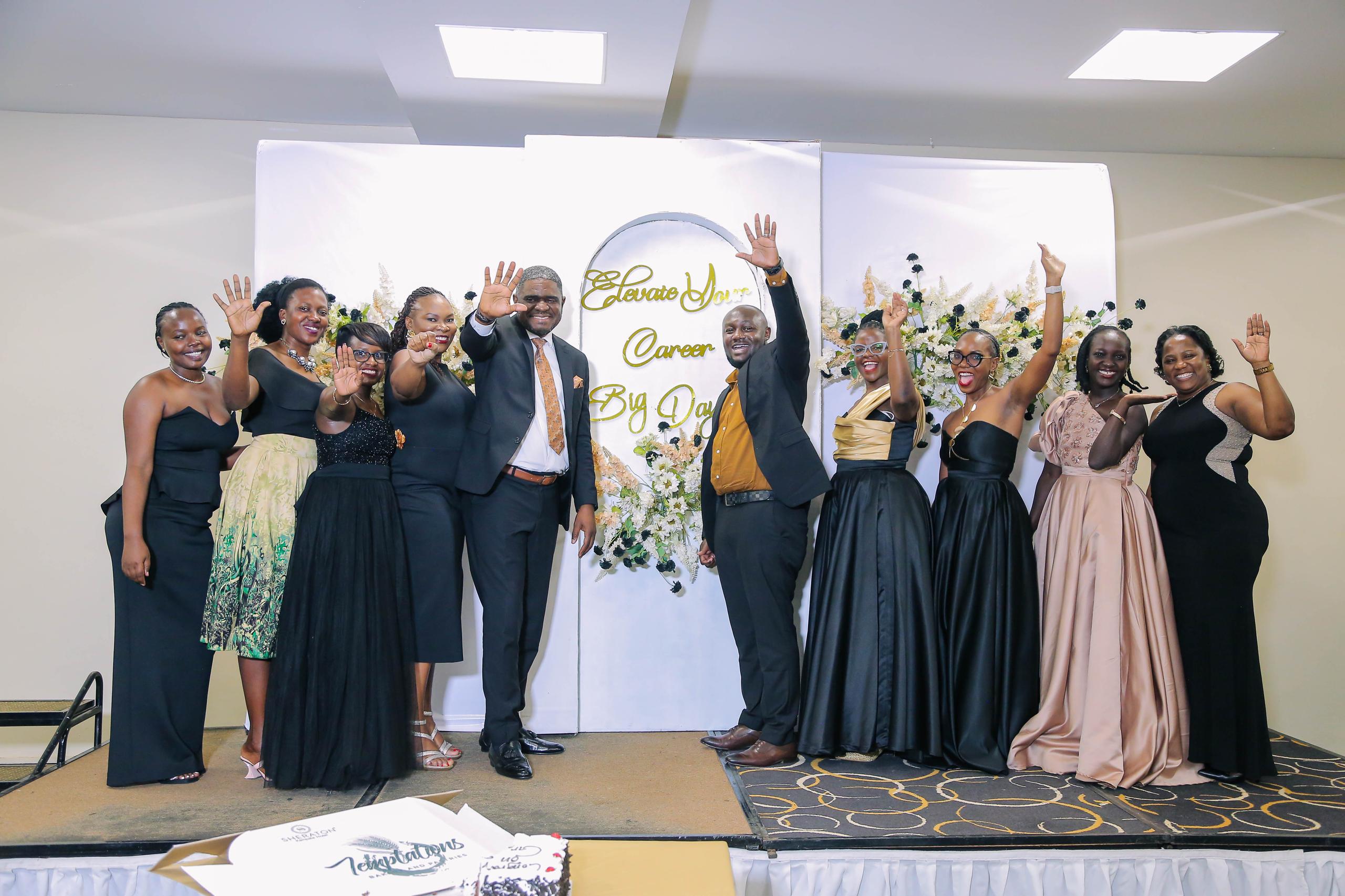
On 8th August, I had the honor of graduating from the Elevate Your Career Leadership Programme under the guidance of our coach, Pepe Minambo.
This milestone was not just a personal achievement, it was a profound reminder that elevation is never a solo act. No one rises in isolation. To move upward, we need four sets of people walking beside us: a Coach, Sponsors and Mentors, Pace Setters, and Mentees.
For me, my coach has been Pepe himself—steady, insightful, and relentless in challenging me to grow. My sponsors and mentors have been my pillars: Daddy, Mummy, Aunty Spe, and Aunty Pamela, whose wisdom and belief continue to shape me. My pace setters are the friends who run the race with me—Samantha, Andrew, Denis, and David—reminding me that iron sharpens iron. And my mentees—Lillian, Patience, and Lorraine, who urge me to pass on what I have learned, ensuring that my growth multiplies in others. To all of you, thank you for walking this journey with me.
Through Elevate, I have come to understand that career growth is not simply about collecting titles. It is about building a system for growth.
- I am challenged to step into the boardroom, not just as a participant, but as Chair of Amari Voyages and Vice Chair of Young Lawyers at EALS.
- I have metamorphosed from being an attendee at conferences to standing on stage as a speaker at the EALS Regional Conference.
- I am reminded to remain a student, embracing learning through the Journey to the Boardroom.
- And I am called to give back through service—as a Rotarian and beyond.
From Coach Pepe, I carry timeless lessons: have the power to begin, continue, and finish. Always start with the end in mind, and be willing to seek out the knowledge you need.
From guest speaker Mona Ssebuliba, I embraced words that continue to echo: Does your family have a strategic plan? Become the standard, because excellence is non-negotiable. Remember, you get what you negotiate for, and you must have the courage to walk away.
Growth, I have learned, is built on three essentials:
- Competence—performance currency. Deliver results, not excuses.
- Character—self-awareness, humility, and the courage to rethink. Adam Grant’s-Think Again reminds us that growth often lies in unlearning and relearning.
- Chemistry—emotional intelligence. Wanting the best for others and focusing not on blame but on what can be improved.
And above all, true growth is holistic. It is not confined to career achievements but spans five capitals: spiritual, physical, intellectual, relational, and financial, as emphasized in Oikonomics by Mike Breen.
I was also reminded, through Steve Robinson’s Covert Cows & Chick-fil-A, of the power of thinking differently—challenging the ordinary to create extraordinary impact.
So, as I graduate from Elevate, my commitment is clear:
- To become the standard, not the exception.
- To keep climbing the levels of leadership with courage and grace.
- To give back, because leadership is stewardship.
- And most importantly, to help others rise as I rise.
Because elevation is not a solo act—it is a shared ascent.



-
Article 60: Mergers and Acquisitions in East Africa: Emerging Trends, Regional Dynamics and Global Influences.

On the 19th August 2025, the East African Law Society hosted a webinar on Mergers and Acquisitions (M&A) in East Africa: Emerging Trends, Regional Dynamics, and Global Influences. The event convened top legal practitioners, corporate leaders, and regulators to unpack the opportunities, risks, and future of deal-making in the region.
Mr. Steven Tumwesigye, Managing Partner at TASLAF Advocates, set the pace by highlighting how startups and mid-sized enterprises are using M&A as a tool for consolidation and growth. He pointed to healthcare deals such as MyDawa’s acquisition of Guardian Health and Rocket Health’s expansion into telemedicine as signs of consolidation in a sector driven by digital
penetration. He noted that consolidation in agriculture, retail, and ICT is increasingly attractive to investors, provided companies maintain clean books, strong contracts, and formal governance. He emphasized that lawyers have a central role in due diligence, structuring, tax advisory, and
harmonizing employment obligations, stressing that partnerships with innovation hubs and accelerators help prepare young businesses to be merger-ready.
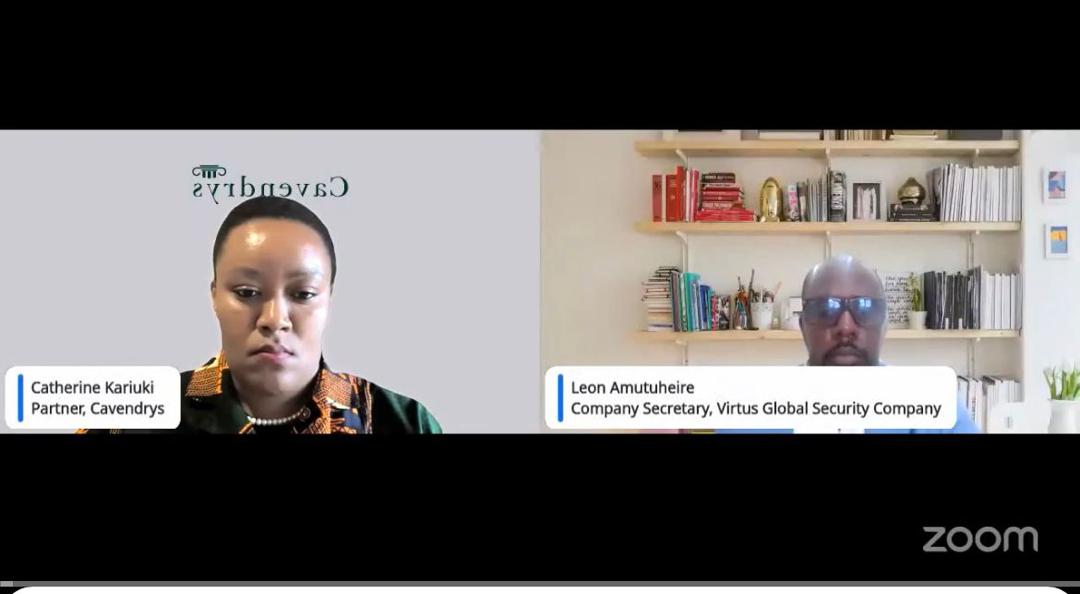
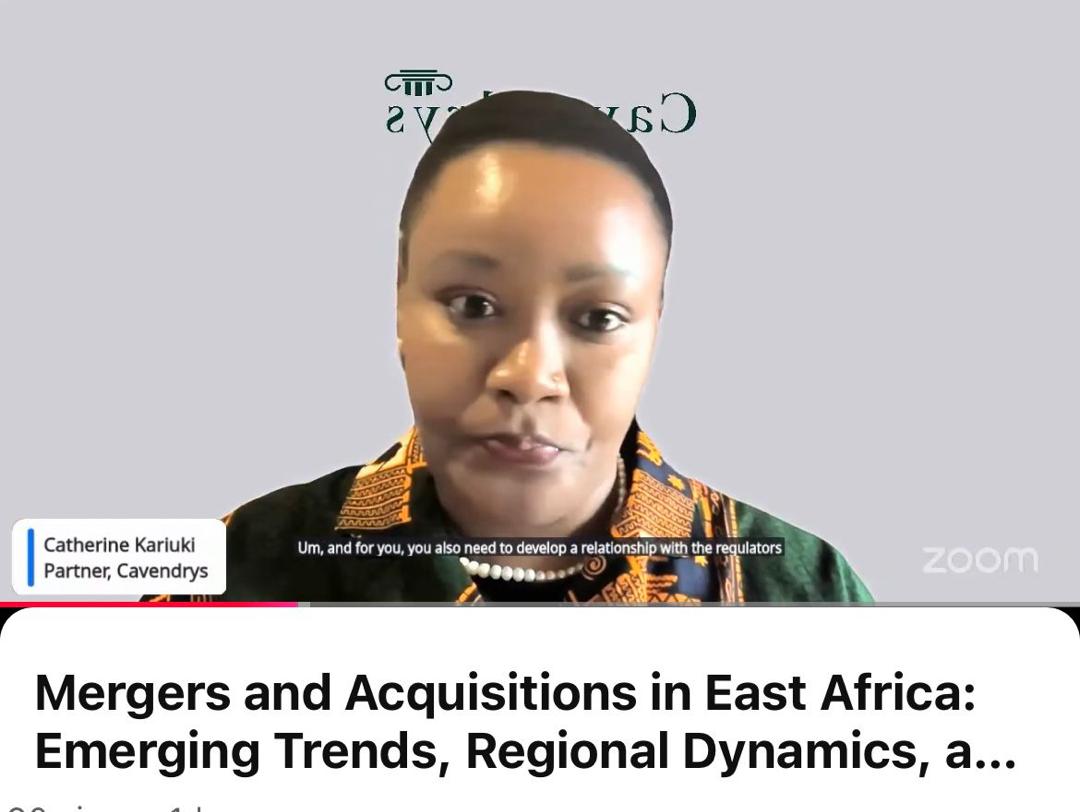
Ms. Catherine Kariuki, Partner at Cavendrys Advocates, expanded on the regional fintech and technology ecosystem, which she described as one of East Africa’s most vibrant. She recalled Nigeria’s Co-Creation Hub acquiring Kenya’s iHub as a strategic move that combined talent, intellectual property, and community. Catherine explained that most fintech acquisitions are
motivated by the need to acquire existing licenses and infrastructure rather than building from scratch, citing IFC’s $100 million investment into Raxio data centers and KCB’s acquisition of RiverBank Solutions as clear signals of investor preference. She stressed that lawyers must anticipate multi-layered approvals, from central banks to competition regulators, and integrate
these into deal timelines. Policy-sensitive examples, such as the challenges surrounding Telkom Kenya’s ownership changes, underscored her call for careful structuring, robust documentation, and clarity on regulatory obligations.
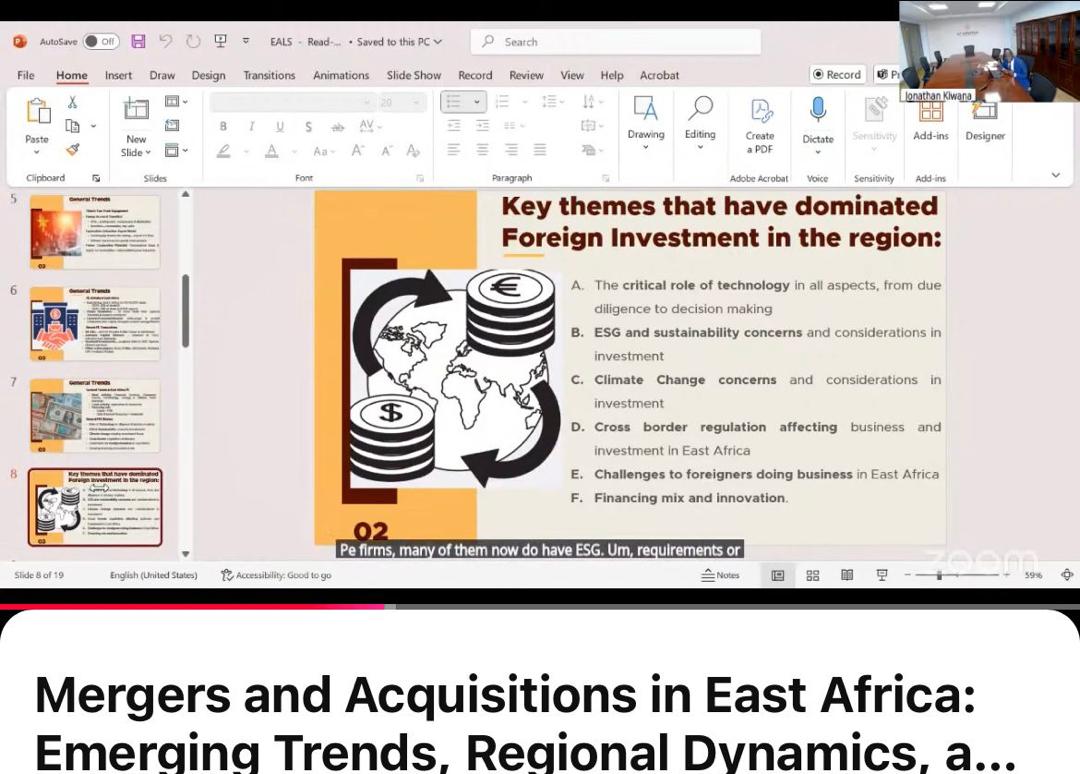
Mr. Jonathan, Senior Associate at AF Mpanga Advocates, presented insights on global capital inflows and their influence on East African M&A. He contrasted European private equity firms’ strong presence in consumer goods, renewable energy, and financial services with China’s focus
on infrastructure and extractives. Notable examples included Access Bank’s expansion across East Africa and Equity Bank’s move into Congo and Rwanda. Jonathan highlighted that technology is reshaping M&A transactions through AI-enabled contract reviews, digital data rooms, and ESG-driven due diligence. He emphasized that investors now assess climate-conscious and socially responsible practices as part of deal viability. For lawyers, he underlined the importance of continuous upskilling, building approvals calendars to navigate cross-border regulations, and mastering project management to coordinate multi-advisory teams.
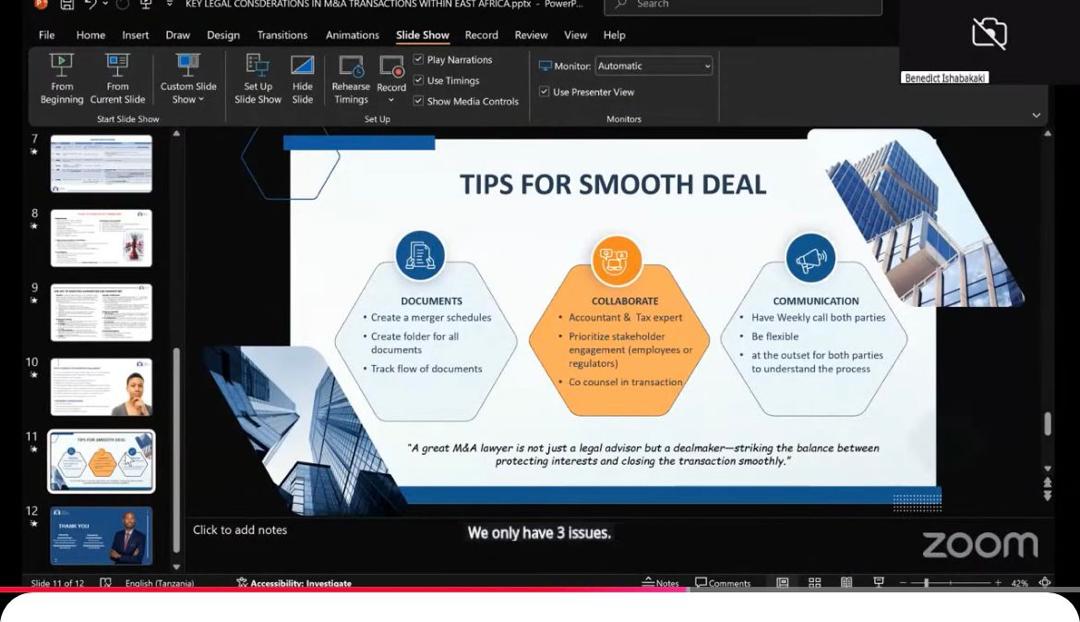
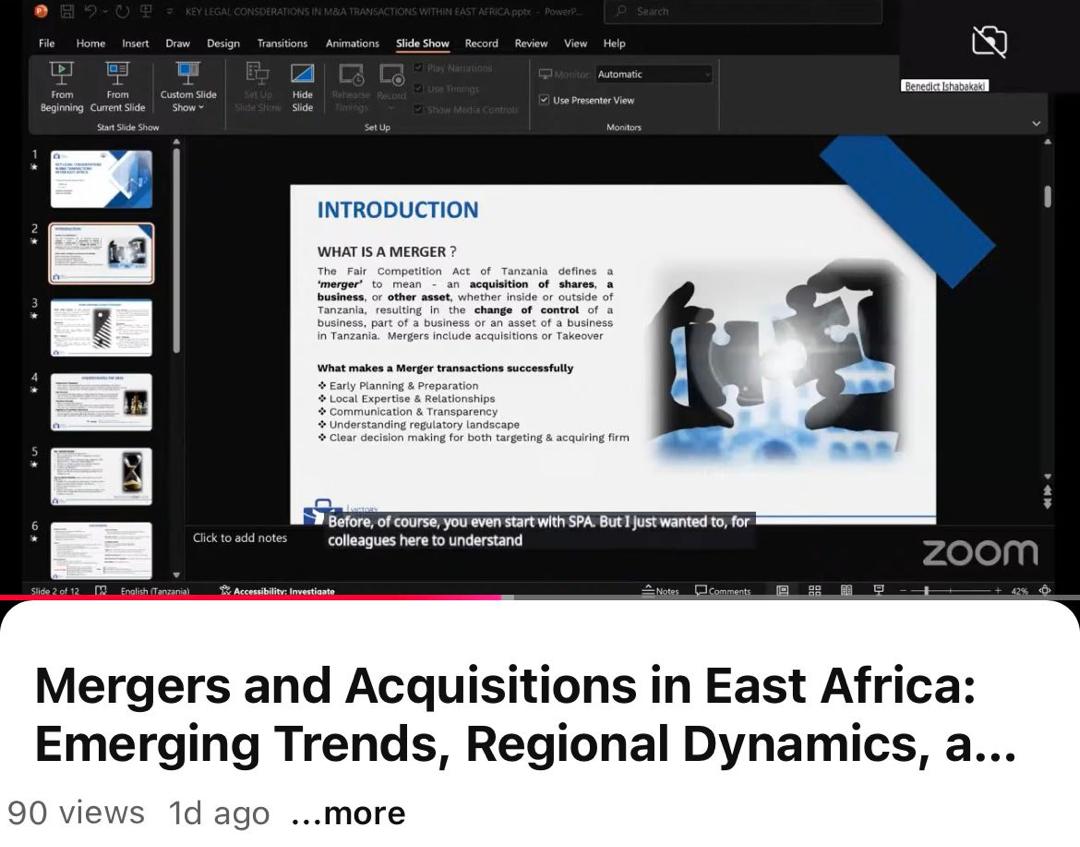
Mr. Benedict Ishabakaki, Executive Partner at Victory Attorneys & Consultants, delivered a practical session on deal structuring, where he emphasized that successful M&A transactions depend on three key tips: thorough documentation and record-keeping, strong collaboration with
other professionals such as accountants and tax experts, and consistent communication among all parties involved. He distinguished between share purchase agreements and asset purchase agreements, noting that while share deals provide continuity and brand leverage, they also
transfer liabilities. Drawing on experience in banking, gaming, and retail acquisitions, he advised treating M&A transactions as projects that require multidisciplinary collaboration with tax, labor, corporate, and litigation experts. He cautioned against insufficient due diligence, overlooking tax
implications, and weak indemnity clauses, which can expose clients and counsel to significant risks. Benedict stressed that rather than discouraging clients from investing in weak compliant companies, lawyers should craft strong warranties, indemnities, and conditional completion mechanisms to safeguard investors.Ultimately, the discussions showed that M&A in East Africa is a powerful tool for growth and resilience, and its success will depend on innovation, collaboration, and strong legal and regulatory frameworks.
-
Article 59: It is Not the Tools. It is the Mindset.

Mindset is the internal lens through which we view the world — our thoughts, beliefs, and attitudes that shape how we interpret experiences and make decisions. It is not just about positive thinking or blind optimism; it is about the posture of our hearts and minds in the face of life’s challenges. While tools and resources matter, what ultimately determines how far we go in life is the way we think. The right mindset can turn setbacks into stepping stones and uncertainty into opportunity.
This truth is at the heart of a powerful message by Joel Osteen, a globally recognized pastor, speaker, and author. He leads Lakewood Church in Houston, Texas — one of the largest congregations in the world — and is known for his uplifting teachings on hope, purpose, and the redemptive power of God. In his sermon “Finding the Lost You,” Joel speaks to something many of us can relate to: the feeling that we have lost touch with our best self — not because of lack, but because of life.
We often assume that people who succeed have better tools, better connections, or better opportunities. But more often than not, it is not the situation or the resources that make the difference — it is the mindset.
Life has a way of shifting us. There was a time we were hopeful, confident, and full of dreams. Then came disappointments — maybe a job you did not get, a business that never picked up, a relationship that ended unexpectedly. You make a few mistakes, lose a little faith, and little by little, you step back from who you once were. But here is the truth: the person you were — the passionate, joyful, daring version of you — still exists. You have not lost them. Maybe you have just lost connection with the mindset that brought them to life.
It is easy to blame the boda business, the small shop that did not grow, or the savings group that fell apart. But two people can be in the same exact setting and come out with two very different outcomes. Why? Because of how they choose to think, to see, and to act. One sees a wall. The other sees a stepping stone. One is driven by fear. The other is fueled by belief.
When we experience failure, we tend to go into hiding. Not just physically, but mentally and emotionally. We disengage. We stop showing up fully — at work, in our families, even in our friendships. We let fear masquerade as wisdom. But hiding never brings healing. Isolation might protect us from more hurt, but it also shuts us off from joy, connection, and purpose.
Mindset is not about ignoring pain or pretending everything is fine. It is about choosing how we respond. It is deciding not to stay in the ditch, even if we drove ourselves there. Like a car that obeys the direction of its driver, life often follows the path of our thoughts. If we keep steering toward doubt, discouragement, and defeat, we will keep finding ourselves stuck.
The good news? You can turn the wheel. You can shift your perspective. You can choose to believe again — in your purpose, in your growth, and in the possibility of something better.
So maybe today is the day to ask: Where are you? Not just physically, but mentally. Emotionally. Spiritually. Where is the version of you that once dared to try, to hope, to build, to love? That version of you is not gone — it is just waiting for you to change the lens.
Mindset is everything. It is the soil from which all things grow. You do not need a new life. You need a new lens. And from there, everything can change. The words of Joel Osteen remind us that our best self is not buried beneath failure — it is simply waiting for the right mindset to bring it back to life. Take a moment to reflect, recalibrate, and reconnect. Sometimes the greatest transformation begins not with better tools, but with a better thought.
For more information, watch full video: https://youtu.be/PCRFr20Aqqo
-
Article 58: Leading Through Change: Reimagining Legal Leadership in a Multigenerational Profession
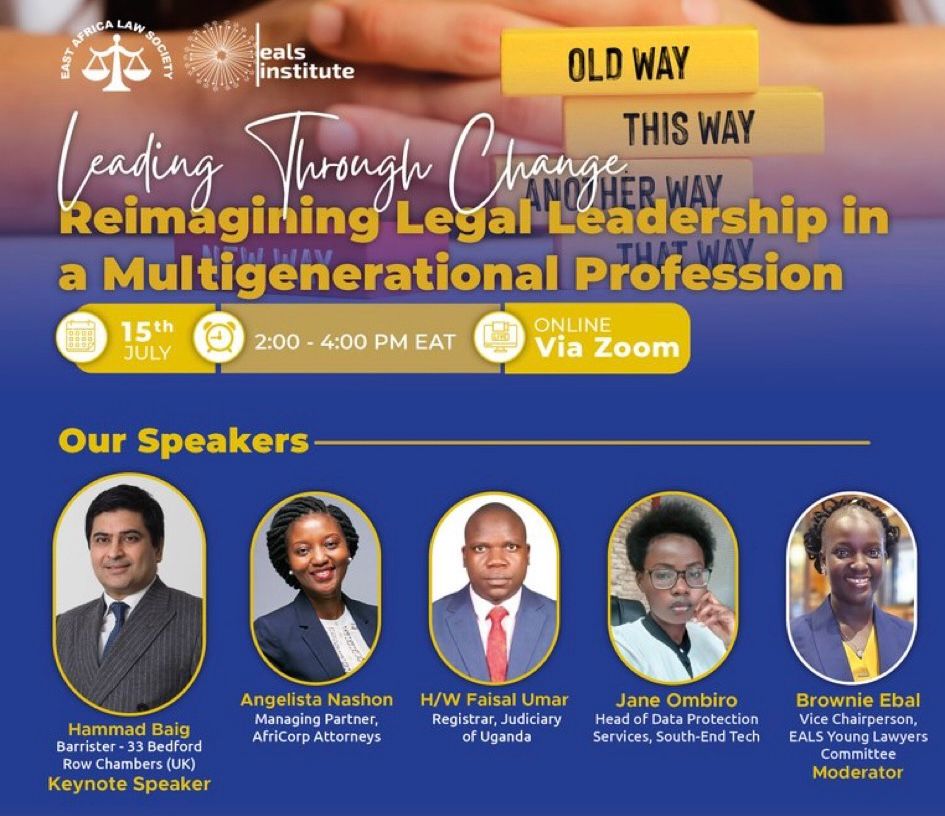
On 15th July, the East Africa Law Society (EALS) hosted a regional webinar titled “Leading Through Change: Reimagining Legal Leadership in a Multigenerational Profession.” The session brought together a dynamic blend of seasoned legal minds, judicial officers, and young innovators across East Africa and the UK. The conversation explored how different generations in the legal profession can lead together in a rapidly evolving world shaped by technology, shifting work ethics, and global complexity.
As moderator of the session, I had the honor of introducing a distinguished panel and steering the conversation toward practical reflections and forward-thinking strategies. The webinar was not only timely but necessary, as it responded to the urgent need to bridge generational divides and prepare the legal profession for the future through innovation, inclusion, and mentorship.
Mr. Hammad Baig, barrister at 33 Bedford Row Chambers in the UK, delivered the keynote address under the theme “Leading Across Generations and Borders: The Future of Legal Leadership and the Rule of Law.” Drawing on over a decade of international litigation and arbitration experience, he offered a compelling view of legal leadership grounded in agility, purpose, and integrity. Hammad underscored the increasing complexity of the legal world—where different generations now work side by side in law firms, chambers, and institutions. He painted a vivid picture of a profession being reshaped by globalization, technological disruption, and heightened expectations for social responsibility. Through anecdotes drawn from high-stakes cross-border disputes, he emphasized that leadership today requires more than legal expertise—it demands cultural fluency, digital literacy, and emotional intelligence.
One of his most powerful examples involved a senior partner, himself, and a junior associate collaborating on a case involving 180,000 archived documents. It was the junior’s AI expertise and the senior partner’s intuition that cracked the case—a perfect example of intergenerational synergy. He challenged the profession to move beyond stereotypes and instead focus on shared aspirations like meaningful work, respect, and belonging. He strongly advocated for reverse mentorship—where younger legal professionals support senior colleagues in navigating new tools, platforms, and communication norms. Hammed’s message was clear: the future of legal leadership lies in our ability to lead collaboratively across age, borders, and belief systems, while remaining uncompromising on the rule of law. His charge to the profession was to be guardians of that rule, agile in change, purposeful in vision, and unshakable in integrity.
Following this, His Worship Faisal Umar, Deputy Registrar at the High Court of Uganda, built upon the keynote by focusing on mentorship, adaptability, and the skills needed to thrive in a diverse legal workforce. He unpacked the generational landscape, from Baby Boomers who remain active in leadership and private practice, to Gen X professionals occupying senior roles, to Millennials and Gen Z who are rising fast with fresh perspectives and digital fluency. He warned against “arrivalism” among younger lawyers, encouraging them to remain teachable and purposeful, while calling on senior lawyers to nurture—not dismiss—the ambition and creativity of emerging professionals.
His Worship highlighted Uganda’s strides in judicial digitization, including the rollout of the Electronic Court Case Management System (ECCMIS), noting similar advances in Kenya, Rwanda, and South Africa. These developments, he argued, demonstrate how legal leadership must evolve with technology. He spoke candidly about how Gen Z professionals consume and produce knowledge differently, often preferring AI tools and digital libraries over traditional textbooks. He stressed the importance of emotional intelligence, urging legal leaders to offer correction without condemnation and mentorship without ego. With Africa’s population now overwhelmingly under 35, he called for intergenerational equity and institutional mechanisms that prepare the next generation without sidelining the wisdom of the current one. He noted that the law is no longer solely defined by its tradition but by its responsiveness to the realities of a changing society—where disputes involve airspace, cryptocurrencies, and transnational commerce, and where client needs demand empathy, contextual understanding, and cross-cultural agility.
Advocate Angelista Nashon, Managing Partner at Africa Attorneys in Tanzania, delivered a practical and refreshing take on how law firms and legal institutions can foster cross-generational collaboration. Drawing from her own leadership experience managing a team that includes Gen X, Millennials, and Gen Z, she emphasized that the first step to bridging generational gaps is understanding what drives each group. She offered a breakdown: Baby Boomers are structured, value face-to-face engagement, and prize job security. Gen X are pragmatic and experienced but may be slower to adapt to fluid workspaces. Millennials are purpose-driven, collaborative, and tech-adaptive. Gen Z are fast-paced, digital-first, and thrive in flexibility.
In her firm, Angelista has institutionalized a “Teach Me Something New Today” session, where even the youngest intern has the opportunity to teach a senior lawyer something practical—be it an AI tool or a new way of doing things. This, she explained, breaks hierarchy, builds mutual respect, and unlocks learning in both directions. She also addressed common frustrations, such as younger lawyers being misinterpreted as disrespectful when trying to assert themselves. Her advice: learn who you’re talking to and adapt your communication accordingly. She acknowledged that each generation brings something essential to the table, and the key to effective leadership is fostering inclusivity, workplace flexibility, and cross-generational mentorship.
Rather than resist change, Angelista argued, the legal profession must embrace it—recognizing that digital tools, evolving client expectations, and social media engagement are not threats to tradition but opportunities for relevance. She concluded with a call to celebrate generational diversity and build cultures where every voice—whether seasoned or new—is heard, valued, and empowered to contribute.
Throughout the session, participants from across East Africa shared reflections, questions, and appreciation for the insights offered. The conversation made it clear that the future of legal leadership will not be defined by age or rank, but by collaboration, cultural intelligence, and ethical conviction.
By the end of the two-hour dialogue, the collective message was unmistakable: the legal profession in East Africa must lead through change—not by clinging to outdated models, but by reimagining leadership through mentorship, inclusivity, agility, and shared purpose. As professionals, our call is to build bridges, not silos—to prepare not just for the profession as it is, but for the world as it is becoming.
For more information, please watch full video: https://www.youtube.com/live/1DjR1E-On2c
-
Article 57: Elevate: From Surface to Substance.

By Brownie Ebal.
I joined the Elevate Class expecting leadership training. What I did not anticipate was how deeply it would transform me—from the inside out. I came in ambitious and driven, but I left with clarity, purpose, and a sharper filter for what truly matters.
From Doing to Becoming
As a high-capacity, multi-talented individual, I was always on the move. But Elevate taught me that growth does not come from doing more—it comes from going deeper. I began to reflect on who I am, what I value, and how I show up in the world. It became less about performing and more about becoming. I learned that elevation requires presence, not just productivity.
The Discipline of Visibility
One of the most surprising lessons was how essential visibility is to growth. Not the superficial kind, but strategic visibility. Coach Pepe reminded us: “Do not be a spectator on LinkedIn.” Share your learning. Tell your story. Let people know you are evolving. If no one sees your value, it becomes difficult for the right doors to open. I learned to write and share insights at least three times a week—translating lessons from videos, books, and our sessions into teachable reflections. This was not just about building a following—it was about building influence.
The Power of Repetition
Initially, repetition felt monotonous—until Coach Pepe said: “Repetition is not boring. It is depth.” That mindset shift changed everything. Mastery is not built on novelty, but consistency. Every repeated principle became a brick in the foundation of who I am becoming. Coaching, as we came to understand, is not about inspiration but integration—making learning part of your rhythm until it becomes identity.
Letting Go to Step into Legacy
One of my biggest turning points was stepping down as CEO of Amari Voyages to focus on strategy, governance, and long-term impact. It was a hard decision, but the right one. I appointed Victoria Nakiyimba as CEO and embraced a Chair role that allows me to build systems, mentor intentionally, and lead strategically. Through this, I finally began living out what we learned: legacy is built when you release the need to control everything and instead focus on what truly multiplies your impact.
Trust, Strategy, and Silent Power
Elevate reminded me that trust is not built in words—it is built in consistent action. I have also learned to move with strategic silence. Not every idea needs a spotlight; some things thrive in stillness. I now speak less, listen more, and act with clarity. In a world that rewards noise, I have come to value depth, discernment, and deliberate power. Silent influence, I discovered, can be louder than performance.
Voice, Visibility, and Mentorship
Today, I mentor with intention. I support young professionals more fully and show up with purpose. I have been appointed Vice Chairperson of the Young Lawyers under the East African Law Society and am increasingly present in regional legal conversations. But I do not speak for attention—I speak for alignment. To share what uplifts others, to be visible in ways that are meaningful, not performative.
Walking the Talk One of my long-desired goals was to join Rotary. Through Elevate, I finally acted on it. I also got accepted into Journey to the Boardroom, a highly selective leadership program. These milestones were not just about achievement. They were signals of alignment—evidence that I was now acting in clarity, not just chasing motion.
Learning to Learn Differently
Our sessions were structured around in-person coaching, online engagements, books, videos, journaling, and reflection. We were taught to curate content, follow thought leaders, and create learning portfolios—even legal ones. Coach Pepe emphasized that learning does not end in a classroom. It continues through introspection, feedback, and courage. He introduced us to the “career allies” we all need: mentors, coaches, sponsors, pace-setters—and how to position ourselves for them to find us.
We also explored the seven places where opportunity hides: in reflection, curiosity, relationships, information, urgent needs, problems, and bold decisions. This reshaped how I approach my work and how I identify growth windows—especially in fast-evolving fields like law, ESG, and governance.
The Brutal Truths of Career Growth
Elevate did not shy away from hard truths. We tackled the brutal rules of career advancement: perception beats performance, real decisions happen behind closed doors, silence can be a strategy, and politics are unavoidable. It was confronting—but it was necessary. Understanding these dynamics has made me more aware, more strategic, and less emotionally invested in illusions.
Building Influence and Brand
Another powerful lesson was that influence is intentional. We dove into persuasion, negotiation, branding, and executive presence. I refined my fees, reshaped my communication style, and began to conduct brand audits. Every touchpoint—how I write, speak, show up—was reassessed. I added affiliations like the International Water Association (IWA) to my National Water and Sewerage Corporation (NWSC) posts, not for prestige, but for credibility. I began to build systems for teaching others, creating apprenticeships, and documenting my knowledge.
Purpose, Power, and Growth
I learned that the most critical career question is not “What do I want to do?”—but “What am I becoming?” We explored the hedgehog concept, the mirror of self-knowledge, and how to map out economic engines based on strengths and service. I confronted trade-offs and distractions. I reorganized my calendar, restructured my goals, and began to lead my life—not just my schedule.
What Elevate Gave Me:
Depth over distraction
Strategy over noise
Silence over oversharing
Purpose over performance
Alignment over applause
A Case for the Program
Elevate Your Career is not just a program—it is a pivot point. It demands clarity, sharpens focus, and calls you out of comfort into intentional growth. It does not entertain—it equips. If you are navigating transition, preparing for leadership, or rethinking your professional impact, Elevate offers a mirror, a map, and a method. And for those willing to do the inner work, it delivers lasting transformation.
I Am Not Just Graduating. I am Elevating.
Elevate did not just sharpen my skills. It helped me become. I now lead with clarity, live with intention, and contribute with purpose.
To Coach Pepe Minambo—thank you for demanding depth.
To my Elevate peers—thank you for your stories, laughter, and truth.
To my learning companion and childhood friend, Samantha Karuhanga—thanks for doing life with me. To many more adventures!
To the coaches, mentors, and surrogates—thank you for enabling me to fulfill my potential in your various capacities.
To myself—thank you for saying yes.
I am not just graduating. I am elevating.


About Me
I love reading, writing, attending events, learning, leadership and meeting new people.
I hold a Masters Degree in International Law and I am passionate about life.
If you are interested in learning more about self discovery and becoming the best version of yourself.
Follow Me On
Subscribe To My Newsletter
Subscribe for new stories and exclusive content.

