
Hello, I am Advocate Brownie Ebal
I am a legal Practitioner, Venture Capitalist and Philanthropist.
Welcome to my site.
I love life, travelling, food, beauty, the law, leadership and meeting people from diverse backgrounds. I hope to inspire each one of you with my various articles as I share from my experiences around our beautiful world.
I live in Kampala, Uganda.



-
Article 66: The Power of Words: Mastering Communication for Impact, Confidence, and Connection.

In an age driven by constant interaction online and offline, few skills are as powerful, or as underappreciated, as the ability to communicate with confidence. This truth sits at the heart of a remarkable conversation between motivational speaker and bestselling author Mel Robbins and trial attorney turned viral communicator Jefferson Fisher, featured on the Mel Robbins Podcast.
Fisher, a practicing lawyer with millions of followers across social platforms, has built a reputation for teaching people how to speak with clarity, authority, and empathy, from the front seat of his car, no less. But this is not just another talk about “talking better.” This is about using your words to transform your relationships, your presence, and your life.
“What you say is who you are,” Fisher asserts. “Most people will never experience you beyond the words you speak.” That idea is both empowering and sobering. It means your tone, your intention, and your delivery are not just part of your message—they are your message.
One of the most powerful lessons from this conversation is that good communication is not about saying more—it is about saying what matters, with purpose. Whether dealing with tension in a marriage, navigating awkward family dinners, or facing difficult conversations at work, Fisher encourages a posture of curiosity, not defensiveness. Instead of reacting with “Why did you say that?” he suggests we pause and ask, “What did you hear?” This small shift opens the door to understanding, not argument.
Fisher also challenges the belief that being kind is being weak. In his words, kindness is clarity delivered with respect. You can be honest and direct, while still being compassionate. When delivering tough feedback or navigating conflict, he recommends framing it with affirming language: “I am telling you this because I know you can handle it.” It is a way of honoring the person in front of you while holding the conversation to a higher standard.
More than tactics, though, Fisher invites us to lead with values. He speaks of personal “conversational values” that keep him grounded—guiding every interaction. Values like: if I cannot be a bridge, I will be a lighthouse; if there is room for kindness, I will use it; let my words show who I am, even if they do not know my name. These internal commitments shape not just what we say, but who we become in the process.
Ultimately, this conversation is a reminder that we do not need more noise—we need more intention. The next conversation you have is not just another exchange. It is a mirror of who you are, a seed of your legacy, and a chance to shape the world around you.
For more information, watch the full episode here: https://youtu.be/ZUCB3M_1Qp4
-
Article 65: Are Loans Really Worth It?

On 3rd September 2025, Legacy Hills Investments hosted an X Space under the theme “Are loans really worth it?” The discussion brought together Maria, Chief Manager of Credit at Centenary Bank, and Gitta, a financial analyst, to share their insights on the role of loans in Uganda’s economy and the realities of borrowing.
Maria noted that loans play a critical role in Uganda’s development. She explained that they act as catalysts for financial inclusion, help grow the money supply, and stimulate the economy when invested in productive ventures such as agriculture. Beyond business, loans also empower women and youth, giving them opportunities that might otherwise remain out of reach. On the question of how banks set loan prices, Maria clarified that several parameters are considered, including the Central Bank Rate, the rates at which banks themselves borrow, interest paid on deposits, borrower risk, and the regulatory framework. She urged borrowers to safeguard their credit history as this can give them bargaining power for better terms.
According to her, borrowing makes sense when it has a clear purpose, such as acquiring assets or consolidating debt, since saving alone often takes years. However, it becomes a trap when people take loans for careless spending on things like parties or gadgets, or when they ignore repayment terms and keep borrowing from multiple sources. She advised borrowers to compare offers, negotiate terms, especially the choice between floating and fixed rates—and only commit to what they can manage.
On the issue of defaults, Maria observed that while the national non-performing loan rate is at 4.1%, Centenary Bank maintains a lower figure of 3%. She encouraged borrowers to engage their lenders early, reschedule payments where necessary, and commit even small amounts towards repayment. She also highlighted the wide range of loans available at Centenary, including products tailored for youth and women, mortgages, business loans, SME and corporate loans, agricultural loans, and even green loans for items like solar panels. She cautioned guarantors to remain mindful of their liability and reminded borrowers that communication and discipline are key to managing debt successfully.
Gitta, on the other hand, placed Uganda’s loan culture in a broader perspective. He pointed out that while developed countries have effectively used loans to spur growth, Ugandans often find themselves tied to borrowing at unfavorable rates. Commenting on interest rates, he referenced the Bank of Uganda’s benchmark of 9.75% as of August 2025, noting its influence on what consumers face in the market. He emphasized that although banks try various measures before resorting to property auctions, borrowers must understand the risks of mismanaging credit. To build resilience, he suggested that individuals occasionally borrow small amounts and repay them faithfully to create a strong credit rating for future use. He strongly discouraged borrowing for liabilities and instead encouraged Ugandans to consider investing in financial institutions themselves, as these institutions remain very profitable.
The conversation wrapped up with a reminder that loans can be both good and bad, depending on how they are handled. Borrowing with purpose, maintaining good credit history, and fostering open communication with lenders emerged as the key takeaways. While Gitta stressed the importance of investing wisely, Maria concluded by affirming that borrowing is not inherently harmful but should be approached cautiously, with clear goals and trusted financial partners.
-
Article 64: Breaking Free from Debt: Building Multiple Streams of Income.

On 20th September, financial educator Benjamin Mukasa led an insightful Zoom session on one of the most pressing topics today: debt. Far from being just a burden, debt was unpacked as a double-edged tool, capable of building wealth if managed wisely, but equally capable of trapping individuals in financial bondage if misused.
Benjamin began by grounding the discussion in the basics: what is debt? At its core, it is simply money borrowed today against future income. But whether this borrowed money turns into opportunity or stress depends entirely on how it is used. Good debt, he explained, is channeled into assets or investments that generate income or appreciate in value—education, business loans, or mortgages. Bad debt, on the other hand, funds consumption and liabilities, like borrowing for luxury cars, expensive weddings, or the latest gadgets.
He painted a vivid picture of the debt spiral: overspending leads to borrowing, which leads to more borrowing, and soon, stress and financial pressure become a way of life. Breaking free requires discipline and strategy. Two proven approaches were outlined: the Snowball Method (clearing smaller debts first for motivation) and the Avalanche Method (tackling the highest-interest debts to save money in the long run).
The conversation then broadened to breaking free from debt and creating financial resilience. Participants were encouraged to:
- Audit spending and track every shilling to avoid “small leaks” that drain resources.
- Negotiate wherever possible—from school fees to loan interest rates.
- Diversify income streams by turning hidden skills into cash flow opportunities, whether baking, tutoring, or bookkeeping.
A critical reflection also came up: Is it valid to say that it’s easier to build wealth with debt than through saving? Benjamin explained that the statement carries much weight. With debt, one can take action earlier—such as starting a business today instead of waiting years to save up. Debt also adds urgency: because repayment is mandatory, people tend to put in more energy and focus to ensure success. In contrast, savings come with less pressure, which can sometimes lead to slower execution. Yet, he cautioned, debt only works when used responsibly. Mismanaging it—like diverting a loan into personal expenses—can turn it into a trap.
The session closed with a powerful reminder: “Debt is not the end of your story. It is simply a chapter. And chapters can change. What matters are the choices you make from this point forward.”
-
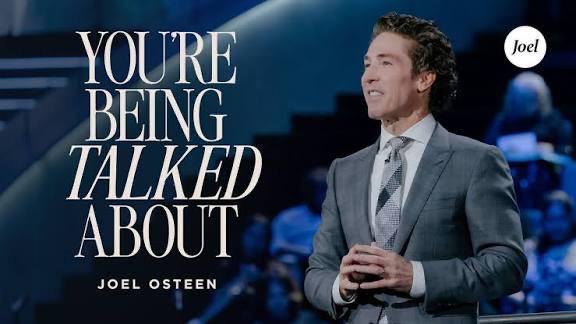
Article 63: You’re Being Talked About – A Message of Favor and Divine Timing
There are seasons in life when it feels like nothing is moving. You have put in the work, prayed the prayers, stayed consistent, but still—no promotion, no opportunity, no breakthrough. Maybe you are in a job where your efforts go unnoticed. You run a small business that has not taken off. Or you are quietly trusting God for a spouse, a child, or healing. Life feels stuck, and worse still, you cannot see any open doors.
That is the encouragement from Pastor Joel Osteen, the world-renowned leader of Lakewood Church in Houston, Texas—one of the largest congregations in the world. He is known globally for his uplifting messages of hope, purpose, and divine favor.
In his sermon titled “You’re Being Talked About,” Joel reminds us of something deeply powerful: God is talking about you. Behind the scenes, in places you may never step foot, God is arranging conversations about your life—conversations of favor, provision, and purpose.
God does not always work through dramatic miracles or loud announcements. Sometimes, He whispers into the hearts of others—people you have never met, bosses you have never spoken to, strangers with the power to change your life. He nudges them to bless you, open a door for you, or give you an opportunity. And you may never even know they were acting under divine instruction.
Think about it. How often have you heard someone say, “I don’t know why, but I just felt I should help you?” That is not coincidence. That is God speaking.
The Bible gives us a beautiful example of this in the book of Ruth, chapters 1–4. Ruth was a young Moabite woman who lost her husband at a young age. Her mother-in-law, Naomi, also became a widow. Together, they returned to Bethlehem, broken and unsure of what the future held. Ruth had no status, no wealth, no support—just her character and her faithfulness.
Determined to survive, she went out to the fields to gather leftover grain behind the harvesters. It was a hard, humble job—like digging through leftovers at the market or looking for scraps to feed your children. But she kept at it. She did not complain. She kept her spirit right.
Then something shifted.
In Ruth 2:15, Boaz—the wealthy landowner whose field Ruth happened to be working in—told his men, “Let her glean even among the sheaves, and do not reproach her.” In fact, he instructed them to purposely drop bundles of grain for her to pick. Ruth had no idea this conversation was happening. All she knew was that favor found her—suddenly, abundantly, and without warning.
She went from surviving to thriving. That one divine connection led not only to provision but to marriage, restoration, and a place in the lineage of King David and even Jesus Christ Himself.
God had been talking about her.
That is the heart of Joel Osteen’s message. You may feel hidden or forgotten, but God sees you. He knows when to send the right person, bring the right opportunity, or create a turnaround you never imagined.
We often think of people talking about us in a negative way—gossip, criticism, judgment. But today, be encouraged: God is having conversations about you for your good. He is putting your name on hearts. He is stirring up generosity, favor, and help in places you have not even applied or visited.
Whether you are a teacher in a remote town doing your best with few resources, or a young person hustling in Kampala’s streets, or a single parent praying for daily provision—you are not alone. The same God who saw Ruth’s heart sees yours.
The key is not to give up while you are waiting. Keep showing up with excellence. Keep loving people, even when you feel overlooked. Keep worshiping, even when life feels unfair. Your chapter of blessing is coming. Your promotion is already in discussion. Your name is part of a divine conversation.
Because the truth is, people do not control your destiny. Your boss is not your source. Your background does not limit your future. God is the one ordering your steps—and He is already talking to the right people about you.
Therefore, do not be discouraged when things seem silent. Heaven is never quiet when it comes to your purpose.
For more information, click on the link to watch full video: https://youtu.be/PGftp5NQ91A
-
Article 62: Aligning Purpose with Action: Education, Leadership, and Giving Back

Written by Adv. Brownie Ebal
In a world increasingly defined by pace, pressure, and performance, it is easy to confuse activity with impact. We take on roles, chase milestones, and tick boxes—yet deep within, many of us long for something more enduring: purpose. The kind that fuels not just what we do, but why we do it.
For me, that search has never been theoretical. It has been lived—in courtrooms and classrooms, in boardrooms and book drives, in moments of solitude and seasons of leadership. I have always believed in the power of service, in the idea that we rise by lifting others. But even belief needs structure. Passion needs direction. Purpose needs action.
That is the space I found myself in, standing between all I had done and all I was being called to become.
I did not know it then, but what lay ahead would connect everything I cared about: education, leadership, and service. It would stretch my comfort, deepen my commitment, and reframe how I understood giving, not just as an act, but as a way of life.
And it began with an invitation:
When I first heard the phrase “90 Days of Transformation,” I imagined something light, a typical leadership training, a few motivational sessions, perhaps one or two “aha” moments. I was not ready. Not for what actually unfolded.
Somewhere between powerful words shared by facilitators and the sacred silence of personal reflection, I began to unravel—and in the process, rebuild. The questions came fast and deep, shaking the core of what I thought I knew about myself:
- Am I truly living my purpose?
- What more could I become if I stopped holding back?
- Have I been shrinking to stay safe?
These were not passing thoughts. They were catalytic questions. And they lit a fire.
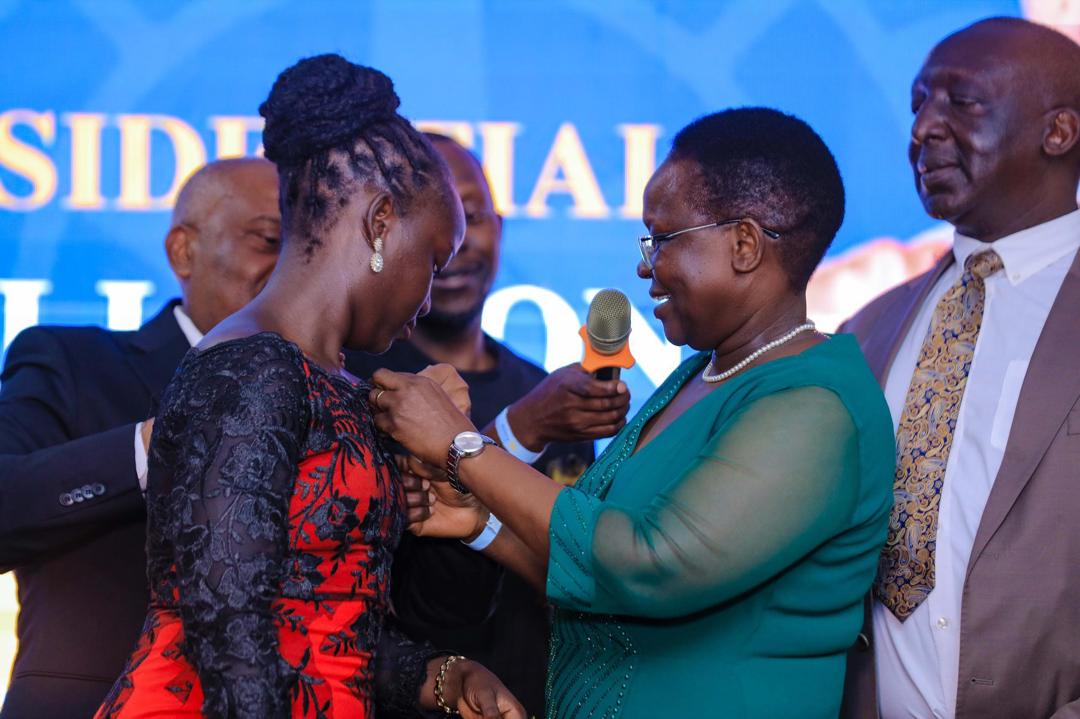
That fire led me to take a bold step: I was officially inducted into the Rotary Club of Bugolobi Morning Tide. For years, Rotary had been a supportive partner—inviting me to speak at events, collaborate on causes, or attend fundraisers. But I had remained on the periphery, engaged but never fully committed. This journey of transformation, however, demanded more. It called for commitment, courage, and clarity.
So when the invitation came, I said yes.
Standing on that stage, I felt the fullness of the moment. Surrounded by love and encouragement, I felt something deeper than excitement—I felt alignment.
Then came a moment that shifted everything. A casual remark during the induction ceremony: “We aim to raise over $1 million.” That was not just an aspiration, it was a standard. And suddenly, I believed it was possible.
I realized then: I was in a room where ambitious goals for charity were not a dream—but an expectation. And for the first time, I truly felt I belonged in that room.
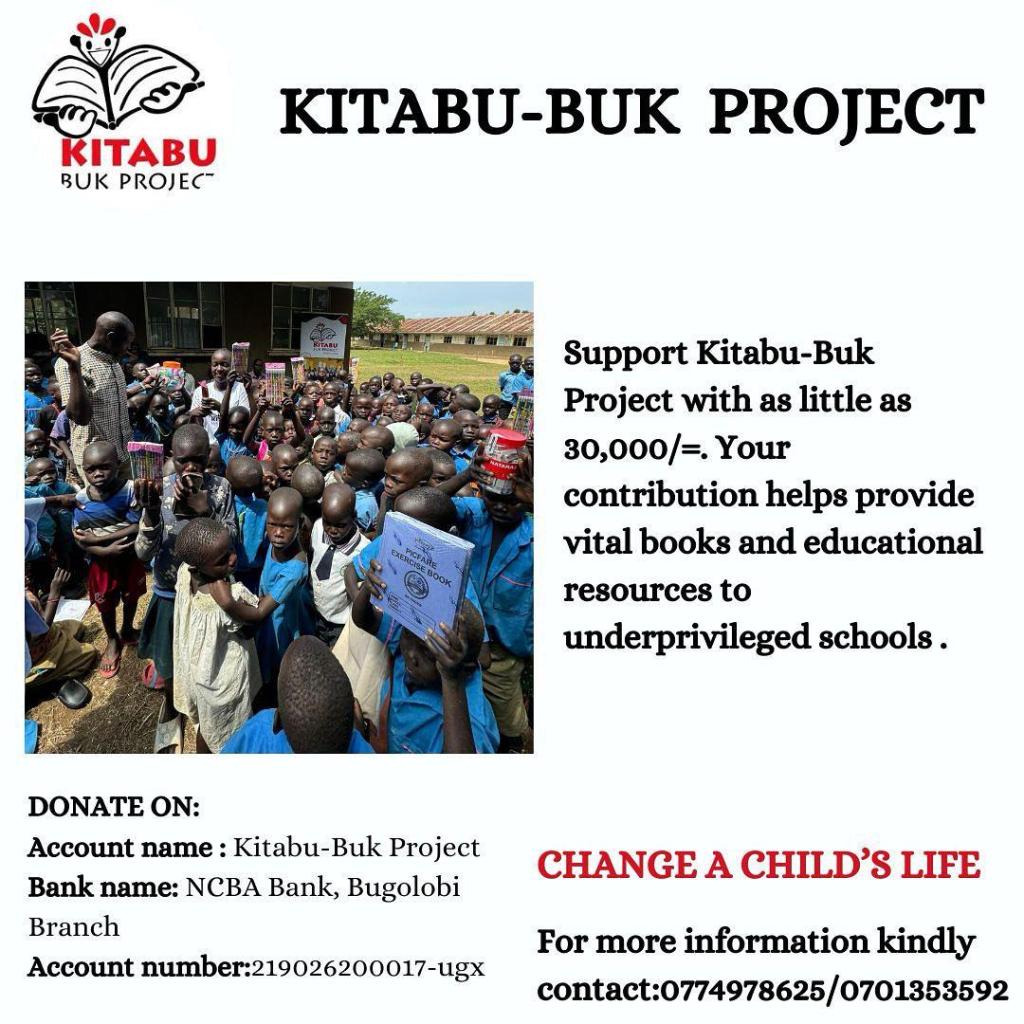
My thoughts turned to the Kitabu Buk Project, the nonprofit I founded to provide educational resources and mentorship to children in underserved communities. What began as a small grassroots movement—donating used textbooks to public schools—has now grown into a national initiative supporting literacy, academic access, and student advocacy.
To date, Kitabu Buk has reached over 40 schools across Uganda, delivering more than 100,000 educational materials, mobilizing communities, and reigniting a love for reading in places where books are scarce but dreams are abundant.
Yet, despite all we’d achieved, I often wondered how much more we could do—with the right network, resources, and boldness.
Rotary answered that question. A lot more.
Because Rotary is not just about charity—it is about showing up. With intention. With compassion. With consistency. It is structured generosity, channeled into action and sustained by a global community of leaders who believe in service above self.
As the founder of Kitabu Buk Project, I now see the beautiful intersection of education, leadership, and purpose-driven giving. When we pour into others—whether through a donated book, a mentorship session, or a shared opportunity—we are also pouring into a future where no child is left behind because of where they were born or what they lack.
This is the heart of Kitabu Buk Project: empowering communities, one book and one kit at a time. But we cannot do it alone.
I invite you to partner with us, whether as a donor, advocate, or volunteer—in shaping brighter futures. Your support ensures that more children access knowledge, grow in confidence, and dream bigger.
🌍 Learn more or donate today at: https://kitabubukproject.org
💛 To make a direct contribution:
Mobile money: 0774978625
Account name: Kitabu Buk Project
Bank name: NCBA Bank, Bugolobi Bank
Account number: 219026200017 – UGX
This is what giving back looks like—not as obligation, but as calling. Not from guilt, but from growth.
Rotary has opened a new door for me. And I am walking through it with open arms—ready to serve, to build, and to rise.
To every emerging leader out there:
Dive—unflinching—into the sacred unknown.
For beyond fear lies becoming.
And beyond becoming lies purpose.
And with purpose, there is always more to give.
To join this global movement of transformation through service: https://www.rotary.org/en




About Me
I love reading, writing, attending events, learning, leadership and meeting new people.
I hold a Masters Degree in International Law and I am passionate about life.
If you are interested in learning more about self discovery and becoming the best version of yourself.
Follow Me On
Subscribe To My Newsletter
Subscribe for new stories and exclusive content.

