
Hello, I am Advocate Brownie Ebal
I am a legal Practitioner, Venture Capitalist and Philanthropist.
Welcome to my site.
I love life, travelling, food, beauty, the law, leadership and meeting people from diverse backgrounds. I hope to inspire each one of you with my various articles as I share from my experiences around our beautiful world.
I live in Kampala, Uganda.



-
Article 86: 20 Life Skills Every Young Person Should Learn Before Adulthood

Raising a child is not only about taking them to school, buying them clothes, or giving them a comfortable life. It is also about preparing them for the world. A world that will require them to think, communicate, work with others, manage pressure, handle failure, make decisions, and take responsibility for their own lives.
Academic success is important, but life requires more than good grades. A young person may pass examinations and still struggle with money, relationships, discipline, emotions, or basic independence. This is why life skills matter. They shape character, confidence, and resilience.
Here are 20 important skills every young person should learn before adulthood.
1. Problem-Solving
Life will not always go according to plan. Children must learn that challenges are not the end of the road. They should be taught to pause, think, assess options, and find solutions instead of giving up immediately. A problem-solving mindset helps them become independent and confident.
2. Communication Skills
A young person should learn how to express themselves clearly and respectfully. Communication is not just about speaking; it is also about listening, understanding, asking questions, and knowing when silence is wiser than argument. Good communication opens doors in school, work, family, and leadership.
3. Emotional Intelligence
Children should be taught to understand their emotions and the emotions of others. Anger, fear, disappointment, excitement, and sadness are all part of life. What matters is how they manage them. Emotional intelligence helps young people avoid unnecessary conflict and build healthier relationships.
4. Time Management
Time is one of the first resources a young person must learn to respect. They should learn how to plan their day, complete tasks on time, balance work and rest, and avoid unnecessary distractions. A person who manages time well is already learning discipline.
5. Conflict Resolution
Disagreements are part of life. Young people should learn that not every disagreement requires shouting, fighting, or walking away. They should be taught how to listen, apologise, forgive, negotiate, and seek peace without losing their dignity.
6. Critical Thinking
In a world full of information, young people must learn how to think for themselves. They should not believe everything they hear or see. Critical thinking teaches them to ask: Is this true? Is this fair? What is the evidence? What are the consequences?
7. Financial Literacy
Money lessons should begin early. Children should understand saving, budgeting, giving, investing, debt, and delayed gratification. They should learn that money is a tool, not a master. Financial literacy prepares them to make better choices and avoid unnecessary financial stress in adulthood.
8. Self-Discipline
Discipline is not punishment; it is the ability to do what needs to be done even when one does not feel like doing it. Young people should learn consistency, focus, and self-control. Talent may open a door, but discipline keeps a person growing.
9. Responsibility
A child who is never given responsibility may grow into an adult who avoids accountability. Young people should learn to take care of their belongings, complete assigned tasks, admit mistakes, and understand that choices have consequences.
10. Cooking Basics
Every young person should know how to prepare simple meals. Cooking is not only a domestic skill; it is a survival skill. It teaches independence, planning, patience, and appreciation for the work that goes into caring for a home.
11. Cleaning and Organising
A clean and organised environment reflects discipline and self-respect. Young people should learn how to clean their rooms, wash dishes, organise clothes, and maintain personal spaces. These small habits build order in bigger areas of life.
12. Teamwork and Collaboration
No one succeeds alone. Young people must learn how to work with others, share ideas, respect different opinions, and contribute to a common goal. Teamwork prepares them for school projects, workplaces, businesses, communities, and leadership.
13. Goal Setting
Dreams are important, but goals give dreams direction. A young person should learn how to set realistic goals, break them into small steps, track progress, and stay committed. Goal setting teaches purpose and focus.
14. Decision Making
Every day, young people make choices. Some are small, others can affect their future. They should learn how to weigh options, seek advice, think about consequences, and take responsibility for the decisions they make.
15. Basic DIY Skills
Young people should know how to handle simple practical tasks such as fixing a loose screw, changing a bulb, using basic tools safely, or doing minor repairs. These skills build confidence and reduce helplessness.
16. Respect and Kindness
Respect should not depend on someone’s age, status, money, or position. Young people must learn to treat people with dignity. Kindness is also a strength. A respectful and kind person leaves people better than they found them.
17. Empathy
Empathy teaches young people to see beyond themselves. It helps them understand that other people have feelings, struggles, fears, and dreams too. A child who learns empathy becomes an adult who can lead, serve, and love better.
18. Physical Fitness and Exercise
Health is wealth. Young people should learn the importance of movement, exercise, rest, and taking care of their bodies. Physical fitness builds energy, confidence, discipline, and mental strength.
19. Basic First Aid
Every young person should know basic first aid, such as how to respond to small cuts, burns, choking, fainting, or emergencies. These skills can protect them and may even help save someone’s life.
20. Adaptability and Resilence
Life changes. Plans fail. People disappoint. Opportunities come and go. Young people must learn how to adjust, recover, and keep moving. Resilience is what helps them rise after failure and remain hopeful even when life is hard.
In conclusion, the greatest gift we can give young people is not simply comfort, but preparation. We must raise children who can think, work, serve, lead, manage themselves, and stand strong in difficult seasons.
A well-prepared child becomes a confident adult. A responsible young person becomes a responsible citizen. And when we teach life skills early, we do not just build better individuals; we build better families, better communities, and a better future
-
Article 85:Burnout in the Legal Profession: Managing Stress, Sustaining Performance and Preventing Professional Exhaustion

On 14th May 2026, the East Africa Law Society hosted a timely webinar under the theme, “Burnout in the Legal Profession: Managing Stress, Sustaining Performance, and Preventing Professional Exhaustion.” The discussion, held during Mental Health Awareness Month, created a much-needed space for legal professionals to reflect on stress, emotional fatigue, workplace pressure, and the importance of sustaining wellness in legal practice.
As moderator, I had the honour of guiding a distinguished panel of speakers through a conversation that was both necessary and long overdue. The discussion brought together mental health expertise, legal practice experience, employment law perspectives, and reflections on institutional responsibility within the profession.
The keynote address was delivered by Dr. Evas Atwine, Chief Executive Director and Founder of the International Centre for Mental Health and Family Care (ICFC) Ltd. Speaking on “Understanding Burnout in High-Pressure Professions: Mental Health Resilience and Sustainable Practice,” Dr. Atwine began by clarifying a common misconception: mental health is not mental illness. Rather, it is the ability to manage stress and remain productive.
She described burnout as physical and mental exhaustion, loss of emotional capacity, reduced motivation, diminished resilience, and loss of hope and optimism. To make the concept relatable, she compared burnout to a phone that is constantly used without being charged, a car running without servicing, a tree surviving drought until it eventually dries out, and an overloaded backpack that becomes too heavy to carry.
Dr. Atwine explained that lawyers fall within high-pressure professions because they constantly deal with people’s pain, disputes, losses, rights, conflicts, and expectations. She described such professions as “healing professions” because they involve helping others through difficult situations. However, she warned that professionals in such spaces may be tempted to heal others while silently harming themselves.
She identified excessive workloads, long working hours, digital overload, poor work-life balance, economic pressure, and compassion fatigue as some of the leading causes of burnout. She also highlighted warning signs such as irritability, anxiety, chronic fatigue, poor sleep, reduced motivation, frequent illness, withdrawal, and isolation. She cautioned against glorifying busyness and reminded participants that exhaustion is not a badge of honour.
One of her strongest reminders was that success which comes at the cost of one’s well-being is not true success. She emphasized that burnout is not an achievement and that self-care is a professional responsibility. She encouraged lawyers to manage workloads, delegate, take structured breaks, utilize annual leave, practice digital detox, prioritize quality sleep, foster healthy relationships, and seek professional support early. She also reminded participants that “no” is a complete sentence and that professionals must learn to set boundaries without guilt.
The first panelist, Ms. Mariam Babaali, Managing Partner, Kabuzire, Mbabaali and Co Advocates, spoke on “The Reality of Burnout in Legal Practice: Pressure, Performance and Professional Identity.” She opened with a powerful reflection that what is not transformed is transmitted. In her view, this speaks directly to the legal profession, where many lawyers inherit systems that teach ethics, integrity, courtroom conduct, and professional demeanor, but not emotional processing, stress management, or recovery from trauma.
Ms. Mbabaali described legal practice as adversarial and emotionally demanding. Lawyers listen to painful client stories, handle emotionally charged matters, manage strict deadlines, appear in court, and constantly switch between emotional intensity and professional composure. She noted that many lawyers carry secondary trauma from the disputes they handle, yet few spaces exist for them to process what they have heard, seen, or argued.
She challenged law firms, courts, and professional bodies to create systems that allow lawyers to check in on their mental health, especially after difficult matters. She also questioned the culture of celebrating constant availability, long hours, and chronic stress as signs of excellence. In her view, the profession must stop normalizing exhaustion and instead build a culture that allows lawyers to rest, reflect, set boundaries, and serve without losing themselves.
The second panelist, Ms. Mercy Cheredi Chore, Associate Advocate, CM Advocates LLP, addressed “From Stress to Liability: Employer Duties and Mental Health in the Workplace.” Her presentation shifted the conversation from personal wellness to legal and institutional responsibility. She explained that mental health in the workplace is no longer merely a private issue, but one with legal, regulatory, and employment implications.
She noted that while mental health challenges may arise from both work-related and non-work-related factors, liability may arise where an employer knows or ought to have known about an employee’s mental health risk and fails to respond reasonably. The issue is therefore not only whether the employer caused the condition, but whether the employer ignored warning signs, failed to accommodate the employee, or responded in a punitive manner.
Ms. Mercy discussed legal frameworks across East Africa, including constitutional protections, employment law, occupational safety obligations, anti-discrimination principles, and mental health legislation. She highlighted that in Uganda, occupational safety law recognizes both physical and mental elements affecting health in relation to work. She also referred to emerging case law where courts have considered issues such as discrimination, failure to accommodate mental health conditions, constructive dismissal, unfair termination, and psychological harm.
Her key message to employers was that mental health risks must be taken seriously. She encouraged employers to document and investigate mental health complaints, obtain independent medical assessments, avoid assuming that mental health challenges amount to incapacity, and provide reasonable accommodations where possible. She also called for workplace mental health policies, employee assistance programmes, confidential referral pathways, grievance mechanisms, and support structures.
The final panelist, Ms. Asmahaney Saad, spoke on “Beyond the Individual: Institutional Responsibility in Preventing Burnout.” She reflected on whether the legal profession can meaningfully address burnout without rethinking how success is measured. She observed that many people are attracted to law because of visible symbols of success such as eloquence, respect, courtroom visibility, financial reward, status, and social recognition. However, she questioned whether these external measures are enough when the person behind them is internally exhausted.
Ms. Asmahaney emphasized that law should not become the whole of one’s identity, but should instead be understood as a tool for service, purpose, and impact. She encouraged lawyers to ask deeper questions: Why law? What part of law aligns with my purpose? Am I practicing from passion, survival, competition, or pressure?
She noted that many lawyers enter the profession as high achievers and are then placed into a system that rewards competition, long working hours, aggression, and visibility. In her view, this creates a survival culture that must be transformed. She called for more open conversations around mental health, greater awareness within professional bodies, wellness initiatives, support structures, and a mindset shift within the legal fraternity.
The webinar served as a powerful reminder that lawyers are human beings before they are professionals. They carry not only files, deadlines, and client expectations, but also emotions, pressure, fatigue, and personal responsibilities. Burnout in the legal profession is therefore not merely an individual concern; it is a personal, institutional, and professional issue that requires intentional action.
The future of legal practice must not be built on silent suffering. It must be built on healthier systems, supportive workplaces, honest conversations, self-awareness, institutional responsibility, and a renewed understanding that caring for oneself is not a luxury. It is part of sustaining excellence in the legal profession.
For more insights, watch the full discussion here:
-
Article 84: From Bumpy Roads to Better: T.D. Jakes’ Message on Moving Through Life’s Obstacles into God’s Promise
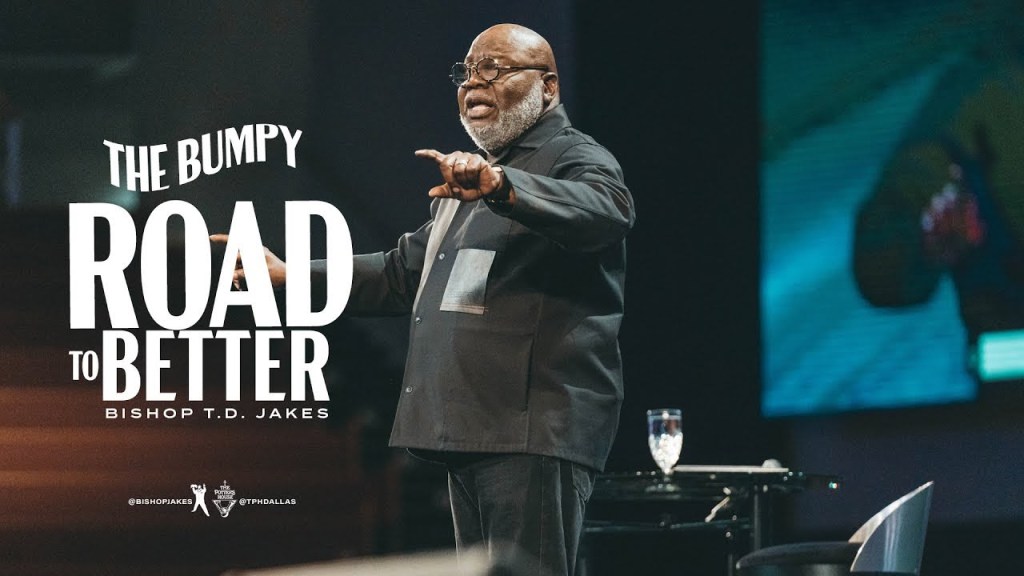
In his motivational sermons on TBN, T.D. Jakes shares a powerful message about overcoming life’s obstacles and moving into the next level of God’s promise. His words remind us that the journey to better is not always easy, smooth, or comfortable. As he says, “The road to better is bumpy.” This message speaks to anyone who has faced delays, disappointments, pressure, confusion, or seasons where life seemed to be moving in the opposite direction of their prayers. Yet, through his teaching, T.D. Jakes encourages us to understand that the bumps in the road are not always signs of defeat. Sometimes, they are signs that we are being moved, shaped, and prepared for what God has ahead.
Life has a way of teaching us that progress is often uncomfortable. Many people desire growth, success, healing, stability, and breakthrough, but few people want the difficult process that often leads there. We want the promise, but we may not always welcome the pressure that pushes us toward it. However, the truth is that no meaningful transformation comes without stretching. The difficult moments we face may feel like setbacks, but they can also become the very path God uses to move us into a better place.
T.D. Jakes speaks about seasons of famine, not only as a lack of food, but as any season where something important feels missing. It may be a famine of peace, opportunity, love, support, clarity, or direction. These are the seasons that expose where we have become too comfortable, too passive, or too afraid to move. They force us to confront the truth that faith must be accompanied by action. Prayer is important, but there are moments when we must stop looking at the problem and begin moving toward the solution.
Many people remain stuck because they expect change without movement. They desire new results while staying in the same place, repeating the same patterns, and holding the same mindset. But better often requires movement. As T.D. Jakes says, “You got to move.” That movement may not always be easy. It may require courage, sacrifice, and the willingness to step forward even when things are still uncertain. Sometimes, the pressure we feel is not there to destroy us, but to push us out of the place where we have become too settled.
The difficult seasons of life also reveal what we are holding on to. Pain has a way of making people cling tightly to what feels safe. After disappointment, we may hold on to relationships, habits, memories, money, positions, or past versions of ourselves because we are afraid of losing again. We may think we are holding on out of love, but sometimes we are holding on out of fear. Fear tells us that this is all we have left, that nothing better will come, and that if we release what is in our hands, we will be left with nothing.
However, fear can limit growth. When we hold on too tightly, we may block the healing, restoration, and new direction that God is trying to bring into our lives. Sometimes, what we are afraid to release is connected to the next level of our journey. The process may be painful, but it may also be necessary. Growth requires us to examine not only what we have lost, but also what we are still carrying because of that loss.
Through the story of Joseph, T.D. Jakes reminds us that pain does not have to make us bitter. Joseph went through betrayal, rejection, separation, and hardship, yet he did not allow those experiences to poison his heart. When he eventually found himself in a position of power, he did not use that power for revenge. Instead, he used it to preserve life, restore family, and release others from guilt. That is a powerful lesson. True favor is not just about being lifted higher; it is about being mature enough to handle the height.
Many people desire influence, honor, and open doors, but the real question is whether they can be trusted with them. Can we be trusted with success without becoming proud? Can we be trusted with power without becoming vindictive? Can we be trusted with favor without using it to punish those who once hurt us? Sometimes, the delay is not because we lack talent. It may be because our hearts still need healing. We may have the ability to go further, but bitterness, anger, and unresolved pain can quietly stand in the way.
The journey to better is therefore not only external; it is deeply internal. It is not only about getting a new opportunity, a new job, a new platform, or a new level of recognition. It is also about becoming the kind of person who can carry those blessings well. Better is not just about having more. It is about becoming whole, mature, wise, and strong enough to use what we have been given for a greater purpose.
There are also seasons in life that feel like night. In those seasons, clarity may not come all at once. We may not see the full picture. We may only receive small glimpses of hope, small signs of direction, and brief moments of encouragement. But sometimes, a flicker of light is enough to keep going. A small reminder, a word of encouragement, a moment of peace, or one open door can give us the strength to continue.
In the night seasons, we must learn to listen carefully. Sometimes, what we hear in our spirit may not make sense to everyone around us. Others may not understand the call, the dream, the burden, or the direction because they did not hear what we heard. That does not always mean they are against us. Sometimes, they simply do not have the same revelation. This is why wisdom matters. The young may hear the call, but the older may know the way. Strength and experience must learn to work together.
Every generation has something valuable to offer. The young often bring energy, courage, innovation, and fresh vision. The older often bring wisdom, interpretation, patience, and lessons learned through experience. When both work together, purpose becomes clearer. The future is not built by rejecting the past, and the past should not fear the future. Growth happens when humility allows us to learn from one another.
One of the strongest lessons from this message is that God can bring us back to the place of our pain, not to shame us, but to heal us. The place where we once felt rejected can become the place where we are restored. The place where we felt confused can become the place where we finally understand. The place where we almost gave up can become the place where purpose is awakened again. What once looked like shame can become a testimony.
This is why we must not despise the bumpy road. The discomfort, the pressure, the waiting, the stretching, and the unexpected turns may all be part of the process. The road may be difficult, but difficulty does not mean defeat. Sometimes, it means we are closer than we think. The bumps are not always a sign that we are lost; they may be a sign that we are being moved, shaped, healed, and prepared for better.
In the end, better is not simply a destination. It is a transformation. It is the person we become after the famine, after the fear, after the night season, and after the pain. It is the maturity to move when movement is required, the courage to release what fear has made us hold, the grace to forgive when we could seek revenge, and the humility to hear God’s voice even in uncertain places.
The road to better may not be easy, but it is worth it. Every bump can become part of the testimony. Every delay can carry a lesson. Every painful season can produce strength. And every step forward, no matter how small, can bring us closer to the life, purpose, and breakthrough we were created for.
For more insights, watch the full sermon here: https://youtu.be/11KwqBOiKFo
-
Article 83: Minimalist Money Rules: How Owning Less Can Help You Build More Financial Stability.
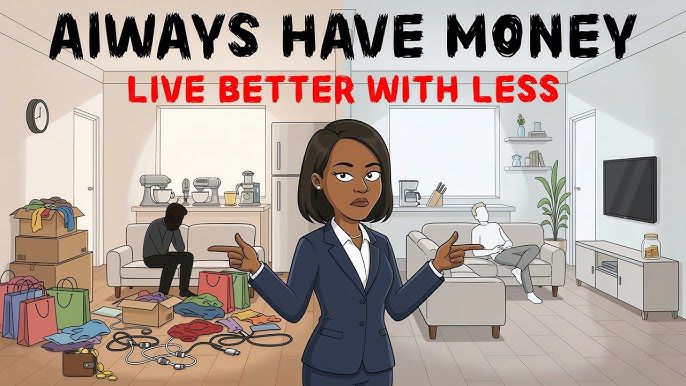
Money is one of those topics that many people think is only about how much you earn. We often assume that financial stability belongs to the person with the bigger salary, the better job title, or the more impressive lifestyle.
Yet, in reality, financial peace is not always determined by income. Sometimes, it is determined by how intentionally we live.
There are people who earn a lot but remain financially stretched because every increase in income is followed by an increase in lifestyle. They upgrade their homes, cars, gadgets, clothes, furniture, and daily habits until every shilling they earn is already spoken for. On the outside, they may look successful. On the inside, they may be living one or two missed paychecks away from crisis.
On the other hand, there are people earning much less who live with calm confidence. They may own fewer things, but they have savings. They may live simply, but they have options. They may not be chasing every new trend, but they are building quiet financial strength.
This is where minimalist money rules become important.
Minimalism is not about poverty, deprivation, or refusing to enjoy life. It is about choosing what truly adds value and refusing to let unnecessary possessions quietly drain your money, energy, and peace.
One powerful lesson is that everything we own costs money twice. The first cost is obvious: the price we pay when we buy it. The second cost is less obvious: storage, maintenance, repairs, cleaning, insurance, mental energy, and the opportunity cost of money that could have been saved or invested.
That unused gym equipment is not just sitting in the house. It is taking up space. That gadget bought on impulse is not just harmless clutter. It is money that could have gone toward an emergency fund. That outfit with tags still on it is not just fashion. It is a reminder of spending that was not aligned with actual need.
Rule 1: Calculate Cost Per Use Before Buying
Before buying anything, ask yourself how often you will realistically use it. A cheap item that is rarely used may actually be expensive, while a costly item used regularly over many years may offer better value.
The question should not only be, “Can I afford this?” It should also be, “Will I use this enough for it to make sense?” Cost per use helps us think about value, not just price.
Rule 2: Apply the Replacement Test
Look around your home and ask yourself: if this item disappeared today, would I spend money to replace it? If the honest answer is no, then the item may no longer be serving your life.
This applies to clothes, books, kitchen items, electronics, old hobbies, and things we keep out of guilt or habit. The replacement test helps us separate what we truly value from what we are simply storing.
Rule 3: Never Upgrade Out of Boredom
Many people replace perfectly functional items simply because something newer exists. A phone still works, but a newer model has been released. A car is reliable, but someone else has bought a shinier one.
This kind of upgrading can quietly destroy wealth. Boredom is not a financial emergency, and novelty is not always progress. Sometimes the wisest financial decision is to continue using what already works.
Rule 4: Create Friction for Spending and Ease for Saving
If spending is too easy, impulse buying becomes almost automatic. Removing saved card details, deleting shopping apps, unsubscribing from promotional emails, and applying a 24-hour waiting rule before non-essential purchases can reduce unnecessary spending.
At the same time, saving should be made automatic. When money is transferred to savings or investments before it is casually spent, financial progress becomes easier to maintain.
Rule 5: Count What You Own
Counting possessions may sound unnecessary, but it creates awareness. Many people underestimate how much they own until they actually count their clothes, shoes, bags, books, or kitchen items.
Once you know how much you already have, buying more feels different. Awareness is one of the strongest protections against mindless spending.
Rule 6: Rent or Borrow Before You Buy
Not every interest requires ownership. Sometimes we buy equipment, clothes, tools, or accessories for a new hobby before we are sure the interest will last.
Renting or borrowing first helps you test whether the interest is genuine or temporary. It also protects you from becoming a museum of abandoned enthusiasm.
Rule 7: Understand the Lifestyle Multiplier Effect
Some purchases come with hidden extra costs. A car may require insurance, fuel, servicing, parking, and repairs. A larger home may require more furniture, more cleaning, and higher utility bills.
Before making a major purchase, ask yourself: what else will this require me to spend on? The true cost of an item is rarely just the price tag.
Rule 8: Define Enough Before Your Income Increases
One of the biggest financial traps is failing to define “enough.” Without a clear definition, every income increase becomes an invitation to spend more.
Enough does not mean settling for less. It means knowing what level of comfort, housing, clothing, transport, and lifestyle genuinely supports your life without trapping you in endless consumption.
Rule 9: Measure Wealth by Options, Not Possessions
True wealth is not only measured by what you own. It is measured by the choices you have. Can you handle an emergency without panic? Can you leave a toxic job? Can you support your family when it matters? Can you say no to opportunities that compromise your values ?
That is real wealth. It may not always be loud or visible, but it gives peace.
Rule 10: Practise Regular Decluttering
Many people declutter once, feel better, and then slowly accumulate more things again. A better approach is regular decluttering.
This can be as simple as reviewing one drawer, one shelf, one wardrobe section, or one category of items every month. Small, consistent reviews are often more effective than one big annual purge.
Financial freedom is not built only through earning more. It is also built through needing less, wasting less, and choosing better.
The more intentional we become with what we own, the more margin we create in our lives. That margin becomes savings. Savings become security. Security becomes confidence. Confidence becomes freedom.
Minimalist money rules are not about denying ourselves joy. They are about refusing to confuse possession with progress. They remind us that a full house does not always mean a full life, and a high income does not automatically create financial peace.
In the end, the goal is not simply to own less. The goal is to live with greater clarity, stronger discipline, and more freedom. When we stop allowing every desire, trend, and impulse to make a claim on our money, we begin to take back control of our future.
The real question, therefore, is not whether we can afford more things.
The real question is whether those things are helping us build the life we actually want.
For more information, please watch the full video here: https://youtu.be/X-fYyGqcaUc
-
Article 82: Five Money Rules That Can Change Your Life and Create Financial Freedom

Money is one of those topics many people avoid until life forces them to pay attention. Yet, it affects almost every part of our lives, the choices we make, the peace we feel, the opportunities we pursue, and the freedom we eventually enjoy.
For many people, income comes in and disappears almost immediately. There are bills to pay, family needs to meet, transport costs, food, rent, school fees, medical expenses, loans, social obligations, and unexpected emergencies. Before long, the month feels longer than the money available.
These reflections are drawn from an insightful episode of The Mel Robbins Podcast on money, financial freedom, and taking control of your future. In the episode, Mel Robbins is joined by David Bach, one of the most trusted voices in personal finance. David explains the rules of money in a way that feels practical and empowering, reminding listeners that financial freedom is not built through fear or shame, but through clarity, discipline, and simple decisions repeated over time.
But financial freedom rarely happens by accident. It is not only about earning more. Some people earn well and still remain financially strained because every shilling already has somewhere to go. Financial freedom begins when you decide that your money must stop moving without direction. You must give it a plan before expenses, debt, impulse spending, lifestyle pressure, and emergencies decide for you.
The encouraging thing is that it is never too late to begin. Whether you are just starting out, recovering from debt, raising a family, building a business, or trying to regain control after a difficult season, the most important step is to start. You do not need to fix your entire financial life in one day. You only need to begin making better decisions, one step at a time.
1. Have a plan for your money
The first rule is simple: either you have a plan for your money, or someone else will have a plan for it.
Money can disappear quietly. A small payment here, a quick purchase there, transport, lunch, airtime, data, online subscriptions, weekend plans, contributions, and impulse buying can slowly drain your income without you noticing. By the end of the month, it becomes difficult to explain where the money went.
That is why a money plan is important. A plan does not mean you must have a lot of money. It means you must know what your money is doing. Before spending, decide what must go to your needs, what must go to savings, what must go to debt repayment, what must go to investment, and what can be used for enjoyment.
A practical money plan helps you separate necessities from lifestyle wants. Rent, food, transport, school fees, medical care, utilities, and debt obligations may need to come first. After that, you can plan for the things that are nice to have, such as eating out, new clothes, travel, entertainment, or upgrading your lifestyle.
The goal is not to punish yourself. The goal is to stop living under financial confusion. When you know where your money is going, you regain control. Even before you become debt-free or wealthy, the act of planning gives you peace because you are no longer avoiding your financial reality.
2. Pay yourself first automatically
Many people wait to save what remains after spending. The problem is that usually, nothing remains.
Paying yourself first means that before your money goes to everyone else, a portion of it must go to your future. This can be savings, investment, retirement planning, business capital, or any account that helps you build long-term security.
The key is to make it automatic. If you wait to save manually, you may keep postponing. But when the money moves automatically as soon as income comes in, you learn to adjust your lifestyle around what remains. Even if you cannot start with a big amount, start with something. It may be a small fixed amount or a small percentage of your income. What matters is building the habit.
A powerful way to think about it is this: every month, your money pays landlords, shops, lenders, service providers, schools, telecom companies, and many other people. But does it pay you? If your money never pays you, then you are working for everyone except your future self.
Paying yourself first is a declaration that your future matters too.
3. Build an emergency fund
Life can change quickly. A medical emergency, job loss, delayed payment, family crisis, car repair, rent pressure, school fees deadline, or urgent travel need can destabilise someone who has no savings.
That is why an emergency fund is not a luxury. It is protection.
An emergency fund is money set aside strictly for real emergencies. It is not for a holiday, a new outfit, a party, or lifestyle upgrades. It is the money that stands between you and panic when life becomes unpredictable.
Start small. You can begin by saving a specific amount every day, every week, or every month. The first goal can be to save enough to cover one month of essential expenses. After that, you can work towards three months, then six months.
This fund should be kept somewhere safe and accessible, but not too easy to misuse. It should be separate from your daily spending money so that you are not tempted to dip into it for ordinary expenses.
An emergency fund gives you dignity. It reduces the need to borrow in panic, take expensive loans, depend on others, or make desperate financial decisions. It gives you breathing room when life happens.
4. Get serious about debt
Debt is one of the biggest reasons people feel trapped. It can come in many forms: bank loans, salary loans, mobile loans, business loans, school fees loans, credit from friends, shop credit, or informal borrowing from relatives.
Not all debt is bad, but unmanaged debt is dangerous. It can quietly eat your income until you are working only to repay yesterday’s decisions.
The first step is to stop pretending. Write down every debt you owe. Include the lender, total balance, interest rate if any, monthly payment, and due date. This may feel uncomfortable, but clarity is better than fear.
Then begin paying off debt deliberately. One practical approach is to start with the smallest debt first. Clearing smaller debts gives you momentum and confidence. Once one debt is gone, use the money you were paying there to attack the next debt. This creates progress.
At the same time, avoid taking on unnecessary new debt. Be careful with lifestyle borrowing. Do not borrow to impress people, attend every function, buy things you do not need, or maintain an image that your income cannot support. Social pressure can be real, but financial peace requires discipline.
Debt repayment is not only about numbers. It is also emotional. The moment you start facing your debt, you begin to feel lighter. You may not be debt-free immediately, but you are no longer running away. You are taking back control.
5. Invest for long-term freedom
Saving protects you, but investing grows you.
If all your money only sits for spending and emergencies, it may not create long-term wealth. Financial freedom requires ownership. This could mean owning a business, land, rental property, shares, treasury bills, bonds, unit trusts, retirement investments, or other legitimate assets that grow over time.
Investing does not have to start with a huge amount of money. You can begin from where you are. What matters is learning, starting small, staying consistent, and choosing investment options that match your income, goals, risk appetite, and stage of life.
The most important thing is to avoid get-rich-quick thinking. Many people lose money because they want fast returns without understanding the risk. Be careful with schemes that promise unrealistic profits. Real wealth usually grows slowly, consistently, and with discipline.
Investing is not about showing off. It is about buying options for your future. It is about giving yourself the freedom to make choices later in life. The earlier you start, the more time your money has to grow. But even if you are starting late, it is still better to begin than to do nothing.
Financial freedom is not just about having a lot of money. It is about having peace, options, and control. It is being able to handle emergencies without collapsing. It is being able to make decisions without being controlled by debt. It is being able to support the people who depend on you without completely losing yourself. It is being able to dream beyond survival.
The journey may not always be easy. Responsibilities are many, income may be stretched, and unexpected demands will always come. But even in that reality, small deliberate steps matter. Planning matters. Saving matters. Paying yourself first matters. Reducing debt matters. Investing matters.
You do not become financially free in one dramatic moment. You become financially free through repeated decisions that honour your future.
Start with what you have. Start where you are. Start today.
The moment you begin to take control of your money is the moment you begin to take control of your life.
For more insights, you may watch the full video: https://youtu.be/uysZfSEmeRE

About Me
I love reading, writing, attending events, learning, leadership and meeting new people.
I hold a Masters Degree in International Law and I am passionate about life.
If you are interested in learning more about self discovery and becoming the best version of yourself.
Follow Me On
Subscribe To My Newsletter
Subscribe for new stories and exclusive content.

