
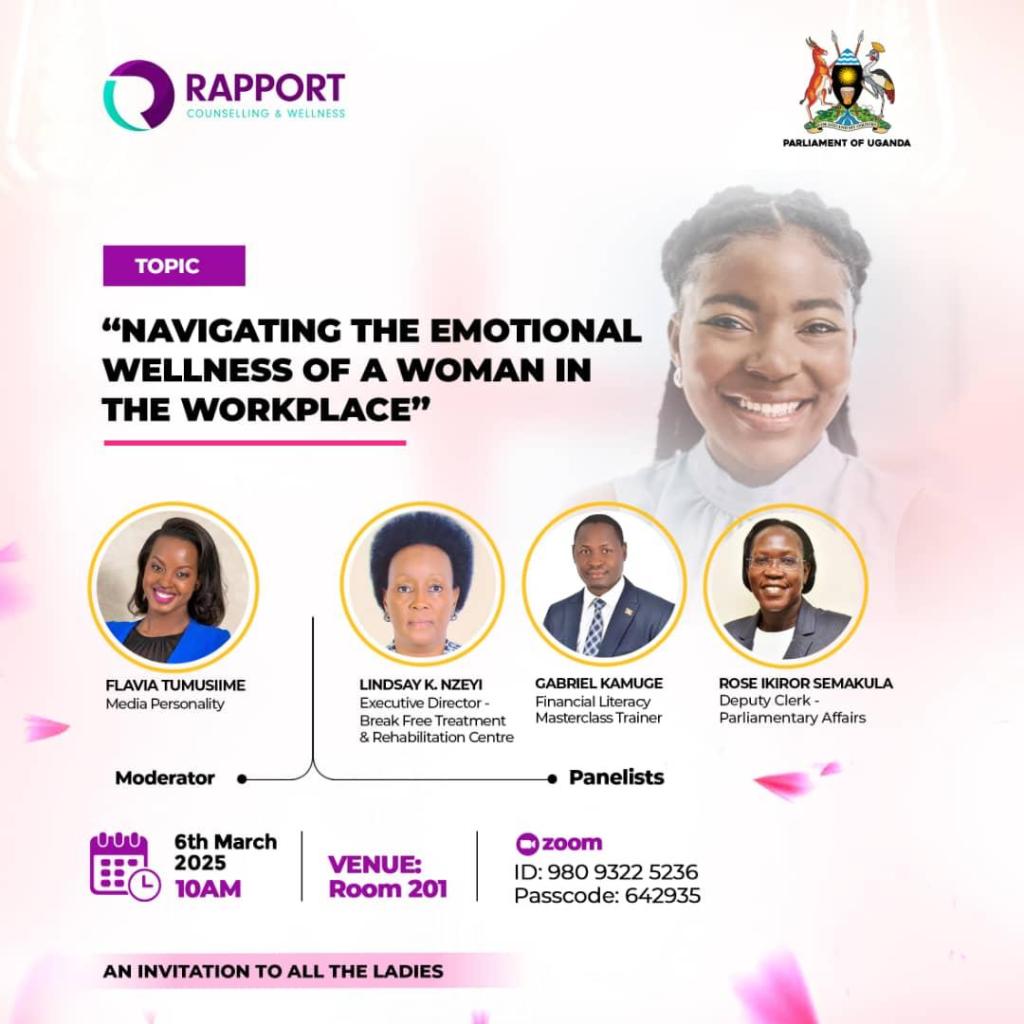
On 6th March, 2025, the Parliament of Uganda hosted a Zoom discussion under the theme “Navigating Emotional Wellness of a Woman in the Workplace.” The session aimed to equip women with strategies for managing emotions, maintaining balance, and fostering resilience in professional spaces. The panel featured Lindsay K. Nzeyi, Executive Director of Break Free Treatment & Rehabilitation Center; Gabriel Kagume, Financial Literacy and Masterclass Trainer; and Rose Ikiror Semakula, Deputy Clerk – Parliament Affairs.
The discussion highlighted the emotional struggles women face at work, how external pressures influence professional well-being, and the steps women can take to maintain balance.
Workplace stress is not always a result of professional responsibilities alone. Emotions from outside work—such as personal struggles, family obligations, or financial pressures—can spill into the workplace, affecting concentration and performance. Unresolved personal issues may also manifest in professional interactions, leading to conflicts or emotional exhaustion.
Burnout is another common challenge, often caused by excessive workloads, competition for promotions, or the pressure to meet financial obligations. Taking on too many responsibilities beyond one’s capacity can lead to exhaustion, reduced productivity, and loss of enthusiasm for work. Financial insecurity further contributes to emotional strain, especially when individuals feel pressured to overwork in order to meet financial demands.
Below are some of the recommended solutions;
- Expressing oneself openly: Confidence in communication is essential for a healthier workplace experience. Addressing concerns, seeking support, and articulating professional needs can help create a more balanced work environment.
- Acknowledging and managing emotions: Recognizing how emotions impact performance allows for better regulation. Strategies such as journaling, seeking mentorship, or practicing mindfulness can be useful in processing emotions constructively.
- Setting boundaries: Taking on excessive workloads does not always guarantee success. Prioritizing core responsibilities and maintaining a sustainable work pace can help prevent burnout.
- Developing financial independence: Financial stress can be managed through budgeting, financial literacy education, and exploring additional income sources. Books such as How Come That Idiot Is Rich and I Am Poor? and Where Did My Money Go? were recommended for better financial management.
- Building a strong support system: Consulting the right people for both personal and professional advice provides valuable guidance and helps in navigating workplace challenges more effectively. Seeking mentorship, professional networks, or trusted individuals with relevant experience can offer meaningful support and perspective.
- Focusing on personal growth: Defining individual goals and staying committed to them ensures a more fulfilling career path rather than engaging in unnecessary competition.
- Resilience: Emotions are a natural part of life, but knowing when and how to react is crucial. Practicing composure in challenging situations, maintaining humility, and taking responsibility for personal success all contribute to emotional wellness.
In conclusion, the discussion reinforced the importance of emotional awareness, financial stability, and effective communication in maintaining workplace well-being. Navigating emotional wellness requires setting boundaries, managing stressors constructively, and fostering resilience. By applying these strategies, a balanced and fulfilling work experience can be achieved.
 BecomingGolden
Leave a comment