
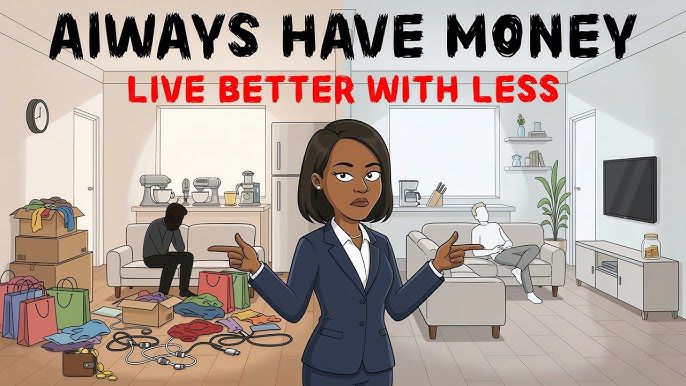
Money is one of those topics that many people think is only about how much you earn. We often assume that financial stability belongs to the person with the bigger salary, the better job title, or the more impressive lifestyle.
Yet, in reality, financial peace is not always determined by income. Sometimes, it is determined by how intentionally we live.
There are people who earn a lot but remain financially stretched because every increase in income is followed by an increase in lifestyle. They upgrade their homes, cars, gadgets, clothes, furniture, and daily habits until every shilling they earn is already spoken for. On the outside, they may look successful. On the inside, they may be living one or two missed paychecks away from crisis.
On the other hand, there are people earning much less who live with calm confidence. They may own fewer things, but they have savings. They may live simply, but they have options. They may not be chasing every new trend, but they are building quiet financial strength.
This is where minimalist money rules become important.
Minimalism is not about poverty, deprivation, or refusing to enjoy life. It is about choosing what truly adds value and refusing to let unnecessary possessions quietly drain your money, energy, and peace.
One powerful lesson is that everything we own costs money twice. The first cost is obvious: the price we pay when we buy it. The second cost is less obvious: storage, maintenance, repairs, cleaning, insurance, mental energy, and the opportunity cost of money that could have been saved or invested.
That unused gym equipment is not just sitting in the house. It is taking up space. That gadget bought on impulse is not just harmless clutter. It is money that could have gone toward an emergency fund. That outfit with tags still on it is not just fashion. It is a reminder of spending that was not aligned with actual need.
Rule 1: Calculate Cost Per Use Before Buying
Before buying anything, ask yourself how often you will realistically use it. A cheap item that is rarely used may actually be expensive, while a costly item used regularly over many years may offer better value.
The question should not only be, “Can I afford this?” It should also be, “Will I use this enough for it to make sense?” Cost per use helps us think about value, not just price.
Rule 2: Apply the Replacement Test
Look around your home and ask yourself: if this item disappeared today, would I spend money to replace it? If the honest answer is no, then the item may no longer be serving your life.
This applies to clothes, books, kitchen items, electronics, old hobbies, and things we keep out of guilt or habit. The replacement test helps us separate what we truly value from what we are simply storing.
Rule 3: Never Upgrade Out of Boredom
Many people replace perfectly functional items simply because something newer exists. A phone still works, but a newer model has been released. A car is reliable, but someone else has bought a shinier one.
This kind of upgrading can quietly destroy wealth. Boredom is not a financial emergency, and novelty is not always progress. Sometimes the wisest financial decision is to continue using what already works.
Rule 4: Create Friction for Spending and Ease for Saving
If spending is too easy, impulse buying becomes almost automatic. Removing saved card details, deleting shopping apps, unsubscribing from promotional emails, and applying a 24-hour waiting rule before non-essential purchases can reduce unnecessary spending.
At the same time, saving should be made automatic. When money is transferred to savings or investments before it is casually spent, financial progress becomes easier to maintain.
Rule 5: Count What You Own
Counting possessions may sound unnecessary, but it creates awareness. Many people underestimate how much they own until they actually count their clothes, shoes, bags, books, or kitchen items.
Once you know how much you already have, buying more feels different. Awareness is one of the strongest protections against mindless spending.
Rule 6: Rent or Borrow Before You Buy
Not every interest requires ownership. Sometimes we buy equipment, clothes, tools, or accessories for a new hobby before we are sure the interest will last.
Renting or borrowing first helps you test whether the interest is genuine or temporary. It also protects you from becoming a museum of abandoned enthusiasm.
Rule 7: Understand the Lifestyle Multiplier Effect
Some purchases come with hidden extra costs. A car may require insurance, fuel, servicing, parking, and repairs. A larger home may require more furniture, more cleaning, and higher utility bills.
Before making a major purchase, ask yourself: what else will this require me to spend on? The true cost of an item is rarely just the price tag.
Rule 8: Define Enough Before Your Income Increases
One of the biggest financial traps is failing to define “enough.” Without a clear definition, every income increase becomes an invitation to spend more.
Enough does not mean settling for less. It means knowing what level of comfort, housing, clothing, transport, and lifestyle genuinely supports your life without trapping you in endless consumption.
Rule 9: Measure Wealth by Options, Not Possessions
True wealth is not only measured by what you own. It is measured by the choices you have. Can you handle an emergency without panic? Can you leave a toxic job? Can you support your family when it matters? Can you say no to opportunities that compromise your values ?
That is real wealth. It may not always be loud or visible, but it gives peace.
Rule 10: Practise Regular Decluttering
Many people declutter once, feel better, and then slowly accumulate more things again. A better approach is regular decluttering.
This can be as simple as reviewing one drawer, one shelf, one wardrobe section, or one category of items every month. Small, consistent reviews are often more effective than one big annual purge.
Financial freedom is not built only through earning more. It is also built through needing less, wasting less, and choosing better.
The more intentional we become with what we own, the more margin we create in our lives. That margin becomes savings. Savings become security. Security becomes confidence. Confidence becomes freedom.
Minimalist money rules are not about denying ourselves joy. They are about refusing to confuse possession with progress. They remind us that a full house does not always mean a full life, and a high income does not automatically create financial peace.
In the end, the goal is not simply to own less. The goal is to live with greater clarity, stronger discipline, and more freedom. When we stop allowing every desire, trend, and impulse to make a claim on our money, we begin to take back control of our future.
The real question, therefore, is not whether we can afford more things.
The real question is whether those things are helping us build the life we actually want.
For more information, please watch the full video here: https://youtu.be/X-fYyGqcaUc


Leave a Reply