
Book 9: Do the Work: Slaying Resistance and Becoming Who You’re Meant to Be
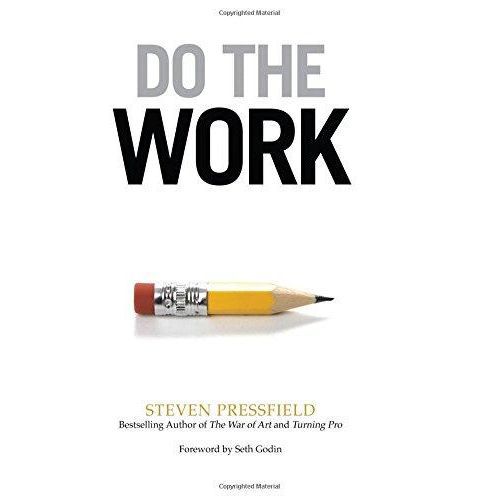
In Do the Work, Steven Pressfield issues a call that is as simple as it is demanding: do the work. Not when you feel ready. Not when conditions are perfect. But now, amid fear, doubt, and uncertainty. Because the work itself is the path, and everything that rises to stop you is part of the journey.
Pressfield paints a vivid battlefield: on the field of the Self stand a knight and a dragon. You are the knight. Resistance is the dragon.
He does not soften what Resistance is. He describes it as an active, intelligent force, relentless in its singular mission to stop us from becoming our best selves. It shows up whenever we try to choose long-term growth over immediate comfort, whenever we attempt something meaningful, something that stretches us beyond who we are.
And yet, paradoxically, Pressfield reminds us that Resistance is universal. It is not personal. It is not a sign that you are failing, it is proof that you are in the arena. Everyone who has a body, he suggests, experiences it. The fear does not go away. The battle does not end. The warrior and the artist wake up each day to fight it anew.
What then is the response?
“Don’t think. Act.”
Pressfield insists that overthinking is one of Resistance’s most subtle weapons. The chatter in our minds, the doubts, the imagined failures, the endless analysis are not our thoughts, he says. They are Resistance. And the antidote is simple, though not easy: act first, reflect later. We can revise anything, improve anything, refine anything but only after we have begun.
There is a kind of deliberate “stupidity” he advocates for, the courage to move forward without fully grasping how difficult the journey will be. Ignorance and arrogance, he calls them, strange but necessary allies. Because if we truly understood the magnitude of what we are attempting, we might never start. And if we did not believe, perhaps irrationally, that we could pull it off, we would quit before we begin.
So he urges: start before you’re ready.
Boldness, he echoes, carries genius and power and magic. Begin it now.
There is something raw and primal about creation, he argues. Babies are born in chaos. Stars are formed in violent explosions. Likewise, our ideas are not meant to emerge polished and perfect. They are meant to be messy, instinctive, alive. Better to be primitive than sophisticated, he says—because sophistication often hides hesitation.
Momentum becomes everything.
Pressfield advises us not to obsess over quality in the early stages. Get to the end as if something is chasing you. Don’t stop. Don’t look down. Don’t think. The first draft, the first version, the first attempt is not about perfection, it is about completion. Action and reflection must never happen at the same time. One comes after the other.
And yet, amid this urgency, he calls for clarity.
“What is this about?”
This question, he suggests, must be asked again and again. Strip your project, your business, your idea, your art—down to its essence. Can you explain it in a single page? Can you identify its theme? Because once you know what it is about, you begin to see the path forward. The end state becomes visible.
Still, even with clarity and momentum, there comes what he calls the “Big Crash.” That inevitable moment where doubt, fatigue, and fear collide. It is not failure, it is part of the process. A signal that you are growing, that you are approaching a higher level of mastery.
“Panic is good,” he says. It means you are crossing a threshold.
At that point, the rule changes: the problem is not you. The problem is the problem. Work the problem.
Resistance, he reminds us, does not come from outside. It comes from within, but it is not us. That distinction matters. It means we are not broken. We are not incapable. We are simply facing the internal force that rises whenever we dare to create, to lead, to build, to become.
And what carries us through?
Love.
The opposite of fear, Pressfield says, is not courage, it is love. Love for the work. Love for the challenge. Love for the people we hope to serve through what we create. This love becomes the force that aligns us with what he calls “Assistance”—that quiet, universal energy that helps bring ideas into reality.
But even then, the final battle remains: finishing.
Resistance is strongest at the end. Because finishing means exposure. It means being seen, being judged, risking failure in the real world. It means “shipping.”
And that, he says, takes “balls of steel.”
Yet, there is transformation in finishing. The first time you complete something, truly complete it, you change. You prove to yourself that you can. And from that point on, something shifts. You become someone who delivers.
You become someone who does the work.
In the end, Pressfield leaves us not with comfort, but with urgency. Tomorrow is today. The moment is now. The dream you carry, the book, the business, the vision, the impact, is not waiting for perfect conditions.
It is waiting for you to begin.
Stay stubborn. Stay a little naive. Trust the instinct. Ignore the chatter.
And above all—do the work.
Book 8: The Power to Co-Create: A Reflection on Wayne Dyer’s “The Power of Intention”
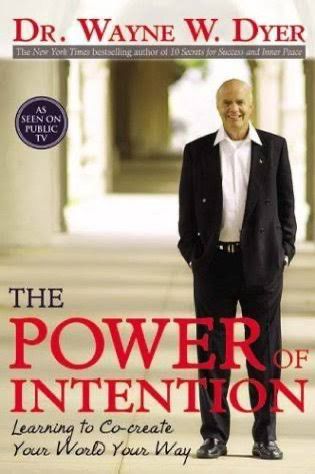
Intentionality is more than setting goals or making plans. In The Power of Intention, the late Dr. Wayne Dyer—a world-renowned spiritual teacher, psychologist, and bestselling author—redefines it as the conscious alignment with a universal creative force. A pioneer in the field of self-development, Dr. Dyer spent decades teaching that we are not passive recipients of life’s circumstances, but active co-creators of our reality.
To him, intention is not just about ambition or willpower—it is about aligning with the invisible energy that shapes all life. It is a field, a divine intelligence, a presence we can connect to at any moment, regardless of background or status.
This message strikes a deeper chord in places where opportunity is not always obvious, and where survival often takes priority over self-actualization. In communities where success is measured in school fees paid, harvests secured, or children fed, the idea that you can co-create your life with the universe may seem impractical. But Dyer turns that assumption on its head.
He invites us to shift our perspective: to stop striving against life and start flowing with it. According to him, the most transformative life changes happen not when we push harder, but when we pause, connect, and surrender to a deeper wisdom already present within and around us.
Dyer identifies seven “faces” of intention—creativity, kindness, love, beauty, expansion, abundance, and receptivity. These are not abstract ideals. They are practices we can embody in the quiet routines of daily life.
Take creativity, for instance—not just in art, but in the way a market vendor arranges produce with care, or how a parent stretches a small income to cover school supplies. Kindness is not only grand gestures; it is giving up your seat in a taxi, or helping a stranger carry a jerrycan after a long day. Receptivity might be as simple as saying “yes” when someone offers you help without asking why.
In a world where religious language is often woven into conversation and community values, Dyer’s framing of intention as divine co-creation resonates without effort. His teachings echo something familiar: that faith without works is incomplete, but works without alignment can become empty routine. We are reminded that intention is not about demanding from the universe—it is about becoming a vessel through which grace can flow.
What stands out is Dyer’s challenge to the ego. He invites us to question long-held inner narratives like “I am what I own,” or “I am only valuable if I succeed.” These are stories many silently carry: students who tie self-worth to grades, job seekers who define identity by rejection, or parents who feel diminished when they cannot provide in visible ways. But Dyer urges a different view—that we are not what is missing, but what is possible.
In many communities, people have learned to “hustle” out of necessity. There’s pride in hard work, yes—but also burnout, bitterness, and the quiet fear that no matter how much we do, it will never be enough. This book gently says: you were never meant to carry it all alone. That intention is not forced—it is received. And that when we act from alignment, life begins to rise up and meet us halfway.
Rather than giving a formula for success, The Power of Intention offers a way of seeing. A way of trusting. A way of surrendering control—not in resignation, but in wisdom.
It reminds us that true abundance is not always about having more. Sometimes, it is about recognizing what we already carry: the capacity to forgive, the courage to try again, the stillness to listen, the resilience to believe.
Ultimately, this is not just a book about positive thinking. It is a call to partnership—with spirit, with community, and with the unshakable power within. It reminds us that even when the road is rough, the future unclear, or the resources few—we are still co-creators of our own becoming.
And when we remember that, we do not just endure. We rise.
For more information, please watch full video here: https://youtu.be/i7XPS0QmYhI
Book 7: Maximizing Your Potential: A Call to Live Fully and Die Empty.

In a world where survival often takes precedence over purpose, it is easy to slip into routines, to play it safe, and to mistake comfort for contentment. But what if the greatest tragedy is not failing, but never discovering what we were truly capable of?
This is the sobering question at the heart of Dr. Myles Munroe’s powerful book, Maximizing Your Potential. A renowned leadership teacher, pastor, and speaker, Dr. Munroe draws from Scripture, real-life stories, and deep spiritual insight to issue a clarion call: you were created with treasure inside you—and the world needs it.
From the very first pages, the book challenges the reader to confront a painful truth: many people will live and die without ever releasing their full potential. Not because they weren’t gifted, but because they allowed fear, tradition, or the expectations of others to keep them small.
It is a message that speaks directly to contexts where dreams are often deferred for practical survival. Where generations have been taught to stay within the boundaries of “respectability,” to not aim too high, to do just enough to get by. And yet, the streets are filled with bright young people bursting with ideas, artisans with incredible skill, and elders with wisdom that never made it to the page. This book is a bold invitation to those very people: do not settle. Dig deeper. Live fuller. Leave nothing behind.
Dr. Munroe argues that potential is like a seed—what it becomes depends on the environment it’s planted in, the effort invested in it, and whether it is ever planted at all. He draws on biblical stories and examples from everyday life, including a sculptor in Brazil who lost both hands to leprosy yet trained himself to carve with his feet—eventually becoming a national treasure. That same kind of hidden brilliance, he insists, lies in all of us.
What makes Munroe’s message powerful is how grounded it is in realities that are all too familiar. He speaks of how culture, religious rigidity, educational systems, and even family expectations can suppress the God-given dreams of a person from childhood. How many young women have been told to tone down their ambitions? How many men have walked away from their creativity in pursuit of “safer” jobs that never fulfilled them? Munroe does not condemn this reality—he names it. Then he offers a path forward.
That path starts with reconnecting to your Source—God. According to Munroe, the manufacturer defines the function of the product. And God, as our Creator, has already encoded us with the purpose, passion, and capacity we need to fulfill our assignment on earth. He explains that living by faith, refusing comparison, guarding your environment, and persevering through resistance are essential to drawing out the greatness within.
But this is not a book of hype. It is deeply practical. Munroe lays out clear “enemies of potential”—fear, procrastination, distractions, the opinions of others, even premature success. And he does not ignore the importance of hard work. Potential, he says, is not realized without effort, discipline, and commitment to growth. The story of a woman who turns an abandoned playroom into a thriving greenhouse of African violets becomes a metaphor: what you nurture will grow. What you ignore will die.
Perhaps the most profound principle in the book is this: die empty. Do not leave behind songs unwritten, schools unbuilt, sermons unspoken, or kindness withheld. Empty your gifts into the world. Pour yourself out completely.
Dr. Munroe reminds us that the wealthiest place on earth is the graveyard—because buried there are dreams never pursued, ideas never shared, and talents never developed. But it doesn’t have to be this way.
Ultimately, Maximizing Your Potential is a prophetic challenge to live beyond the limits society sets, to defy the inner voice that says “not yet,” and to become the fullest version of who God intended you to be.
And in communities where untapped brilliance surrounds us—in rural schools, in city markets, in church pews, in quiet living rooms—this book is not just a good read. It is a wake-up call.
For more information, watch full video: https://www.youtube.com/live/mCRQ0PeK–U
Book 6: Build Stores in Season: Ancient Principles for Modern Financial Wisdom By Ronald Mukasa
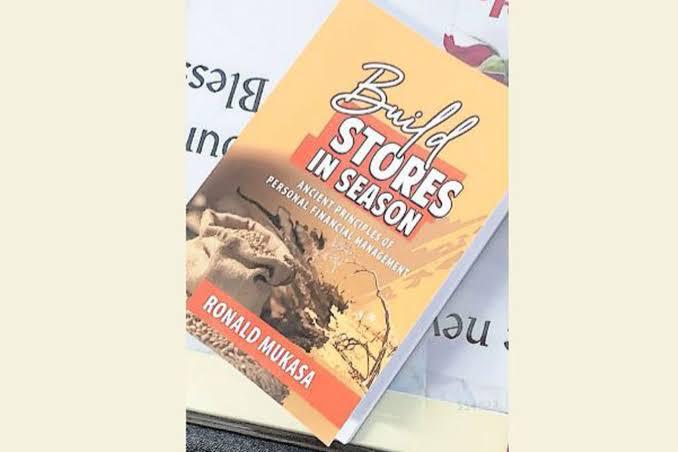
Ronald Mukasa is a financial literacy coach and business development professional who has spent the last 13 years equipping individuals, Small & Medium Enterprises (SMEs), and corporate organisations with practical financial knowledge. He has trained extensively under the NSSF Financial Literacy Program and the Bank of Uganda’s Financial Literacy Program, and serves as Director of Research, Innovation and Learning at Enterprise Uganda. A certified accountant and statistician, Ronald holds a Master’s in Development Management from the London School of Economics and is the founder of Geuka Africa Limited, an e-learning and consultancy platform. His passion lies in empowering individuals, especially young people, to make informed financial decisions that secure their future.
In his book Build Stores in Season, Ronald draws inspiration from biblical principles and the story of Joseph in Egypt to offer timeless lessons in personal financial management. He begins with a foundational truth— “The plans of the diligent lead to profit as surely as haste leads to poverty” (Proverbs 21:5)—reminding us that seasons are not in our control. We can only recognise them and respond appropriately. The first question we must ask is: who controls the seasons? The answer—certainly not us. The seasons affect us all equally, but it is how we act in each season that determines our outcomes.
Ronald uses the example of Pharaoh humbling himself to listen to a foreign prisoner, Joseph, whose God he did not even worship, in order to save his nation. Joseph’s revelation was simple: a time of plenty was coming, followed by a time of scarcity. The plan to survive was straightforward—gather and store grain during the time of abundance.
This wisdom is central to our own financial lives. Often, we fail to act not because we do not know the season, but because we ignore it. One of the biggest threats to financial independence is our lack of focus. Many people with multiple opportunities become distracted and never commit to one path long enough to see results. Boredom, impatience, and a desire for excitement can derail even the best intentions. Ronald notes that Joseph may have gotten bored collecting grain for seven years, yet he stuck to the plan.
The temptation to manage everything alone is another common pitfall. “And now let Pharaoh look for a discerning and wise man and put him in charge of the land of Egypt,” Joseph advised (Genesis 41:33). Sometimes, others can implement your plan better than you—what matters is that you remain wise and protect your interests. Collaboration and delegation are key ingredients for building sustainable wealth.
Ronald identifies three cardinal sins during a time of plenty:
- Not recognising you are in a season of plenty.
- Indulging in wasteful spending and basking in temporary abundance.
- Failing to plant—neglecting saving and investing during the surplus.
In many communities, the urge to consume takes precedence. We hear that familiar voice: “Why save? What if you die tomorrow?” These sentiments, often backed by anecdotal examples, discourage prudent action. Add to that the pressure to show success—building your dream house, acquiring a second partner, or taking out expensive loans to signal you have ‘arrived’. One’s banker, who is very close during the season of plenty, is often all too willing to help in this display. But Ronald challenges this thinking with a piercing question: if your salary were halved today, would you survive? Most people would adapt by reorganising their expenses. Yet, when it comes to voluntary saving, they claim they do not earn enough to do so. This contradiction highlights how external crises push us into wiser decisions than we are willing to make voluntarily.
A key indicator that you are in your season of plenty is stability—a job with a regular salary, basic education, or a vocational skill that brings in an income. You may not feel rich, but you are in a position to build. Yet, many waste this opportunity, distracted by the illusion of endless time or the pursuit of status. Even Joseph’s brothers in Canaan wasted their season, not storing enough, and ended up begging for food in Egypt.
Joseph’s method was deliberate—he only collected grain. He did not diversify for the sake of novelty. Simplicity and consistency were his strengths. Grain that is not stored gets spoiled, and so does income that is not intentionally saved.
There are three kinds of stores Ronald highlights:
- Emergency stores for unforeseen crises.
- Investment stores that build future wealth.
- Business stores that serve both as a savings vessel and a source of income.
Debt, he notes, is a “humble servant during growth but a merciless master during decline.” While building stores, one must also be cautious of those eager to benefit from them—moneylenders, banks, even well-meaning relatives. In African cultures, ‘forced generosity’ or ‘black tax’ is common. Supporting extended family is commendable, but it must be done sustainably. Ronald echoes George Clason: “If you desire to help thy friend, do so in a way that will not lay thy friend’s burdens upon thyself.”
Joseph shared from his stores, but with wisdom. He did not give away Egypt’s resources recklessly. Generosity should be structured. If your budget is exhausted, it is okay to stop giving for a season.
Ronald also explores the importance of planting during scarcity. Egypt’s people brought everything they had—money, land, livestock—in exchange for food. They were once producers but became beggars. Genesis 47:19 captures this desperation: “Buy us and our land in exchange for food… that we may live and not die.” The lesson is clear: when scarcity comes and you have no stores, you become a servant to those who planned ahead.
Even so, scarcity is not a death sentence. Ronald lists six lessons for such times:
- If you have life, you still have a chance.
- Planting is possible even during hard times.
- Seeds can be borrowed—look to investors, family, or partners.
- Share your harvest with those who supported you.
- Work hard to repay and rebuild.
- Always hold onto hope.
Joseph’s brothers, who once scorned him, returned in humility. In times of scarcity, pride must give way to survival. Excellence, hard work, and integrity—Joseph’s early trademarks as a slave—are even more crucial during the hard seasons.
Governments often do not have stores for everyone. Ronald emphasizes: if your government is not prepared, then YOU must be. Build personal, family, and collective stores (such as SACCOs, NSSF, and investment clubs). Understand that corporate or national stores are not your personal security.
The time to build is now. Rain means nothing if there is no seed in the ground. And when the harvest comes, build stores before you celebrate. Over time, those stores will begin to yield steady returns. Then, as a sign of gratitude to the Giver, remember to share. Just like Joseph did—with the very brothers who betrayed him.
Final Reflections by Dr. Peter Kimbowa, CEO Summit Uganda which highlight key lessons from this book:
1.The Power of Vision and Foresight
Joseph’s ability to interpret Pharaoh’s dream emphasized the importance of planning for the future. This teaches readers to anticipate economic cycles and prepare for both growth and downturns.
2. Saving During Seasons of Plenty
There is wisdom in saving surplus resources during times of abundance. This teaches readers the importance of creating emergency funds and investing wisely during prosperous times.
3. Strategic Resource Management
Joseph organized the storage and allocation of resources efficiently. This is a lesson on budgeting, minimizing waste, and optimizing assets for long-term sustainability.
4. Diversification and Risk Management
Egypt’s success lay in its diversified agricultural production and structured storage systems. This guides readers on diversifying income sources and investments to mitigate risks.
5. Economic Planning for Generational Impact
Joseph’s plan not only saved Egypt but also impacted surrounding nations and future generations. This encourages readers to think beyond personal wealth, focusing on generational wealth creation and preservation.
6. Resilience in Times of Scarcity
Joseph’s leadership showed resilience and resourcefulness during famine. This highlights important strategies to adapt to economic downturns, including cost-cutting and finding new opportunities.
7. The Role of Leadership in Economic Stewardship
Joseph’s governance demonstrated accountability and integrity in managing public resources. This stresses the need for ethical leadership in personal finances and societal roles.
8. Debt Management and Avoidance
Egypt avoided excessive borrowing by preparing in advance. This shows the importance of understanding good vs. bad debt, managing credit wisely, and avoiding debt traps.
9. The Power of Collaboration and Networking
Joseph worked with Pharaoh and other leaders to implement his plan. This emphasizes the importance of partnerships, mentorship, and networking in building financial resilience.
10. Faith, Wisdom, and Action
Joseph’s story reflects a blend of faith, wisdom, and proactive decision-making. This should inspire readers to combine spiritual insights with practical financial knowledge. Joseph’s foresight left a legacy of empowerment for future.
Book 5: Woman in the Eyes of God: Reclaiming a Lost Identity by Maria Matembe

written by Brownie Ebal and Nakiyimba Victoria.
Dr. Miria Matembe has spent much of her life advocating for gender equality, challenging societal norms that limit women’s potential, and fighting for justice in both law and politics. In this book, she turns her attention to one of the most deeply rooted obstacles to gender equality—religious misinterpretation and misapplication. Society has long dictated that women
must be submissive, silent, and secondary to men, but Dr. Matembe presents a different perspective—one that she believes aligns more closely with God’s true design.
With the sharp mind of a lawyer and the passion of a reformer, she takes a bold approach in re-examining scripture, aiming to restore women’s identity in the eyes of God. She argues that rather than being excluded from God’s mission, women have always played a central role in His divine plan. Through a careful interpretation of biblical stories and principles, she seeks to replace centuries of misrepresentation with a renewed understanding—one that empowers women to embrace their God-given purpose.
Dr. Matembe’s career is a testament to her unwavering commitment to justice. As a lawyer, legislator, minister, and advocate, she has influenced national and international policies, particularly in constitutional law and governance. She played a key role in shaping Uganda’s progressive constitution and has championed the rights of women in leadership, ethics, and integrity. Now, through this book, she extends her mission beyond legal and political spheres, calling upon women to reclaim their place in God’s plan—not as silent bystanders, but as active participants in His work.
With personal conviction and scriptural insight, Woman in the Eyes of God: Reclaiming a Lost Identity is both a challenge and an invitation. It is a call to women to rise, to see themselves as God sees them, and to walk boldly in the truth of their restored identity.
Maria Matembe speaks with conviction about the role of women in God’s mission. She emphasizes that Christ’s death and resurrection restored both men and women to their original status before the fall. She calls upon women to fix this truth in their minds and rise up to follow Jesus, their Redeemer. With passion, she reminds women that they were not left out of God’s plan for restoration. “How great and honorable,” she exclaims, “that you, a woman, were a party to God’s plan of restoration for humankind! Glory to God!”
Reflecting on the story of Rebekah, she points out how, in assisting Jacob to secure his father’s blessing, Rebekah was co-working with God to fulfill His divine purpose. According to His will, Esau was never meant to receive that blessing, though God did not reveal this secret to Isaac. Maria Matembe observes that many times, women in families have had to resort to indirect
means to secure what they believe is right, simply because they have been ignored or denied participation in important decisions. She empathizes with such women and urges men to recognize the wisdom that women bring. “My appeal to men,” she says, “is to allow women to participate in decision-making, so that their God-given wisdom can be harnessed for the benefit
of the family.” Otherwise, she warns, women are left with no choice but to use indirect means, which are often misunderstood and misjudged.
She speaks with admiration about the many women who co-worked with God to fulfill His mission for Israel. She recalls the bravery of the Egyptian midwives, Shiphrah and Puah, who defied Pharaoh’s orders and saved the Israelite baby boys. “Had these women obeyed Pharaoh, the Israelites would not have increased in number,” she notes. Jochebed, the mother of Moses,
also stands out in her reflections. “How could she have known that her child was special unless God revealed it to her?” she asks. Maria Matembe insists that God grants wisdom and boldness to the women He calls into His mission.
She stresses that God can use any woman—whether ordinary, noble, professional, young, or old—as long as she is available. “Your status, whether married, single, or widowed, is not a hindrance,” she asserts. “Even the most vulnerable woman can be used by God.” She challenges widows and single mothers not to make excuses. “Cooperation with God is all that is required,” she declares.
Maria Matembe is particularly drawn to Esther’s story, seeing her as a model for leadership, especially on the African continent. She praises Esther’s wisdom, courage, and determination to save her people, and draws lessons from Deborah, a judge and prophetess who was both a political and spiritual leader while managing her household. “This,” she insists, “proves that
women can be public leaders and still maintain strong family roles.” She also finds inspiration in Jael, who, alongside Deborah, played a crucial role in securing Israel’s victory over Sisera. “Too often, women fight against each other instead of working together to defeat common enemies,” she observes. “Yet, in the end, God’s purpose prevails, regardless of who gets the credit.”
She highlights the daughters of Zelophehad, who boldly approached Moses to claim their inheritance. “And when Moses consulted God, the Lord affirmed them,” she says, quoting the scripture: ‘What Zelophehad’s daughters are saying is right.’ She believes that the law was settled long ago by God Himself, and women today must rise and demand its application.
Maria Matembe speaks passionately about the grace of God upon women. She draws from the life of Rahab, a woman society despised, yet one whom God chose to be in the lineage of Christ. “This is good news for women whom society looks down upon,” she says. “God values you and wants to work with you for His kingdom.” She urges women not to let their past define them, reminding them that Ruth, through her love and faithfulness, earned a place in Jesus’ lineage. “You are who God says you are,” she declares. “Embrace your destiny!”
She also reflects on Bathsheba, whose story was one of restoration. “Despite her past, God honored her by making her the mother of Solomon, one of Israel’s greatest kings,” she notes. “When we surrender to God, He turns our stories around.”
Maria Matembe finds it deeply significant that women were the first witnesses of Christ’s resurrection. “The gospel of Christ centers on His death and resurrection,” she says, “and who were the first to witness it? Women.” She reminds her audience that it was women who stood by Jesus in His suffering and death, and it was women He entrusted with the greatest message of all time: ‘He is not here; He has risen!’
She also speaks of Deborah’s courage in calling Barak to battle. When Barak refused to go unless Deborah accompanied him, she agreed but told him, ‘Because of the way you are going about this, the honor will not be yours, for the Lord will hand Sisera over to a woman.’ Maria Matembe reflects on this and calls upon men to be like Barak—men who recognize and support
the strength of women rather than suppress it. “What mattered to Barak was not whether a man or woman got the credit,” she says. “It was about victory.” She prays that more men will rise with courage and wisdom to support women in realizing their divine purpose.
With a firm voice, she challenges women not to wait for an invitation. She recalls the woman who entered the Pharisee’s house uninvited to anoint Jesus’ feet. “Step into the spaces where decisions are made,” she urges. “Whether in government, business, or ministry, let your presence
be felt. And when you step in, let your actions make a difference in the lives of those you serve.”
For Maria Matembe, the message is clear: God has always used women to fulfill His mission, and He is still calling them today. The question remains—are they ready to rise and answer His call?
Book 4: INSIGHTS FROM BEYOND LIMITS BY PEPE MINAMBO

Written by Adv. Brownie Ebal
Beyond Limits invites you to embark on a transformative journey that challenges you to embrace your uniqueness and redefine your boundaries. With a powerful call to action, this book encourages you to be unafraid of being different to color outside the lines, and to disrupt the status quo. By challenging conventional wisdom and following your heart, you will unlock a world of endless possibilities. Written by Pepe Minambo, a renowned Human Resource Consultant and motivational speaker, this book draws on his extensive experience consulting for leading regional and global brands across diverse industries. With over ten best-selling inspirational books to his name, Minambo empowers readers to envision a future unbounded by limits and filled with potential.
Pepe Minambo, also the author of the best-selling book Be Inspired Before You Expire, shares profound insights in his latest work, Beyond Limits. He poses thought-provoking questions: “How many sets of footprints are there on the moon? Is the genius of a fish in climbing trees? What is the next big thing in your life?” Minambo asserts, “The future belongs to those who create it,” emphasizing the importance of self-belief and proactive engagement in shaping one’s destiny.
As individuals age, Minambo observes, they often become acutely aware of their inadequacies. He notes, “We start to self-consciously focus on our limitations, leading to mediocre thinking patterns that prevent us from taking risks.” This mindset, he argues, transforms potential high achievers into individuals who merely survive rather than thrive.
In Beyond Limits, Minambo challenges readers to reconnect with their inherent greatness. He urges a return to the drawing board, encouraging individuals to rediscover their passion for life, dream boldly, and reject mediocrity. He emphasizes, “Many people have an idea of their purpose in life. They know where they belong, but limits often stand between them and their destiny.”
One critical question Minambo raises in his discussions is, “How do you know you are serving your purpose?” According to him, the answer lies in the world’s response to an individual: “If you are living in your purpose, the world celebrates you; if not, it merely tolerates you.”
To assist in the discovery of one’s purpose, Minambo outlines exercises conducted in his academy, where he teaches public and motivational speaking. He instructs students to create a “purpose statement” encompassing their passions, aspirations, and plans for achievement. He highlights two exercises that facilitate this process:
1.Personal Timeline: Students create a timeline from birth to their current age, gaining insights into their behaviors and passions.
2.External Feedback: Students seek input from three close individuals about their perceived purpose. Minambo asserts, “You can never see the picture when you’re in the frame,” emphasizing the value of external perspectives.
He stresses the importance of curiosity, stating, “The future belongs to the curious, those who relentlessly ask questions.” A quote he shares reinforces this: “He who asks a question remains stupid for only five minutes, but he who does not ask remains stupid for a lifetime.”
Minambo proposes five questions for self-discovery
1.What makes me sing? (Your joy)
2.What makes me cry? (Your passion)
3.What makes me dream? (Your imagination)
4.What makes me excel? (Your strength)
5.What makes me different? (Your uniqueness)
“To live a dynamic life,” he notes, “nothing becomes dynamic until it becomes specific.” He urges individuals to focus on their primary passions, using the metaphor of “Coke” to symbolize core pursuits that should take precedence over distractions.
Minambo cautions against procrastination and indecision, quoting an African proverb: “Indecision is like a stepchild. If he does not wash his hands, he is called dirty; if he does, he is wasting water.” He implores readers to take action without delay, affirming, “Whatever needs to be done, do it now.”
He cites Goethe’s wisdom: “Until one is committed, there is hesitancy,” emphasizing that commitment catalyzes progress. He urges readers to “decide today to move beyond fear and uncertainty” and to reject procrastination.
Addressing how past experiences can shape identity, Minambo notes that some individuals let negative events dictate their perceptions. “A cat that once sat on a hot stove will never sit on a stove again, even if it is cold,” he explains, illustrating how past traumas can hinder present experiences. He advocates for learning from the past while focusing on the present and future.
In reflecting on his journey, Minambo shares, “I have knocked, I have sought, and I have asked, and life has responded in kind.” He emphasizes that life offers opportunities to those who persist despite obstacles and fears.
He concludes by stating that limitations are illusions created by the mind. “At any moment, we can choose to see beyond these boundaries,” he asserts. Success, according to Minambo, is not defined by the absence of challenges but by the courage to confront them. He encourages embracing challenges as catalysts for growth and transformation.
In the end, Minambo reminds us that life is about choices: “the choice to dream, the choice to act, and the choice to persevere.” His narrative serves as an inspiring testament to resilience, reinforcing that success is a journey of persistence and vision.
Minambo emphasizes that personal growth requires more than just ambition; it demands resilience and a proactive approach to overcoming obstacles. “Success is not merely a destination but a continuous journey,” he asserts. This perspective encourages individuals to see their setbacks not as failures, but as essential components of their development.
He also speaks to the importance of community and collaboration in the pursuit of goals. “We are stronger together,” he states, highlighting how sharing experiences and resources can amplify success. By fostering connections and leveraging the goodwill of others, individuals can unlock new opportunities and pathways to achievement. “Never underestimate the power of collective effort,” Minambo advises, as it can lead to innovations and breakthroughs that might be unattainable alone.
Moreover, he underscores the significance of self-belief. “To transform your reality, you must first believe that transformation is possible,” he urges. This self-affirmation acts as a catalyst for change, enabling individuals to challenge their limits and strive for greatness. By cultivating a mindset that embraces possibility and growth, they can begin to break down the barriers that have held them back.
As Minambo reflects on his journey and the lessons he has learned, he shares that gratitude plays a crucial role in maintaining motivation and perspective. “Being grateful shifts your focus from what you lack to what you have, and that is a powerful motivator,” he explains. This practice not only enhances personal well-being but also fosters a positive environment that can inspire those around you.
In conclusion, Minambo’s insights serve as a compelling reminder that life is a canvas waiting to be painted. With courage, collaboration, and a commitment to continuous growth, individuals have the potential to create their own masterpieces. “The universe is full of possibilities,” he affirms, encouraging everyone to embrace their unique journey and pursue their dreams with unwavering determination.
As you embark on this new chapter, remember that the future is a reflection of the choices you make today. Embrace your journey, inspire others, and always strive to go beyond limits. The world is waiting for you to create your legacy.
For feedback, inquiries or to connect with the author, feel free to reach out via email at pepe@motivatorafrica.net
Book 3: Key takeaways from the book: How not to advance in your career: Career limiting moves by Ruby Engena Obote (MRS.)
WRITTEN BY ADV. BROWNIE EBAL AND NAKIYIMBA VICTORIA
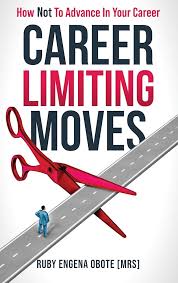
In her book How Not To Advance In Your Career, Ruby Engena Obote identifies several career-limiting moves (CLMs) that individuals often unknowingly engage in. According to Google, a CLM refers to an action or behavior by an employee that negatively impacts their professional reputation, hinders career progression, or damages relationships with colleagues, superiors, or clients. Ruby notes that CLMs can vary from minor mistakes to serious ethical breaches, and they may result in severe consequences, such as being overlooked for promotions or even losing one’s job. Tragically, many employees are unaware of these detrimental actions, which is why Ruby wrote her book.
Ruby emphasizes that identifying a CLM can lead to its transformation into a career advancement move. Importantly, all her insights are grounded in scripture, providing a foundation of truth. She notes that the modern perception of success often equates securing a job with achieving one’s career goals. Many people chase impressive titles and the trappings of success, such as stylish attire and luxury cars, while remaining trapped in roles that lead to resentment and toxicity. Despite appearing successful, many find themselves deeply in debt and lacking savings.
Ruby outlines the following key career-limiting moves:
1. Disrespecting Authority: Ruby stresses the importance of recognizing the source of authority in the workplace. She explains that even if one possesses superior skills or knowledge, it is crucial to respect those in leadership positions. Ruby cites Apostle Moses Mukisa’s wisdom: “A child cannot be a judge against a parent.” She further reminds readers that “promotion comes from Him,” referencing Psalm 75:6, which states, “For exaltation comes neither from the east nor from the west nor from the south. But God is the Judge: He puts down one and exalts another.” Instead of criticizing or undermining one’s boss, Ruby advises employees to pray for their leaders’ wisdom and success, as their leadership directly influences one’s career.
2. Speaking ill of Superiors: Ruby warns that gossiping about or exposing a boss’s weaknesses can severely undermine one’s career. She asserts that highlighting a boss’s flaws reflects poorly on the employee, portraying them as untrustworthy and self-serving. Ruby insists, “Your role should never be to expose the ‘nakedness’ of those above you.” Maintaining respect for superiors is essential for career advancement.
3. Overfamiliarity with Superiors: Ruby highlights the danger of becoming too familiar with those in power. While access to authority figures can be a privilege, it can also lead to a false sense of entitlement. A wise colleague once cautioned her, “You have access to these people, but they are not your friends. They are still your bosses, and you need to treat them with respect.” This familiarity, she explains, can blur professional boundaries.
4. Laziness: Ruby identifies laziness as a significant career limiter. She states that it manifests as a lack of follow-through on tasks and an unwillingness to perform effectively. This behavior not only hampers individual progress but can also negatively affect team dynamics. Quoting Proverbs 10:26, Ruby notes, “As vinegar to the teeth and smoke to the eyes, so is the lazy man to those who send him.”
5. Failing to Upgrade Skills: Ruby emphasizes the necessity of continuous skill development. She warns that neglecting to improve one’s skills is akin to digging a career grave. “An employee who does not upgrade their skills is digging a personal career grave,” Ruby insists. Skill enhancement can take many forms, from pursuing further education to honing existing abilities. She underscores that in her HR role, she has consistently sought to develop her communication and performance management skills.
6. Gossiping in the Workplace: Ruby firmly believes that gossip is a career killer. She warns that gossiping about colleagues or superiors leads to professional decline, echoing the truth found in Ecclesiastes 10:20: “Do not curse the king, even in your thought; do not curse the rich, even in your bedroom; for a bird of the air may carry your voice, and a bird in flight may tell the matter.”
7. Striving to Be Irreplaceable: Ruby challenges the notion that being irreplaceable signifies success. She reflects on her past belief that if she could not be replaced, it meant she was indispensable. Instead, she argues that true leadership is reflected in one’s ability to mentor and nurture others to excel beyond their predecessors. “If you cannot be replaced, it means you have not multiplied yourself,” she explains. Ruby encourages leaders to prioritize the growth of their direct reports, stating, “It is a testament to your success when they do.”
Ruby concludes by encouraging individuals to break the cycle of toxic leadership by choosing to mentor the next generation. She emphasizes the importance of being genuinely concerned about the professional development of colleagues, stating, “Help them grow, help them shine, and draw out their potential.” By modeling great leadership, she asserts, they will inspire the same qualities in the next generation.
Book 2: A story of resilience, a summary of the book: bamboozled by Jesus: How God tricked me into the life of my dreams by Yvonne Orji

WRITTEN BY ADV. BROWNIE EBAL AND VICTORIA NAKIYIMBA AND EDITED BY KASI EDITORIAL SERVICES
The journey of life is an unpredictable adventure, much like the life of Joseph. It is easy to focus on the unfortunate events, the setbacks that seem to derail us from our dreams, but what if those setbacks are stepping stones designed to prepare us for our destiny? What if, instead of viewing them as burdens, we saw them as an unpaid internship—a rigorous, often thankless experience that’s moulding us into who we are meant to be?
Yvonne Orji does not shy away from embracing both faith and fun, refusing to choose between the two because, as she puts it, “I am greedy like that.” This perspective challenges the notion that faith must be sombre, or devoid of joy. Instead, she shows us that these two elements can coexist harmoniously, each enhancing the other.
As we navigate life, it is tempting to search for the fine print, to understand every twist and turn before it happens. However, Yvonne advises against it. Instead of worrying about what is written in the margins of our life contracts, we should stay the course. Yes, the world might seem like it is conspiring against us at times, but those are merely the hidden details that are necessary to shape our journey. Every challenge, every heartbreak, every delay is woven into the fabric of our destiny, guiding us to where we are meant to be.
The critical question we face is not whether we will encounter difficulties, but rather, “What do you do with what you have you got?” Do you recognize the gifts you have been given? Do you protect and nurture them, or do you dismiss them as insignificant? Yvonne draws a parallel to Jesus and His disciples. To the outside world, they were a band of misfits—unremarkable, flawed, and ordinary. Yet, these were the very people Jesus chose to walk with, not because they were perfect, but because they were chosen to be perfected. This leads to a powerful realization: God doesn’t choose the perfect; He perfects the chosen. Too often, we disqualify ourselves from the great things God has in store because we see our imperfections as obstacles. We fail to realize that it is through these imperfections that God’s power shines brightest.
For Yvonne, the trauma of being bullied as a child haunted her, convincing her that her humor—her gift—was a vulnerability that would lead to rejection. Even though she had been performing stand-up comedy successfully since 2006, she still struggled to believe that her humor could have the impact God promised. Like Sarah, who laughed at the idea of bearing a child in her old age, Yvonne scoffed at the notion that her humor could be used for something great. And like Moses, she sought a way out, asking God to use something less terrifying to fulfill her purpose. But God does not work that way. He takes the very things we are most afraid of and uses them to glorify His name. The key is to show up—because showing up is half the battle. The other half? Being prepared when it is time to go. Yvonne emphasizes the importance of doing our part so that God can do His. It is about showing up with intention, ready to take on whatever comes our way, and trusting that God will show off His power in our lives.
So start now. Show God you mean business and watch as He pours out His blessings. The life of your dreams is not just a possibility—it is the destiny that has been waiting for you all along.
There are moments when we hesitate to bring what we consider insignificant matters to God—like finding paint on sale or deciding what to wear for an important meeting. We tell ourselves that God has bigger prayers to answer, that our small concerns would be a waste of His time. Here’s the thing: God is the Author of Time. He does not need anyone to micromanage it for Him. He is not too busy for you, and your worries, no matter how small they seem, are not a nuisance to Him.
Before we can be truly bamboozled by Jesus—led into the life of our dreams—we have to grant God access to every part of our lives, even the intricate, seemingly insignificant spaces. It might look like asking Him which college to attend or seeking His help to shake off nerves before a first date. Whatever it is, know that He delights in sweating the small stuff with you.
Often, we underestimate the power of these little moments and dismiss them, thinking they’re too subtle to matter. These subtle moments never truly go away; they lie dormant, waiting to be discovered and cultivated by God’s hand. In these quiet spaces, God is already at work, setting the stage for something greater than we can imagine.
When Jesus called Paul an “instrument,” it wasn’t just a title—it was a declaration of purpose. An instrument is “a means whereby something is achieved, performed, or furthered.” It is not simply about existing; it is about being used to accomplish something significant. Just like Paul, we are instruments in God’s hands, meant to achieve, perform, and further His plans.
Yet, there’s always that moment of hesitation. You find yourself vacillating between a “yes” that you know will advance your purpose and the quicksand of doubt and uncertainty that holds you back. Here’s a bit of encouragement: go all-in. Dive headfirst into that “yes,” because every time you agree to God’s plans, you align yourself with the next set of hurdles and triumphs that will catapult you closer to your purpose. The crazy part is, most of the time, your “yes” isn’t even about you. Saying “yes” to God often sets you up to be used in ways that are both rewarding and terrifying. Your participation will be requested at inconvenient times, in ways that don’t fit your carefully crafted five-year plan, and in moments when you feel least qualified for the job. Always remember, it’s not about you. God’s not picking you because you’re the best or the brightest—He’s picking you because He wants to mould you into an even better version of yourself and deepen your understanding of Him.
Take Esther, for example. Her selection for greatness was not a reflection of her own greatness, but rather a testament to God’s strategic positioning. All He needed was her willing participation, and He would take care of the rest. Yet, like many of us, Esther had become comfortable—pacified by pleasure and complacency. She was not eager to ruffle any feathers, just as many of us resist stepping out of our comfort zones. Then came what the “Mordecai Moment.” Esther’s uncle, Mordecai, snapped her back to reality, reminding her that God could raise up someone else if she wasn’t willing. It wasn’t that the Jews needed Esther specifically; they were simply offering her an opportunity to be part of God’s master plan. The truth is, your willingness isn’t doing God any favors. He is inviting you to be part of something bigger, to step into your purpose and grow in ways you never thought possible.
God’s plan is going to move forward with or without you, but He’s offering you the chance to be part of it—to be bamboozled by His love, grace, and strategic positioning. In the process, He will transform you into the person you were always meant to be. So, whether it is a decision as small as buying paint on sale or as significant as stepping into your calling, invite God into every detail. Say “yes” to His plans, and watch as He uses you to achieve, perform, and further His kingdom in ways that will leave you in awe.
The journey towards living a purposeful life is not one where you skate by unfazed, untested, or unchallenged. In fact, it is often the opposite. When you say “yes” to God, when you step out in faith—even in the face of uncertainty—doors of favor start to open for you. Sometimes you just have to “faith it ‘til you make it,” as Yvonne Orji says. Like Esther, that one bold move could be the catalyst for God to align the right people, with the right influence, to step in on your behalf.
Don’t miss out on your blessing because you are stuck between reason and logic. It is easy to ask, “What if it doesn’t work?” But what if, instead, you asked, “What if it does?” Imagine the possibilities—not just for yourself, but for everyone connected to you. God’s ability, coupled with your availability, can lead to infinite possibilities. He knows your final destination, even when the path seems unclear to you.
We can’t afford to go around beating ourselves up. We already have a real-life adversary—the devil—who’s working overtime to steal our dreams, joy, and peace. He wants nothing more than to see us fail, but we shouldn’t help him in his hustle. Remember, you are dangerous to the enemy’s camp. If you weren’t, he wouldn’t be so pressed to see you fall. The attacks you face are evidence of the greatness inside you that makes the enemy tremble. You have been genetically predisposed to foil his plans, so don’t give up easily.
Whatever you choose, say it boldly and say it often. This is how you renew your mind, as Romans 12:3 suggests. Replace thoughts of losing with winning. Swap out “barely enough” with the belief for more. Exchange hopelessness for a blessed assurance. We have all been designed for greatness because God Himself is great, and if He lives in us, then our default setting is to be great as well.
It is easy to fall into the trap of thinking that anyone could do what you do. The truth is, not everyone sees or does things the way you do. Your ability to encourage others, connect random dots, pay attention to the minutest details, and cultivate relationships—these are examples of your unique gifts, your special sauce. Once you discover it, never dilute it. The underwater-down version of you is about to be a hot commodity. Yes, there are others in the game who are just as good, or maybe even better, but don’t let that defeat you before you even start.
When you start to wonder how someone like you—from the family you’re from, the city you live in, with the tough breaks you’ve had, and the money you don’t have—could dream this improbable dream, remind yourself to be strong and courageous. The unfiltered, undiluted version of you is exactly what the world needs, and there’s a seat at the table with your name on it. Don’t disqualify yourself just because someone else sat down before you. Who cares if your meal is still baking? When it’s ready, it will be exactly what is needed.
God is giving you a blank disc today, erasing every thought that he never programmed in you, and dubbing his original purpose back into you. Knowing whose you are in your relationship with God should empower you with an unshakable confidence that settles every matter.
There was a time when Yvonne couldn’t imagine someone giving away a car for free, just to bless someone else. It seemed like an impossible level of generosity. Yet, in a desperate moment, she found herself needing God to perform a similar miracle. It didn’t make sense—when she had a job, she was taking the bus, but now, unemployed, God was telling her to go buy a car. With what money? But she realized that He was stretching her faith. God was using a desperate situation to remind her that if He said it, He meant it, and He would represent it.
Some of your angels are bored to death, waiting on standby, ready to move on your behalf, but do you know the difference between who you are and whose you are?
Once Yvonne grasped this truth, it altered how she reacted to setbacks. Instead of panicking, she reminded herself that while she might be taking a hit now, it wouldn’t be like this always—and it wasn’t. She needed to hear a testimony, but instead, God turned her into one. Just like David stood before Goliath with unshakable belief, knowing that if God was for him, no giant could stop him, that same belief will set you apart. It is what will make the difference between you and other students vying for the same scholarship. It is what will distinguish you from your single friends who believe there are no more good men or women left in the world. This faith, this unwavering confidence in God’s plan for your life, is what will propel you into life you were always meant to live.
When doubt creeps in, when fear tries to paralyze you, remember: God’s ability, coupled with your availability, can lead to infinite possibilities. Say “yes,” and watch as God takes you from where you are to places you never thought possible. When you truly tap into the power of knowing whose you are, you are bound to ruffle some feathers. People might be upset that you dared to do what they couldn’t, but their insecurities and shortcomings aren’t your responsibility—that’s what therapy is for. Look at David: young, short, and underestimated, but definitely nobody’s pawn. When his brother tried to belittle him, David didn’t waste time arguing; he simply turned away. That turn-away is key—it is about not getting bogged down by others’ doubts or negativity.
Even the king tried to box David in by listing all the reasons why his plan would fail. But David knew better—his resume wasn’t just about fighting battles; it was about protecting his father’s sheep from lions and bears. Goliath was just another challenge, and David was ready to face it, not with brute strength, but with unwavering faith. Those repeated battles you face aren’t there to wear you out; they’re your training ground, preparing you to face the Goliaths in your own life. When you realize that you’re fighting from the strength of your faith rather than your own power, the odds start tipping in your favor.
Da Good Book urges us to strip off every unnecessary weight that holds us back and to run our own race. David did just that—he didn’t rely on bigger and flashier resources, but on what God had given him, even if it seemed insignificant. Everything God has put in you equips you for the battles ahead, and everything He is to you prepares you for success. He set it up that way and will do everything in His power to defend it.
“Faith’n it” isn’t about denying your problems; it’s about choosing to believe for better despite them. Some of your biggest blessings will not be obvious or easy; they will come disguised as beautiful burdens—hurdles that feel like chores and show up at the most inconvenient times. But these are the blessings that, when unwrapped, reveal God’s true intentions for your life.
Success doesn’t come overnight. It often requires long nights, tough lessons, and perseverance. Yvonne Orji learned that it took her seven years to be discovered, and in that time, she realized that success is created when strife has been perfected. That pressure you feel in tough times exposes the true colors of your faith life. You would be doing yourself a disservice if you quit prematurely. Let patience marinate in you so that you’re not half-baked in faith.
Remember, a delay isn’t a denial. It is in those moments of pressure that your true strengths and weaknesses are revealed, and where the catalyst for change in your life is formed. Like a diamond created from carbon under heat, time, and pressure, your trials are shaping you to shine. It is not easy to stand up for your beliefs, especially in environments that don’t support them, but that pressure is what God uses to prune you for your purpose.
It is a strange feeling to be the strong one—the one who makes everyone laugh, who encourages others—only to find yourself in need of encouragement when nothing seems funny anymore. But even when you’re exhausted, life moves on, and sometimes, all you can do is take things one small step at a time. Every day, Yvonne galvanized herself with small maybes: “Maybe this is temporary,” “Maybe there’s still some fight in me,” “Maybe God hasn’t forgotten about me.” These small steps helped her face each day with expectancy.
When you’re feeling worn out, it is okay to rest. Take a nap if you need it, because you’re not yourself when you’re tired. Remember, money without purpose eventually runs out, while purpose produces seeds that grow into trees, constantly generating fruit. In one short year, Yvonne went from impossible to all things being possible, but that only happened when she gave her all to the One who gave His all. What are you holding in your hands that needs to be transferred to God’s? The minute we think we can do life on our own terms; we limit God’s ability to work in us. Surround yourself with people who inspire hope, because the wrong voices can breed dissension.
God wants us to acknowledge His presence in our lives, especially in how we respond to tough times. Some people may never set foot in a church, but they will see how you handle setbacks at the next cookout or holiday party. Will your response be enough to inspire them to believe? Yvonne decided she loved God more than she feared disappointing her parents. God provided bite-sized blessings to guide her to the next step. That is the protocol for living a purpose-driven life.
There comes a point when you have to sacrifice the familiar to take hold of the fantastic. The familiar waits for life to happen, but the fantastic grabs it by the horns—and Yvonne was holding on with both hands. She cleared her schedule, blocked out dates, and took the leap, even when the few people she knew were unavailable. But God orchestrated time, space, preparation, and opportunity to collide in perfect harmony. When your number gets called, you have to be ready. Don’t miss your moment because you weren’t prepared.
As a recent Instagram post said, “No one else is supposed to understand your calling; it wasn’t a conference call.” Nobody was checking for Jeremy Lin to send shockwaves through the world until he did. If he had let his past dictate his potential, there would be no “Linsanity.” Similarly, Noah built the ark in holy fear, despite ridicule. Expand your world, even if no one else gets it. Stay focused, do the work, and when your moment comes, you’ll go from being called crazy to making the world go crazy.
God never wastes a lesson. Even if you dislike the class or feel frustrated by the tests, it is important to pass them. When you fully surrender your frustrations to God, He can provide answers beyond your imagination. Just when you think you have everything figured out, God can still surprise you with moves you did not anticipate. He is already in your tomorrow today, so if He asks you to do something unconventional, just go with it.
Bishop T.D. Jakes once said that we often misrepresent ourselves to others, creating excuses that justify why we haven’t achieved more. God doesn’t want you to stay small. Why settle for second place when first place is already reserved for you?
An Instagram post said it best: “Don’t ever settle. Not for a job, a man, an acrylic set not shaped correctly—nothing.” God has promised you more than mediocrity, and you shouldn’t settle for less than His best for you.
Fear is a major obstacle, often more damaging than regret. It is a false perception of danger, like the Wizard of Oz’s smokescreen. Just as Dorothy discovered that the Wizard was an ordinary man behind a curtain, fear is merely an illusion designed to hold you back. In contrast, regret is more harmful because it represents missed opportunities.
One fundamental principle that has propelled many forward, is hating regret more than fear. If fear is trying to stop you, remember: one bad night doesn’t dictate your entire destiny. Even when faced with anxiety and doubt, pushing through is often the only way to avoid regret. In moments when fear threatens to derail you, consider the worst-case scenario of going for it.
Then, go for it anyway. When God pushes you out of your comfort zone, embrace it. The worst that could happen is a learning experience, and the best could be a significant breakthrough.
Galatians 6:9 reminds us to keep doing good, even when it seems like we are getting nowhere. “Don’t get tired of doing what is good,” the verse says, because in time, it will pay off if we don’t give up. Even if you feel sidelined, there is a win with your name on it. When it comes, God will make it worth the wait.
Throughout her journey, Yvonne Orji learned the value of serving others. She treated everyone with kindness, which led her from being an unpaid intern to securing significant opportunities. This attitude of service, regardless of status, opened doors and allowed her to make an impact. Your big break might come disguised as grunt work or seemingly thankless tasks. Don’t overlook these opportunities. What you do for others—your kindness, generosity, and hard work—will eventually come back to you. The seeds you sow today will grow into the fruits of tomorrow. Jesus taught that greatness comes from serving others. To be first, you must be last; to be great, you must be a servant. His favor can elevate you faster than a lifetime of labor. From intern to series regular, Yvonne’s story is a testament to the transformative power of God’s favour and the impact of faithful service.
Favor has the power to open doors and create opportunities in unexpected ways. Even when you don’t realize it, favor can make your name known in places you haven’t yet been. For example, Yvonne Orji’s encounter with Chris Rock happened through favor, even though he was not present at her comedy show. It is a reminder that, regardless of your current status or achievements, you have inherent worth and potential.
In a similar vein, comparing yourself to others often leads to disappointment and frustration. The story of the workers receiving different wages highlights how comparisons can cause dissatisfaction and make you lose sight of your own blessings. The workers who were hired first became upset when they saw the latecomers receiving the same pay. This comparison blinded them to the good deal they had originally agreed to. Favor can sometimes seem unfair because it doesn’t always follow conventional protocols or timelines. It is important to remain humble and not take credit for it, as you cannot work for or earn favor—it is a gift. While some might react with jealousy or negativity when they see you benefiting from favor, it’s crucial not to apologize or feel guilty for it. Keep your heart light and focus on your own journey rather than comparing it to others. When dealing with setbacks or feelings of inadequacy, remember that comparisons can be a distraction from the good things happening in your life. Embrace the opportunities and recognition you do receive and continue to focus on your craft rather than trying to fit into mainstream trends or spaces prematurely.
Steven Furtick’s insight on receiving God’s “yes” with praise and His “no” with trust emphasizes that even perceived delays are part of a divine plan. Trust that God’s timing is perfect, and His refusal or delay might be preparing you for something better. By staying grateful and focusing on your own growth, you will align with the favor God has for you. The essence of this message is to remain authentic, value your unique contributions, and not let external factors or comparisons diminish your self-worth. Embrace your journey with gratitude and confidence, knowing that favor and integrity will guide you towards greater success.
This passage emphasizes the importance of faith and expectation when asking for God’s blessings. Rather than limiting ourselves with modest requests, we should approach God with boldness, bringing “big bags” that challenge our faith and expand our capacity. By doing so, we show our trust in His abundant resources and power. The idea is to avoid self- sabotage and negative thinking, which can undermine our potential and limit what we receive. When we act from a place of fear rather than faith, we inadvertently block the very opportunities we are seeking. Instead, we should focus on our growth and stay hydrated—metaphorically speaking—by nurturing our well-being and continuing to evolve.
Additionally, this message underscores the importance of not letting comparisons or negative feedback hinder our progress. It is natural to face setbacks and criticism, but these should not deter us from our path. As we navigate challenges, we should remember that God’s wisdom far exceeds human understanding, and His plans are designed to benefit us in ways we might not fully comprehend.
By embracing our own journey, focusing on our craft, and maintaining our integrity, we align ourselves with God’s purpose and promise. The passage encourages us to be resilient, continue striving for excellence, and trust that even our detractors will eventually serve to elevate us rather than bring us down.
This passage from Yvonne Orji’s book provides a candid look at personal growth and the obstacles that often impede it. It highlights four key traits that can hinder our progress:
1. Stagnation of Validation: Relying too heavily on external validation can leave us vulnerable to others’ opinions. If our self-worth is tied to praise, disapproval can deeply affect us.
2. Asinine Co-signing: Seeking constant agreement from others can stifle personal growth. Those who thrive on co-signs may limit their circle to those who always agree with them, rather than expanding their perspectives.
3. Blatancy of Complacency: Being inspired without taking actionable steps leads to stagnation. True growth comes from putting plans into practice, not just dreaming about them.
4. Processing the Blessing: Sometimes, we need to surround ourselves with people who challenge us and keep us accountable. Growth requires honest feedback and constructive criticism.
Orji encourages embracing self-care and recognizing personal value without compromising core values. Her suggested daily affirmations aim to bolster self-belief and faith, emphasizing the importance of aligning personal growth with a strong spiritual foundation. The message is to stay resilient, pursue meaningful action, and remain confident in one’s journey, trusting that divine guidance and support are always at work.
Book 1: Great reads: Key takeaways on how to work with people of various capacities

There is a popular belief that if you want to hide something from an African person, write a book. However, I believe, the current, African landscape has learnt the trick and the generation is more knowledge seeking.
I am a firm believer that what we experience in this world is not new. If anyone wants to get a head in life, they need to read the wisdom of others which is often hidden in books.
I was struggling with working with people and Ameso Angela (The Co-Founder Kitabu- Buk Project: an NGO that donates used and new textbooks in Uganda), recommended the book: Collaborating with the Enemy by Adam Kahane.
I must admit, the title captivated me thou I thought “enemy” was a bit much. In addition, the author worked to reconcile drug lords in Colombia, so who would not want such advice? I immediately dived into the book.
These are the 10 key takeaways from this book on how to
to build a collaborative team through stretch and conventional collaboration
1. Stretch collaboration: This is more than making a deal or an agreement, this kind of collaboration involves planning. It is an ongoing, emergent process in which action is more important than agreement. As in gardening, we can only create some of the conditions for a collective effort to flourish. We cannot direct it to do so. In this scenario, we normally start with a plan and the difficulty is in ensuring that members stick to the plan. Usually, in Stretch collaboration, participants take the plan that is modest, short term and low risk since they may not like or trust one another.
2. In order to ensure this works out, one should take one step at a time and learn as you go. As the leader, create conditions under which participants can act freely and creatively, creating a path towards success so they can overcome obstacles and take the next step. Remember, no gardener tries to convince a plant to grow. If the seed does not have the potential to grow, there is nothing anyone can do to induce it. In this regard, people find their way forward, not necessarily because they have a good map or plan, but rather because they begin to act and thus generate tangible outcomes in some context. For
example, “a young Lieutenant in a small Hungarian detachment in the Alps sent a reconnaissance unit into the icy wilderness. It began to snow immediately, persevering for two days so that the unit could not return. The lieutenant suffered, fearing that he had dispatched his people to death. On the third day,
the unit came back. Where had they been? How did they make their way back? They said they had considered themselves lost and were waiting for the end when one of them found a map in his pocket that calmed them down. They pitched camp, lasted out the snowstorm, and then with the map they discovered their bearings.
The lieutenant borrowed this remarkable map and had a good look at it. He discovered to his astonishment that it was not a map of the Alps, but of the
Pyrenees.” This shows that once you create a conducive environment for members to flourish and seek ideas on their own, whatever obstacle they come across, they will overcome it. Here the leader must believe in their team for changes to happen.
3. In Stretch collaboration, members should feel that they are co-creators. This will enable the team work together to achieve a goal as they feel valued and are contributing as individuals to something.
4.Talk to members in the group through creating better communication channels for example better through Creating dialogue eg. In my experience, Debating eg. In my opinion.
5. Conventional collaboration: This focuses on trying to change what other people are doing. These might be fellow collaborators or even people outside our collaboration who are targets of our
collective activities. This involves the creative process which is a process of finding not of projecting something already seen and known in one’s mind. The needed inner gestures here are fearlessness in letting go of what isn’t working, and boldness in proposing new solutions.
6. It is useless for one to focus on what one’s enemies should be doing. Focus on what you should be doing differently to deal effectively with the challenges you are facing.
7. Blaming others is a common and lazy way to avoid doing one’s own work and Philosopher Rene Girard says that we create enemies as a way to avoid dealing with the conflict within our communities or within ourselves. Philosopher Martin Buber adds, “ this perspective in which a man sees himself only as an individual contrasted with other individuals and not as a person whose transformation helps towards the transformation of the world contains a fundamental error. The essential thing is to begin with oneself and at this moment a man has nothing in the world to care about than the beginning. Any other attitude would distract him from what he is about to begin, weaken his initiative and thus frustrate the entire bold undertaking.”
8. We tend to feel better when we commit to a given task rather than lazily blaming others for our failures. People we think of as our enemies can surprisingly play a helpful role.
9. If we want to get things done, we must collaborate in a complex, conflictual and uncontrolled context. To do so, we must stretch. The primary obstacle in learning to stretch is overcoming the familiarity and comfort of our habitual way of doing things. We must move away from a declarative (It must be this way) toward a subjunctive (It could be this way).
10. We must loosen our attachment to our opinions, positions and identities: to sacrifice our smaller, constricted selves to our larger, freer one.
Finally, the above stretches are both frightening and liberating. The only way to collaborate with the enemy is to be more open to different views and keep learning.
This book opens your eyes to how trivial some of our issues can be that result in us not working together for a common goal. The author worked with drug lords and rebels to bridge peace in various countries through some of these methods. Therefore, if these methods can work for war lords, us as individuals, friends, family, co-workers, should work with others and have a growth mindset as working with people is part of life.
For more information kindly buy the book: “COLLABORATING
WITH THE ENEMY: HOW TO WORK WITH PEOPLE YOU DON’T AGREE WITH OR LIKE OR TRUST BY ADAM KAHANE”
Kindly subscribe to our weekly newsletter where I will write about the various events, that I attend. I love sharing the knowledge I learn and I hope my key outputs can help each one of you on your journey to becoming the best versions of yourself.
Written by Advocate Brownie Ebal
 BecomingGolden