
Written by Brownie Ebal and Victoria Nakiyimba.
On 10th April 2025, the East African Law Society hosted a webinar titled “Navigating Business and Human Rights in the Digital Age,” exploring the evolving relationship between business practices, technological advancement, and human rights within the East African legal context.
Nasanga Aki from IBIS Consulting provided a compelling historical backdrop, tracing the development of corporate accountability from the aftermath of World War II to the adoption of the UN Guiding Principles on Business and Human Rights. She emphasized how the digital age intensifies challenges for corporations, many of which now possess vast influence over societies. Aki underscored the importance of applying existing frameworks more consistently while also adapting them to the digital realities of today. Her insights stressed that legal practitioners must not only be aware of corporate responsibility norms but actively enforce and evolve them within their jurisdictions.
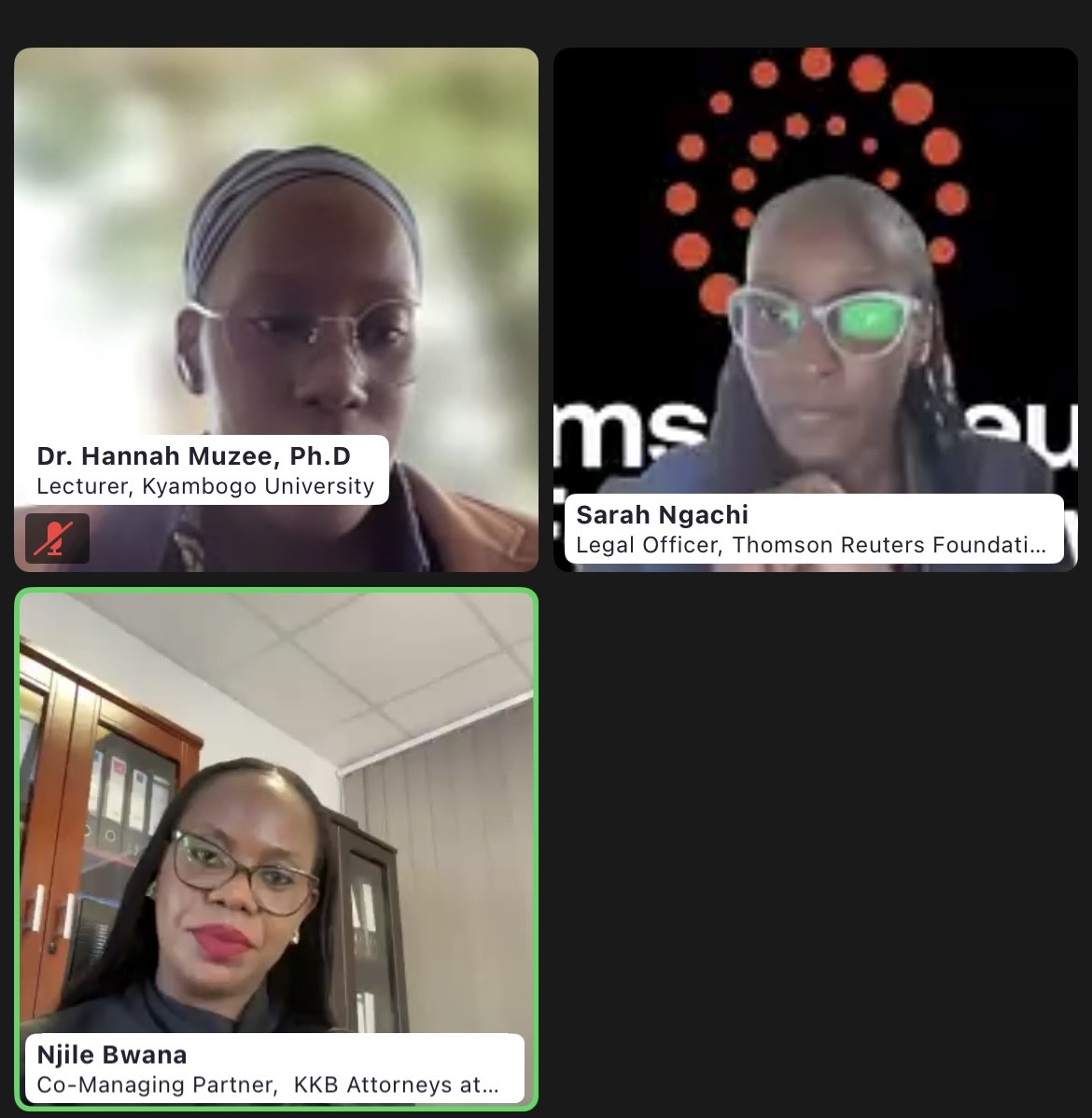
Dr. Hannah Muzee, Lecturer Kyambogo University, turned the spotlight on the gender digital divide, highlighting the disproportionate impact of digital threats and online harassment on women. She pointed out that while technology holds promise, it often reinforces existing inequalities if not intentionally designed and regulated. Dr. Muzee called for increased government responsiveness, particularly through policies that ensure equitable digital access and the promotion of digital literacy among women. Legal practitioners, she argued, must be at the forefront of advocating for protective digital legislation and inclusive governance frameworks.
Njile Bwana of KKB Attorneys at Law tackled the practical realities that legal professionals face as they engage with business and human rights in the digital age. She identified key areas of opportunity in the growing digital economy, such as advising on data protection, digital compliance, and responsible tech development. However, she also cautioned that lawyers must contend with weak enforcement mechanisms, jurisdictional complexity, and a general lack of training in digital law. Bwana emphasized the need for strategic collaboration among legal professionals in the region, pointing to cross-border frameworks as a means to strengthen accountability and harmonize practice.
Throughout the session, a clear theme emerged: the legal profession must evolve alongside technology. The digital age offers powerful tools for growth and social impact but also introduces risks that demand urgent legal attention. The speakers collectively highlighted that historical knowledge, gender awareness, and forward-looking training are all essential for lawyers seeking to remain effective in a rapidly changing landscape.
Ultimately, the webinar underscored the growing role of legal practitioners in shaping not only compliance frameworks but also the ethical future of business in East Africa. By embracing collaboration, advocating for inclusive policies, and deepening their understanding of digital environments, lawyers can help ensure that technological progress does not come at the expense of human rights.



 BecomingGolden
Leave a comment