
written by Brownie Ebal and Nakiyimba Victoria
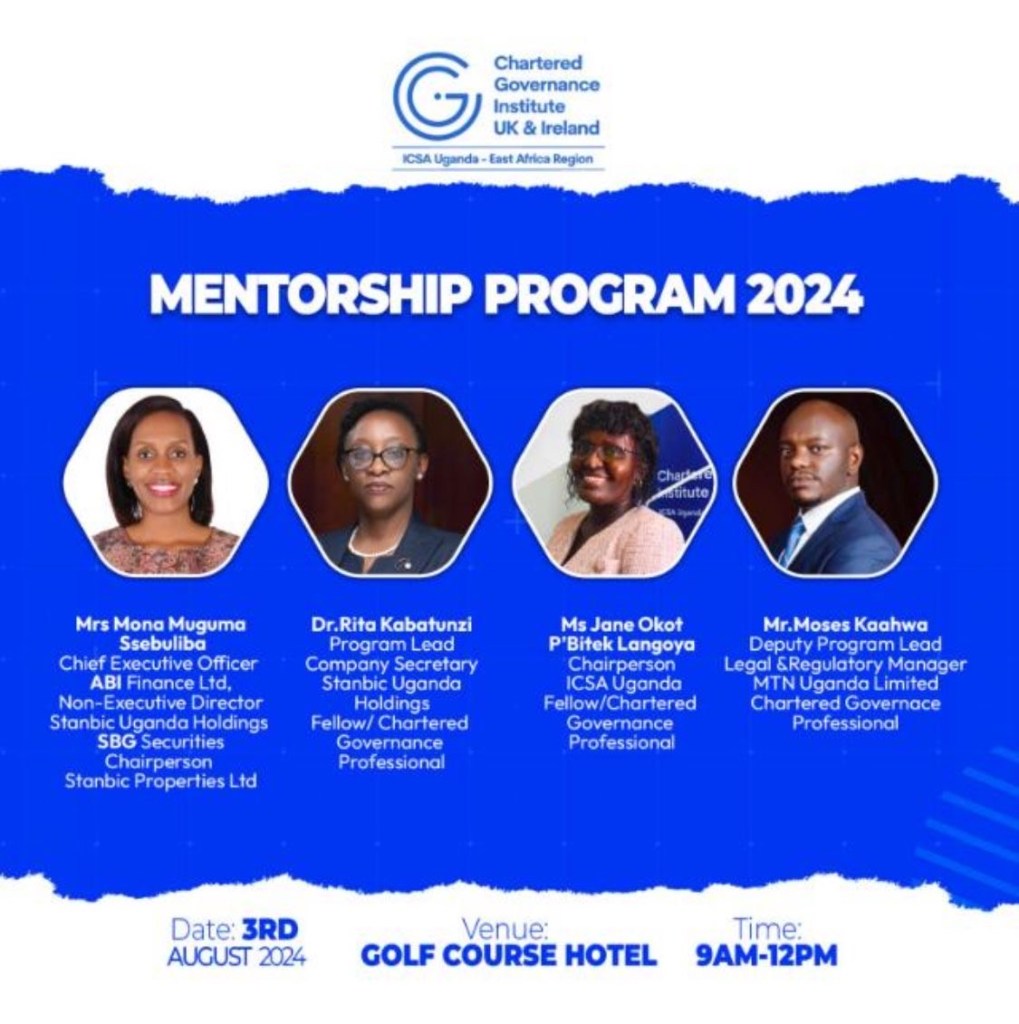
In today’s dynamic corporate world, success demands more than technical knowledge—it requires mentorship, strategic insight, and a commitment to continuous growth. That is why the ICSA Mentorship Program 2024 is a must-join opportunity for professionals aiming to excel in governance, leadership, and personal development. This thoughtfully designed program equips participants with the skills and tools they need to navigate challenges, build their professional brand, and lead with purpose.
The program featured an impressive lineup of facilitators, including Dr. Rita Kabatunzi (Program Lead, Company Secretary, Stanbic Uganda Holdings), Allan Rwakakooko (Legal Manager, UMEME Ltd.), Annabel Mwesigye (Legal and Compliance Officer, Vision Group), Francesca Kakoza (Director Legal, IRA), and Godwin Otim (Human Resource Specialist), among others.
These experts shared candid insights on critical topics such as personal development, purposeful leadership, effective networking, and sustainable self-care.
Here are 22 key takeaways to accelerate your personal and professional growth.
1.Conducting a successful board meeting
Effective board meetings require a forward-looking perspective, ensuring compliance while managing straightforward issues with ease. A well-structured meeting promotes value-added discussions, prioritizes good time management, and focuses on the organization’s success. Board meetings should always be purposeful and strategic, allowing participants to engage in discussions that push the organization forward.
A successful board meeting is characterized by a clear agenda aligned with the organization’s mission, strategic conversations that go beyond routine updates, and an environment that encourages valuable insights from all members. Preparation is key-an annual board work plan should ideally be prepared three months before the new financial year, and board papers should be distributed a month in advance for thorough review.
2. Lessons from marathon running: staying goal-oriented and focused
Drawing a parallel to marathon running, the importance of goal orientation, consistency, and continuous improvement was emphasized throughout the series. Like marathon runners training for endurance, professionals must focus on their organization’s success while remaining self-aware and committed to constant self-improvement.
Self-awareness plays a crucial role in professional development, allowing leaders to identify their strengths and areas for growth. Knowing oneself is a powerful tool for networking, building stronger relationships, and gaining support for key initiatives. Surrounding yourself with the right people-your “tribe”-can further fuel growth and success.
3. The Secrets of victory lie in the non-obvious
Success often stems from the seemingly simple but essential practices of meticulous planning, segmentation of tasks, and sticking to a timeline. An annual board work plan should be developed months ahead of time, critical documents should be shared on schedule and anticipating what others might contribute during meetings can keep you ahead of the curve.
Being proactive is key: aim to be indispensable and visible by doing more than just your job. Understand your business, know the key executives, and consistently position yourself as someone who delivers results. Resourcefulness, self-awareness, and the ability to delegate when
necessary are crucial traits of effective leaders who exceed expectations.
4. Building a strong network
Ian Mutiibwa (Managing Partner, Signum Advocates), Allan Rwakakooko (Legal Manager, UMEME), and Annabel Mwesigye (Legal and Compliance Officer, Vision Group) emphasized the critical role of networking for career advancement, influence, and personal growth. Networking involves mastering your role, contributing confidently to discussions, and cultivating
trust, collaboration, and partnerships that drive mutual success.
The mentorship series identified three essential types of networks for professionals:
- Operational Networks: Relationships with colleagues involved in daily work.
- Strategic Networks: Connections beyond one’s immediate team, spanning across departments or roles.
- Developmental Networks: Relationships with mentors, advisors, or senior leaders that provide guidance and growth opportunities.
Participants were encouraged to regularly engage with influential figures in their field, understand their strengths and foster reciprocal relationships that build trust. Moreover, they were reminded that influence in the workplace often stems from navigating office dynamics strategically—not as manipulation but as a means of aligning relationships and influence to drive
meaningful outcomes.
5. The importance of self-care and preventing burnout
Mary Louise Nassuna, Wellness Enthusiast and Experienced Researcher, highlighted burnout as a significant risk in high-pressure roles, often stemming from chronic stress. She emphasized the importance of regular self-care routines to mitigate this risk, including physical exercise, adequate sleep, annual health checkups, and maintaining meaningful social connections. By investing in physical, intellectual, and social capital, professionals can build resilience and achieve long-term success.
She also underscored the role of financial management as a form of self-care. Allocating 60% of income to expenses, 10% to savings, and the remainder to personal growth and investments can foster both financial stability and overall well-being.
6. Defining personal brand and navigating workplace dynamics
Dr. Rita Kabatunzi, Program Lead and Company Secretary at Stanbic Uganda Holdings, emphasized the importance of defining one’s brand as a leader. Being present and engaged in meetings, offering sound advice, and knowing when to escalate issues are crucial steps toward building a credible reputation. Leaders should also stay calm under pressure, wear a smile, and
bring a sense of humor to the table. A key insight she shared was, “Dream big enough to scare you”—a reminder that ambition should push beyond comfort zones.
Navigating workplace dynamics, she noted, requires emotional intelligence, which encompasses self-regulation, empathy, and effective decision-making. The Johari Window, a psychological tool for self-awareness and mutual understanding, was introduced as a way to foster deeper connections with colleagues, enhancing both team cohesion and individual growth.
7. Embracing emotional intelligence and personality awareness
A critical theme highlighted in the mentorship series was the power of emotional intelligence (EI) in navigating workplace dynamics. Leaders with high EI exhibit self-regulation, empathy and social skills-traits that allow them to connect meaningfully with colleagues and inspire trust. By improving these areas, individuals can become more effective in managing both their own emotions and interpersonal relationships, which ultimately boosts team morale and productivity.
Participants were encouraged to explore personality assessments to better understand their natural tendencies, such as extroversion or introversion, and whether they are more intuitive or structured in their approach. These insights provide a foundation for understanding one’s strengths and potential areas for growth, making it easier to work in alignment with others and build strong professional relationships.
8. Recognizing and appreciating colleagues
Recognition is a powerful motivator. People thrive when they feel appreciated and valued, and taking the time to acknowledge achievements can significantly boost motivation and morale. Leaders should make it a priority to recognize contributions, whether through public acknowledgment in meetings or through personalized messages of appreciation.
Fostering a culture of recognition helps create mutual respect and encourages collaboration, allowing everyone to contribute to the organization’s success. Acknowledging colleagues’ efforts not only boosts individual morale but also strengthens the collective drive toward
common goals.
9. Navigating office politics
Moses Kaahwa, Company Secretary at MTN Uganda Foundation, reframed office politics as an essential tool for influence rather than a negative force. He encouraged leaders to view office politics as the art of building relationships and understanding the informal power dynamics that shape organizational decisions. By becoming politically aware and adept at navigating these dynamics, leaders can create opportunities to advance initiatives that align with their organization’s goals.
Effective navigation of office politics, he emphasized, requires self-awareness and a willingness to compromise. Building trust and cultivating genuine partnerships often prove more impactful than technical expertise. Leaders who master this dynamic can drive success through collaboration, strategic alignment, and mutual respect.
10. Creating a lasting competitive advantage
The series emphasized the importance of cultivating a unique competitive advantage in one’s role. This involves being visible and indispensable in the workplace-offering unique skills or insights that others rely on. Participants were urged to consider, “What is my competitive advantage?” This question encourages leaders to reflect on what they bring to the table that sets
them apart, helping them become integral to their team’s and organization’s success.
To further build a personal brand, participants were encouraged to “be present in the room” by actively listening, contributing thoughtfully, and ensuring their advice reaches the right people. Taking ownership of their contributions and consistently demonstrating value allows individuals to create a reputation that precedes them.
11. Investing in financial and social capital
Beyond professional skills, the mentorship series underscored the need to invest in financial and social capital as part of a comprehensive approach to personal and professional development. Financial well-being was highlighted as an essential element of self-care, with a suggested
breakdown of income: 60% for expenses, 10% for savings, and the remaining percentage divided for personal development and social engagement.
Social capital-nurturing meaningful relationships with colleagues, mentors, and peers-was recognized as equally valuable. Participants were encouraged to spend time with people who uplift and challenge them, contributing to both personal satisfaction and professional growth
12. Understanding and leveraging different types of power
Power in a professional setting takes many forms, each with its unique impact. The mentorship series explored various types of power-reward, referent, legitimate, expert, coercive, and informational-and how each can be applied to influence effectively.
- Reward Power: Leaders can motivate others with rewards like financial incentives, promotions or recognition.
- Referent Power: This type of power is rooted in charisma and the ability to influence others through charm and likability. Building strong relationships and a positive attitude enhances referent power.
- Legitimate Power: Based on position or title, legitimate power is wielded by individuals at the head of a unit or team.
- Expert Power: This power comes from specialized knowledge or expertise. It is a valuable asset, particularly when leaders use their insights to guide decisions.
- Coercive Power: Involving the capacity to impose consequences, coercive power should be used cautiously, as it can undermine relationships.
- Informational Power: Those who have access to vital information can exert influence simply by sharing or withholding insights.
Mentors emphasized that increasing referent power-through relationship-building, empathy and a commitment to continuous learning-can enhance influence in a positive way. Participants were cautioned against becoming “competent jerks” who isolate themselves despite technical skills.
Instead, a well-rounded leader cultivates empathy, a resourceful mindset, and strong connections with their team.
13. Taking calculated risks and continuous development
Calculated risks are integral to career growth. Professionals are encouraged to be strategic in identifying the skills they need to advance. This might involve stepping into volunteer roles, initiating informal conversations with industry leaders, or reaching out to potential mentors through platforms like LinkedIn, which can expand one’s professional circle and provide insights
into industry trends.
Continuous learning is key, and the importance of following experts, building a personal brand and contributing meaningfully to one’s field was emphasized. Setting SMART goals and regularly checking in with mentors helps professionals stay on track and ensures consistent progress in their careers.
14. Enhancing communication skills and making your mark
Rita Kabatunzi, Moses Kaahwa, and Conny Avako (Business Manager, ICSA) emphasized the importance of presenting ideas clearly and effectively as a cornerstone of influence. Attendees were advised to prepare thoroughly for presentations by understanding their audience, structuring content thoughtfully, and using visuals and hooks to maintain engagement. Techniques such as the SCQA model (Situation, Complication, Question, Answer) were recommended to help structure presentations—introducing a problem, proposing an idea, and concluding with interaction and questions.
Effective communication, they noted, extends beyond verbal content. Body language, which accounts for 55% of the message, plays a critical role. Professionals were encouraged to use visually appealing slides, maintain professionalism in their demeanor, and tailor their presentations to suit their audience for maximum impact.
15. Building long-term, meaningful connections
Building quality relationships is a process that requires time and consistency. Professionals should aim to create meaningful connections rather than focusing solely on immediate gains. Industry events, mutual connections, and professional meetups are excellent avenues for building
these relationships. The mentorship series emphasized the importance of nurturing these connections and offering value before expecting anything in return.
Handling rejection was another skill highlighted; participants were encouraged to view setbacks as non-personal and to maintain a positive attitude. Leaders should also build a strong support network and seek help when necessary, recognizing that long-term friendships and professional
alliances are built on mutual respect and shared goals.
16. Embracing continuous learning and adaptability
As the series drew to a close, participants were encouraged to stay adaptable and committed to continuous self-improvement. Emphasizing the importance of exploring emerging areas, further education such as an MBA was highlighted as a valuable step in professional development. The
mantra “half full, not half empty” became a key reminder to focus on opportunities rather than limitations.
A recommended strategy for staying prepared for new opportunities was to create an “open resume”—a comprehensive overview of one’s skills, experiences, and aspirations. This approach ensures that professionals are ready for advancement and can position themselves for leadership
roles, including potential moves to CEO positions, even within smaller companies.
17. Strategic positioning and building influence
For rising professionals, positioning is key to visibility and long-term success. Reachel Ddumba, CEO of Steadman Consults, shared valuable insights for those aspiring to top leadership positions. She emphasized that leaders should not tolerate mediocrity and must find ways to stand out—whether by arriving early to connect with colleagues, contributing thoughtfully
during meetings, or seeking guidance from coaches and sponsors.
To distinguish oneself, she recommended practicing “thought leadership” by sharing insights, publishing articles, or mentoring others. She also introduced the “Spice Web Theory,” encouraging professionals to leverage their phone contacts as potential allies. “A contact is as good as a contract,” she noted, underscoring the value of cultivating meaningful relationships.
Reachel further highlighted the importance of maintaining a positive professional presence, such as keeping video on during calls and clearly articulating ideas. These strategies, she explained, are essential for building a standout personal brand.
18. Mastering and increasing expert power
Building expert power—the influence that comes from specialized knowledge—was emphasized as a crucial skill. To become a valuable resource, professionals must master their craft, take on challenging projects, and respect other experts in their field. Rachael recommended sharing knowledge, developing credibility, and cultivating thought leadership. By writing articles, leading discussions, or mentoring others, individuals can solidify their authority and influence.
Continuous learning was also a key takeaway. As one mentor put it, “Any leader who is not learning is a liability.” Adapting to new ideas and shifting from a “know-it-all” mindset to a “learn-it-all” approach enables leaders to remain relevant and innovative
19. Reinventing and staying resilient
Staying at the top requires resilience, adaptability, and a commitment to growth. Elly Karuhanga, Senior Partner at KAA, emphasized the importance of reinvention at key inflection points, urging leaders to take ownership and accountability for their actions.
He advised participants to avoid “quiet quitting”—mentally checking out while remaining physically present at work. Instead, leaders should actively contribute, mentor others, and position themselves as problem solvers.
“The world doesn’t allow us to wait,” Elly reminded participants, highlighting the need for continuous evolution and seizing opportunities for growth. By aligning with their employer’s goals and focusing on both short- and long-term objectives, professionals can make meaningful contributions and strengthen their roles.
20. Building and nurturing trust
Trust is essential for effective leadership. The mentorship sessions underscored the importance of consistency, dependability, and authenticity in cultivating trust. Leaders must strive to meet commitments, demonstrate technical competence, and align with their teams’ values to foster an
environment of mutual respect.
The series also emphasized the value of high-quality engagement beyond formal meetings. Informal interactions provide opportunities for leaders to offer support, give constructive feedback, and delegate responsibilities, ultimately empowering their teams. Establishing a culture of accountability within teams and ensuring open communication channels were identified as key elements for building trust and enhancing collaboration.
21. Balancing work, self-care, and collective investments
A key takeaway from the series was the importance of balancing professional responsibilities with personal well-being and financial security. Leaders were encouraged to prioritize regular self-care routines that support physical, emotional, and spiritual health. This holistic approach to well-being is crucial for long-term success and sustainability.
In addition, the mentors recommended exploring collective investments and joint ventures with trusted individuals, starting small and focusing on sustainable growth. Building a network of like-minded, positive individuals who share common goals was emphasized as a strategy for boosting motivation, gaining perspective, and fostering resilience in challenging times
22. Facing and overcoming challenges
The mentorship series also addressed common challenges, offering actionable solutions to help professionals navigate obstacles. Some of the challenges included:
- Knowledge Gaps: Setting SMART goals, creating personal development plans, and attending workshops are effective ways to bridge knowledge gaps.
- Fear of Misunderstanding: Effective collaboration, stakeholder management, and assertive communication help in conveying one’s intentions clearly.
- Overcoming Complacency: Mentors advised setting SMART goals, finding accountability partners, and celebrating small wins to maintain motivation.
- Navigating Overwhelming Workloads: Teamwork, planning, and automation were recommended for managing high demands at work.
- Fear of Failure: Seeking additional training, mentorship, and coaching can empower individuals to confront their fears and grow through challenges.
- Networking and Visibility: Participants were encouraged to make themselves visible by joining professional associations, finding a niche, and connecting with accountability partners.
A growth mindset-believing that one’s abilities can be developed, was emphasized as an essential attitude for overcoming these hurdles.
In conclusion, the mentorship series provided an invaluable roadmap for professionals aiming to excel in their careers. Through candid discussions and practical advice from seasoned mentors, participants gained insight into the multifaceted journey of professional growth from mastering core skills to navigating office dynamics and building influence. The series emphasized the
importance of strategic positioning, continuous learning, and maintaining a balanced life.
At its heart, the mentorship series served as a reminder that success is rarely achieved in isolation. The support of mentors, accountability partners, and a robust professional network can be pivotal. We were encouraged to dream big, take calculated risks, and lead with purpose. In doing so, you not only shape your own career but also contribute meaningfully to the success of
your organization and community.
Ultimately, the path to leadership and fulfillment is one of resilience, curiosity, and integrity. By applying the wisdom shared in this series, we are better equipped to navigate challenges, create value, and inspire others on their journey to success.
For more information about the program, please visit:
https://www.cgi.org.uk
 BecomingGolden
Leave a comment